Showing posts with label American history. Show all posts

Sunday, October 19, 2025

What If Aging Means Less Juggling? Novels, Poems, Feature Articles, History ...


I have never learned to juggle. I've watched a few people learn it, and it didn't seem terrible -- but as someone who can barely catch a basketball, grabbing smaller items out of the air isn't likely. Actually I don't throw very well, either. (Don't ask about the company baseball team, back in 1973 or so.)

Maybe you have read the "how" of juggling? I leaned on such book-learning for writing "Juggling Parenthood at Seventy," which is in the most recent issue of New Feathers Anthology - you can read it here (it's short). I was thrilled that New Feathers asked for a second poem, too, which again is set in my part of parenting "adult children." (Yes, it's here.)

With the onset of my seventies, I notice changes in how I move, which is no surprise. I'm losing some speed and coordination, but not, thank goodness, determination.

What scares me more than the physical changes are mental ones. I worry each time I can't pull up a word or remember why I was headed into another room. It seems that most of my similar-aged friends have the same worry ... none of us want to become dependent on others for basic life, and that's what those little glitches seem to threaten.

But I can't live under threat as a mood. It's terrible for writing. So I'm trying to be practical, the way I was when I got rid of the last throw rug (I loved it, but throw rugs are a Big Problem in terms of falling, "they" say.)

For writing, that means sometimes narrowing the range of what I'm working on. With the gracious collaboration of editor/publisher Justin Lavely, I'm taking a break from feature articles for The North Star Monthly for a few months at least, and I'm not rushing to write another novel. Instead, I'm making a lot of room for poems. There are scraps and Post-it notes and lists all over this home, with metaphors, bits of lines, ideas for structure. It's working! Maybe I should have tried this sooner.

Meanwhile, though, I'm watching how the novels are reaching readers. If you live in Vermont's Northeast Kingdom, you can buy a copy of The Bitter and the Sweet easily in St. Johnsbury or Lyndonville (thank you, Boxcar & Caboose, and Green Mountain Books). But you might not have heard: I was able to regain rights to the first two books in the series, The Long Shadow and This Ardent Flame, and Speaking Volumes has them back in print, with covers that match the ebooks. You can get the lovely softcovers at those same two bookstores -- and of course, order them in any other bookshop, in person or online.

There's some relief in not juggling as much: I don't worry about hard rubber balls landing on my head. But can I stick with just poetry? Umm, no. Watch for news about a huge historical research project in the wings. 


Thursday, June 26, 2025

Historical Erasure: Far From New!

https://commons.wikimedia.org/wiki/File:Westminster_Town_Hall.jpg

Earlier this week I shared some resources for parts of New England history that are often buried in the rush to "explain" who we are and what has happened. In this season of thinking about the early battles of the American Revolution, 250 years ago, I've been mulling over that sharply uncomfortable phrase, "History is written by the victors."

According to Slate.com, although the line is often attributed to Winston Churchill, it has earlier and maybe more authentic roots. Remember my mention of the Battle of Culloden in Scotland, with a survivor who came to my part of Vermont and has an extensive tribute on his burial stone? Check this out: 

"One biographer’s description of the 1746 Battle of Culloden in Scotland laments that we will never know how many members of his subject’s clan died on the battlefield, because 'it is the victor who writes the history and counts the dead.'"

That's what Matthew Phelan wrote at slate.com (https://slate.com/culture/2019/11/history-is-written-by-the-victors-quote-origin.html).

As we work hard to sort out the most credible parts of each day's global news now, this second example from Phelan may be equally important: 

"Two years later, the saying was in use in United States. In 1891, Missouri Sen. George Graham Vest, a former congressman for the Confederacy who was still at that late date an advocate for the rights of states to secede, used the phrase in a speech, reprinted by the Kansas City Gazette and other papers on the next day, Aug. 21, 1891. 'In all revolutions the vanquished are the ones who are guilty of treason, even by the historians,' Vest said, 'for history is written by the victors and framed according to the prejudices and bias existing on their side.'"  (https://slate.com/culture/2019/11/history-is-written-by-the-victors-quote-origin.html)

The next post here will be, accordingly, an invitation into a newly published novel of the American Revolution, by Vermont's own Jesse Haas and set in Westminster, Vermont. 

Sunday, September 1, 2024

Billy Boyle World War II Mystery #19: THE PHANTOM PATROL, James R. Benn


Sure, autumn is great for crisp air, colorful leafs, and seasonal sports. But when cold rain or darkness (or needing a break) sends you back indoors, one of the big treats of the season is a new Billy Boyle mystery from James R. Benn. And number 19 in the series, THE PHANTOM PATROL, comes out this month. 

Apparently the publisher suffers from mild autumn flu or something, and has pushed back the release date to September 24. Definitely a nuisance for the author, as well as for bookstores hosting release events! But it will all work out. And I've got an advance copy, so I can fill you in and you can place a pre-order now, for delight in three weeks.

Yes, the new Billy Boyle is a keeper! This series has moved slowly through World War II, digging up extraordinary pockets of history that this young Irish cop turned wartime detective (working for "uncle Ike," General Eisenhower) discovers in assignments, official or not. His powerful friendship with Kaz, a Polish baron also working in his corps, his alliance with his boss Colonel Harding, and his romance with the very British Diana, who has even engaged in espionage behind German lines, have all lit up the books and given them emotional resonance.

In that way, THE PHANTOM PATROL cuts new ground for Benn. Although Kaz and a few others are with him as the book opens in the darkness of a Paris night, December 13, 1944, in the enormous Père Lachaise cemetery, much of the action depends instead on how Billy interprets what's going on a round him. We get to track his experience, his questions, and his choices, smart or not, as he sorts things out.

"I fired at the afterimage of the muzzle flash, then ducked as another burst slammed into the mausoleum. Kaz let off two more shots and I backed up, taking cover behind a tree as a gunman fired into the position I'd just vacated. I didn't have a clear shot at him, but as I scrambled between the graves, I realized these guys must be soldiers." 

Most of these enemies escape—leaving only one behind, neatly executed so he won't talk. "Excellent planning and ruthless approach," comments Billy's friend Kaz. ""Who are we dealing with here?" 

"And what the hell was in that grave?" I asked.

A quick bit of perspective: At this point in the war, the German occupying forces in France knew they'd been licked, and most officers invested in personal aspects of retreating. That included carrying away the spoils of war, which notoriously included priceless artwork. But others may have a stake in the profits. Soon it's clear that the gang activity Billy's hunting down must be engaged with masterful paintings. The obvious questions are, how are they being moved and how can the American team cut the supply lines?

Lightening up the action are cameo appearances from some of the American noncombatants embracing Paris and sometimes reporting for newspapers or enlarging their careers. Watch for J.D. Salinger and Ernest Hemingway, as well as British actor David Niven, drawing on his own military expertise from between the two wars. (I found myself pausing often to look up some of the surprises, and Niven's career was one of the really remarkable ones.)

David Niven (Wikipedia).

Benn is fully trustworthy as a historian and researcher, and deftly braids his details into Billy Boyle's investigations and personal stakes. It's hard to guess how long this series will run, as Benn's been adept at mining the war, month by month—but readers know the war will end, maybe not as soon as Billy and Kaz and Diana would like, but as even the Nazis know, the tide has turned and can't be resisted. Ramping up the suspense of this period is Benn's subtle threat to the relationship between Billy and the love of his (young) life: Will a Boston cop and an English aristocrat find a way to sustain their love and purposes when peace finally arrives?

Billy's own comment near the end of the book sums up what's at stake, and I can quote it without spoiling the plot: "When this is over, it damn well better have been worth it. We deserved a world worthy of both the sacrifice of the dead and those exquisite paintings. We deserved a world of love and beauty."

Don't miss this episode; it's the footing for the remaining Billy Boyle volumes, a rich platform of meaning and suspense garbed in the significant history of our time.


Friday, December 31, 2021

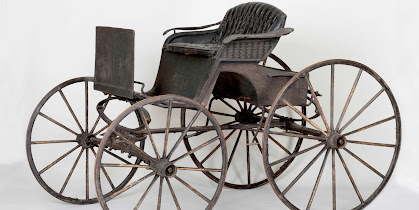
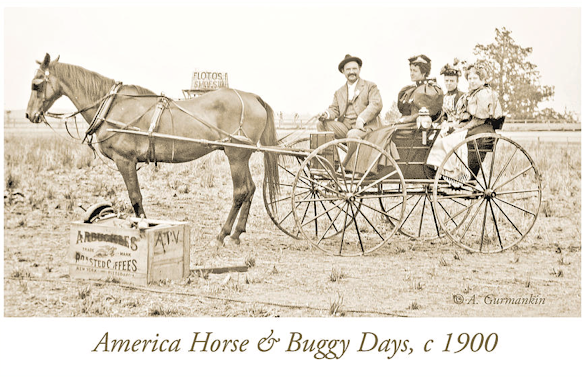
Just a Little Further: Writing the Novel and Learning the Horse and Buggy


In the collection of the Shelburne Museum. No brake!

Within the next week or so, I expect to finish writing the third book in my Winds of Freedom series. It's set in Vermont in 1854, and it's had a working title of Kindred Hearts, but I'm quite sure that will change. I'm waiting until the last plot twist, passion for the future, and page of dialogue are done.  Then I'll brainstorm titles.


Meanwhile, I've been working hard at learning how to hitch a horse to a buggy and drive it! Somehow this was not mentioned in any of my history courses. Luckily, although Vermont winter isn't exactly conducive to asking a neighbor to show me the reins, there are many engrossing YouTube videos that show how to put on a harness, how to attach the "hames," and much more.

Then I've also been taking a crash course (self-taught) in buggies themselves. My protagonists, Almyra and Susannah, are fortunate to have access to the resources of a small livery stable at their village inn. That means that sometimes they don't have the kind of buggy or carriage they want -- and sometimes they end up on horseback themselves. Learning about riding with a sidesaddle was another treat of this book!

Here are some of the images I've studied, working out who puts her foot where, how much risk there is that she'll show a shocking amount of her ankle or petticoat, and more.

Thanks in advance to Fran and Bert Fissette, neighbors who've loved their horses and have answered some of my questions via text, so I could keep typing!

Circ1 1915:

Late 1850s:


Sunday, October 10, 2021

Cotton Mather: From Salem Witch Trial Disaster to Hybrid Corn Experiments to Immense Loss

Check out these early provincial boundaries, via a Creative Commons map created by Kmusser.

I'm about halfway through writing KINDRED HEARTS, and every surface around me is covered with research. Not very tidy, but how exhilarating!

At this stage, also, almost everything around me spurs fresh inquiry ... 

Neighbors up the road just took their daughters to visit Salem, Massachusetts, and that sent me to reviewing the Salem Witch Trials and the notorious role of Cotton Mather (1663-1728) in them.

In turn, that sent me to Wikipedia for a quick review -- I often find Wikipedia to be a great jumping-off site for research, loaded with footnotes. I don't take the view of the Wiki writer as necessarily "valid" but I find a lot to explore from, after looking at this, from https://en.wikipedia.org/wiki/Cotton_Mather—and the last paragraph made me very sad:

Mather was born in Boston, Massachusetts Bay Colony, the son of Maria (née Cotton) and Increase Mather, and grandson of both John Cotton and Richard Mather, all also prominent Puritan ministers. Mather was named after his maternal grandfather John Cotton. He attended Boston Latin School, where his name was posthumously added to its Hall of Fame, and graduated from Harvard in 1678 at age 15. After completing his post-graduate work, he joined his father as assistant pastor of Boston's original North Church (not to be confused with the Anglican/Episcopal Old North Church of Paul Revere fame). In 1685, Mather assumed full responsibilities as pastor of the church.[1]: 8 

Mather wrote more than 450 books and pamphlets, and his ubiquitous literary works made him one of the most influential religious leaders in America. He set the moral tone in the colonies and sounded the call for second- and third-generation Puritans, whose parents had left England for the New England colonies, to return to the theological roots of Puritanism. The most important of these was Magnalia Christi Americana (1702) which comprises seven distinct books, many of which depict biographical and historical narratives.[3]

Mather influenced early American science. In 1716, he conducted one of the first recorded experiments with plant hybridization based on his observations of corn varieties. This observation was memorialized in a letter to his friend James Petiver:[4]

First: my Friend planted a Row of Indian corn that was Coloured Red and Blue; the rest of the Field being planted with corn of the yellow, which is the most usual color. To the Windward side, this Red and Blue Row, so infected Three or Four whole Rows, as to communicate the same Colour unto them; and part of ye Fifth and some of ye Sixth. But to the Leeward Side, no less than Seven or Eight Rows, had ye same Colour communicated unto them; and some small Impressions were made on those that were yet further off.[5]

In November 1713, Mather's wife, newborn twins, and two-year-old daughter all succumbed during a measles epidemic.[6] He was twice widowed, and only two of his 15 children survived him; he died on the day after his 65th birthday and was buried on Copp's Hill, near Old North Church.[1]: 40 

Thursday, June 24, 2021

How Magical!: THIS ARDENT FLAME and Harriet Beecher Stowe

This Ardent Flame is now in print, and the magic continues. 


This is the second in my Winds of Freedom series of historical mysteries, seeing the approach to the Civil War through the eyes of Vermont teenaged girls. In 1852, to be 14 was to be on the verge of womanhood—and to contemplate big questions, like Abolition, Temperance, and votes for women. Also, if you are Alice Sanborn, to confront the wickedness of a man who beats a horse and probably does the same to humans.

Writing This Ardent Flame became magical for me as Alice and her bosom buddy Caroline, deaf from childhood and newly home to Vermont after years of boarding at the School for the Deaf in Hartford, CT, were riding the train north from Boston. Their mission at that moment was to help provide a merry family distraction around two Black men traveling with Alice’s brothers. The men were freemen, but still at risk even in New England, due to the horrors of the Fugitive Slave Law.

As the girls were “conversing” in their adapted language of American Sign Language, lip reading, and already being well attuned to each other’s thoughts, a woman paused to observe and then to ask them about the exchange of Sign. Fascinated, she assured them she’d be following up on this, then leapt off the train for her connection to Maine.

I suddenly knew who it was, before the girls were aware, of course: Harriet Beecher Stowe, author of Uncle Tom’s Cabin, a woman who would later meet President Abraham Lincoln, who supposedly said to her, “So this is the little woman who started this big war.”

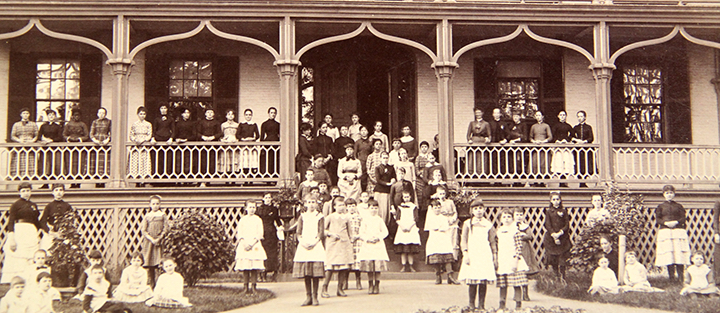
Students and teachers at the American School for the Deaf

Abashed at my own hubris in walking such an important person into the scene, I emailed one of my consultants: the historian at the American School for the Deaf. “Do you mind,” I asked with shaking typing fingers, “if Harriet Beecher Stowe walks through a scene? Could that be historic?”

The quick reply was basically: “Go for it!” Harriet Beecher Stowe and her sister Catherine, it turned out, had been close friends of Alice Cogswell, who ran the school! And in Alice’s scrap book was (gulp) an unpublished poem by the famed Hartford author of Uncle Tom’s Cabin! Here is the actual response from the school historian:

Alice Cogswell kept a scrap book, which we [were] fortunate to inherit from one of her relatives back in 1936.  The scrap book is a collection of poems, letters, and drawings from friends and family members.  She certainly did have a connection with the Beecher family because her scrap book includes a poem from Harriet Beecher Stowe and one from Catherine E. Beecher.  I have no documentation of the circumstances, but it stands to reason.  Both families were prominent in the same Hartford circles, and both women were activists in their own right.  Especially Catherine’s crusade for the education of women.  I imagine Alice’s education at ASD would have been of particular interest to Catherine.

And that, my friends, is the magic of writing historical mysteries—that every now and then, an unexpected guest walks into the scene, and turns out to uncover a real-life revelation.

Saturday, July 4, 2020

The Fourth of July in America's Past—and Today

Daniel Webster in 1835, portrait by Francis Alexander, courtesy of the National Portrait Gallery.
An 18-year-old country boy studying at Dartmouth College in 1800 was asked to give a speech at the Hanover, New Hampshire, Independence Day ceremonies. His words and his passionate delivery rocked the crowd, and the speech began his national career of service to the nation and summoning vivid language and performance, to in turn call people to action. Here is a bit of Daniel Webster's first public speech:
It becomes us, on whom the defence of our country will ere long devolve, this day, most seriously to reflect on the duties incumbent upon us. Our ancestors bravely snatched expiring liberty from the grasp of Britain, whose touch is poison... Shall we, their descendants, now basely disgrace our lineage, and pusillanimously disclaim the legacy bequeathed to us? Shall we pronounce the sad valediction to freedom, and immolate liberty on the altars our fathers have raised to her?
My second book in the Winds of Freedom series, This Ardent Flame, reveals how Vermonters took on this challenge after Webster betrayed their abolitionist goals, in forging the Compromise of 1850. It's fair to say that his legal maneuvering that year cost America dearly, in delaying the end of chattel slavery in the nation.

But the impact of giving speeches on the Fourth of July has been embraced by many another American leader. I reflect today on Abraham Lincoln's proclamation of war on behalf of the Union of American states -- which he gave on April 16, 1861, after Fort Sumter was seized by the Confederacy forces. Knowing the strands among the states were ever fragile, Lincoln deliberately called Congress to gather on July 4 to endorse his action.

In hindsight, it can feel like an intolerable delay, from April 16 to July 4. But Lincoln, portrayed by historian Doris Kearns Goodwin as a master in politics (giving, giving, and giving, until he'd call all to gather and get a task done), calculated that the patriotism of the Fourth of July would move the fragmented Congress to stand together. And he was exactly right.

The Ardent Flame was scheduled for autumn publication this year, but the COVID-19 pandemic has delayed the release until June 2021. Even so, I'm already grappling with book 3, Kindred Hearts, set in 1856 in "North Upton" (a pen name for North Danville, Vermont). In every page, in every shift of plot and character, is my own awareness that the nation was a mere five years from the war that would devastate it, far beyond any initial guesses. And I am walking with my protagonists, especially the teenagers, as they wake up to the cost of having deferred the abolition of slavery.

We, like they, are challenged to take action to address the damage done. It's a good thing to ponder on this 246th anniversary of the Declaration of Independence. May God bless our efforts to unite this land and people in liberty and justice for all.
This portrait by Joseph Alexander Ames, believed to also be of Webster, hangs a mere 6 miles from my writing desk, at the St. Johnsbury Athenaeum.

Wednesday, December 26, 2018

Learning the 1800s: Sunday Mail Delivery

As I write THIS ARDENT FLAME, set in northern Vermont in 1852, I spend a lot of time in research -- but not just exploring this pre-Civil War decade of ferment. In order to understand the thinking and discussions of the time, I often backtrack to the War of Independence and the strong-minded individuals who voiced their dreams for this new nation, built from a set of very different colonies and then growing by annexation of territory (and almost always while ignoring the history and rights of Indigenous peoples).

This week I'm reading Compassionate Stranger: Asenath Nicholson and the Great Irish Famine, by Maureen O'Rourke Murphy. One reason to read the book is as background for how the characters in THIS ARDENT FLAME deal with the Irish immigrants arriving in Vermont at the time. Another is that Asenath Nicholson, an activist of the first half of the 1800s, was born and raised in Chelsea, Vermont, not far from the Northeast Kingdom. (I've spent many hours there as the mom of an actor in a Jay Craven/Howard Frank Mosher film. Where the Rivers Flow North.)

Every detail in the book takes me digging for more details elsewhere, and this morning I "dug into" Sunday mail delivery. I was surprised to learn that it was routine in our nation's first century: It was considered essential for commerce! Moreover, the 1820s/1830s movement to end Sunday mail delivery came out of a small group with religious passions and especially religious bias -- against those Irish and other Catholic immigrants, who often used their "day of rest" to feast, gather, and rejoice, rather than to endure the silent solemnity of a Puritan-style Sabbath.

The post office with its mandatory Sunday opening (required by law to be open at least one hour each Sunday) became a social location. Not only did men gather there to pick up their letters and commercial orders, but they also often sat down to socialize, drink, and play cards. This horrified those who took their Sunday worship more seriously. Interestingly, these horrified individuals were often the same ones pursuing the Abolition of slavery, out of the same Christian beliefs!

Thus, Arthur Tappan, an ardent abolitionist of both New York City and New Haven, CT, would raise as much anger by his "Sunday mail laws" campaign as by his campaign to end slavery, and his brother Lewis, campaigning the same way, had his house broken into in 1834 by an angry mob.

Only 7% of the nation claimed strong religious ties at the time, and most opposed shutting down the post office on Sundays. The invention of the telegraph in the 1840s would ease the commercial necessity of Sunday mails. But the legislation to close the post office on Sundays would not be passed until 1912, and part of the opposition to it lay in favoring one religion over another, counter to the definitive statement of the Constitution that insisted the new nation not pick and choose. (Arguments included the belief that Sunday closing of the postal service would then lead to Saturday closing on behalf of the Jewish Sabbath, to be fair!)

What eventually tipped the nation to passing the closure laws was a combination of two pressures: postal workers wanting a day off like everyone else, and trading the closure for the new service of Parcel Post: being able to handle packages routinely.

That's a lot to think about, in the context of this week's political talk about Amazon, postal rates, and Sunday deliveries that have now resumed!

Sunday, December 2, 2018

My Brain Is Back in 1852 (Writing THIS ARDENT FLAME)

Dishes are stacked a little higher than usual. There's dust under the bed. But the chapters are unfolding, each page a marvel as I "discover" where the new book is going. My feet and my brain are in 1852 (fear not, my heart's still with my honey in 2018, and I can still cook).

Just so you can see what it's like -- at one moment I'm tapping out dialogue and moving the characters to the next scene. And then, quick, it's time to dash back into the research, like these marvelous pages from the 1854 edition of Walton's Register -- a business directory for Vermont that reveals much, much more than who owns what.


Tuesday, July 3, 2018

Independence Day for Book Lovers

Independence Day is such a great holiday in Vermont -- community events, meals shared, LOTS of pies and ice cream, and fireworks in all directions.

Many Vermont people will take part in the annual readings from Frederick Douglass's poignant and powerful speech, "What to the Negro Is the Fourth of July?" (Find some of those events here.) A few years ago, I discovered Frederick Douglass had actually spoken in nearby St. Johnsbury, Vermont -- so glad to know this!

I'll also be burrowing into writers' investigations of "independence" in many books, and I appreciated finding this in my e-mail today from New York Times editor Rumaan Alam:

Many great books for children are grounded in American history. When I was younger, two of my favorites were Robert Lawson’s “Mr. Revere and I” and “Ben and Me,” which imagine the horse that Paul Revere rode into history and a mouse who inspired Ben Franklin’s greatest innovations. I’ve got two young readers of my own, now, and one of the books I most enjoy sharing with them is “I, Too, Am America,” which marries illustrations by Bryan Collier with the enduring text by Langston Hughes. My boys are also huge fans of everything Maira Kalman does; she’s written and illustrated two children’s biographies of great presidents: Thomas Jefferson: Life, Liberty and the Pursuit of Everything and Looking at Lincoln. (Kalman has also published a wonderful illustrated book for adults that includes her thoughts on those presidents and much more, “And the Pursuit of Everything,” which I recommend highly.)
So of course, I wrote back to Mr. Alam:
I like your Independence Day suggestions! Here are a couple more, since straightening out US history is so important: Never Caught: The Washingtons' Relentless Pursuit of Their Runaway Slave, Ona Judge (by Erica Armstrong Dunbar); New England Bound: Slavery and Colonization in Early America (by Wendy Warren); The Half Has Never Been Told: Slavery and the Making of American Capitalism (by Edward E. Baptist).

These interest me because I'm trying to straighten out the picture of Vermont in the years before the Civil War, in The Long Shadow (by Beth Kanell, naturally), which is Book One of the Winds of Freedom (Five Star / Cengage).
What new insight into American history have you found this year? Was a well-written, well-researched book involved?

Happy Fourth of July!
--> -->

Wednesday, November 30, 2016

The Portrait That Lied: How a Novel Begins

When I was a child, a dark and scary oil portrait hung over my mother's armchair in the living room. This was the 1950s; she sat there with her latest library books to devour, chain smoking cigarettes and appreciating her instant coffee, sometimes fortified. We kids all knew the painting was some ancestor of hers, but we weren't much interested. Besides, my youngest brothers swore the woman's eyes followed them when they ran through the living room. (More likely Mom's eyes-on-the-back-of-her-head, as she said, kept tabs on what they were up to.)

When a fine-arts restorer cleaned the portrait a few years ago, details emerged that shocked me.

I knew, by then, that the person in the portrait was named Eleanor, and she was Mom's great-great-great-grandmother. But taking the painting out of its battered frame revealed the painter's signature, and his note of when it was done, along with the phrase, "from a profile." The date turned out to be two years after Eleanor died ... and "a profile," I'm sure, meant one of those black paper silhouettes I tried making as a kid. And the year, of course, was before photographs were common.

When I learned more about the painter, I found out that he commonly painted "postmortem" portraits. He had assistants create a background, and he used his own sense of the person (and that person's community standing) to create a face to set into the center.

Whoa! All the little details came together at last and I realized that (despite one of my cousins always insisting that great-great-great-etc. Eleanor looked like her) the image in the portrait is entirely made up -- it's fiction! Or, as a more critical historian might say: It lied.

Now, I'm already working on a couple of other novels. That's just how it goes. It takes so long to do research, and see the heart of the upcoming book, that there is always something getting into first draft, something else being revised toward publication, and something just starting in the dark ... and some day it will be time to craft a story (probably a novel, but maybe nonfiction after all) about Eleanor. In spite of her portrait being "fiction," I want the American history in the eventual book to be both accurate and insightful.

Cut to the Presidential campaign of 2016, and First Lady Michelle Obama pointing out that she's been living for almost eight years in the White House -- an elegant structure built, in large part, by the labor of enslaved Black Americans. Look also at the past few years of news that have raised the cry that Black Lives Matter, something worth thinking about often as we confront the tilted statistics of who's serving prison time for what crimes. (Vermont's not exempt from those statistics, although I hope we try very hard to earn justice.)

Why think about those things now? Well, Eleanor was born less than 20 years after the Declaration of Independence was signed. She made her living, eventually, from the shipping trade, which for America often included shipping humans. So I have to ask: What part did America's dreadful enslavement of millions of its forced immigrants (and others) play, in Eleanor's life and success -- and in the lives of her own ancestors?

And that's part of why it takes so long to do the really good research. Uncomfortable questions like this one push me to read and learn at a level I would have considered "too much homework" in high school and even college. I'm now reading Wendy Warren's shocking, horrifying book New England Bound: Slavery and Colonization in Early America. She makes it clear that in the 1600s in New England, enslavement of people -- both African and Native American -- was expected and profitable. I'm checking all the names she mentions, against those in the family tree. So far, no direct matches.
from New England Bound, by Wendy Warren

But I'm sure there's darkness back there. And for this writer, that's where we start: in the darkness, facing it honestly, and hoping that courage and wisdom and love will help build a route toward the light.

* * *
Five Star/Cengage is publishing my next book, The Long Shadow, ion April 18, 2018. It can't be a coincidence that the novel, set in 1850 in a nearby Vermont town, begins with an argument over enslavement as a moral disaster and a political divider. Slavery's long, dark shadow ...

Wednesday, January 20, 2016

Nature or Nurture? Justice, Secrets, and Love

A few weeks ago, through a connection with a cousin of mine in Israel (Inbal Jaffe), I received a photo that apparently has been legendary in my family's history. I didn't know it existed until Inbal attached it to an e-mail, but another cousin, Phillip Minden, told me he'd long searched for it. When I saw it, I looked from left to right at the "Three Henry Mindens" in the picture -- noting Dr. (of law) Henry Minden in the center, a man whose generous life I've recently learned about -- and suddenly realized the man on the right was "my" Henry Minden, a man who lived on Long Island when I was a child growing up in New Jersey. More than anyone else, more than my "real" grandparents, who all lived in England, this Henry Minden did for me and my siblings what grandparents do for their grandchildren: He welcomed us at holidays and on Sunday afternoons, hid Easter eggs around the garden for us to find (even though he was Jewish), encouraged us to play musical instruments, and gently assured us that a life of books was a very good life.


As I grew older, my parents revealed a small bit of Henry's story: He and his wife Betty had escaped Europe during the Second World War, via Holland, they said. Later, when I read the story of Anne Frank, I thought maybe they had hidden there, and been sent out secretly. But I didn't ask for more details -- in the family where I grew up, some things you didn't ask about, and most of those had to do with the War and the Camps ... the concentration camps.

Henry died while I was a teen, and I had never been to a funeral. Struggling to read my father's face when he asked me in a neutral tone whether I wanted to go to Henry's, I said, "No thank you." I think my father's relief related to not having to explain to me what I might have heard at that funeral. It was the family's job, as he saw it, to put the sorrow of the past behind, and not speak of it.

So it was that when I turned 50 years old, I knew almost nothing of my father's side of the family. He had said, to the child I was once, that "nobody close" to him had perished in the camps, or the war.

Yet the man with whom I courted that year (and soon married) said to me, "I think your father's family name is in the books in my personal library of Jewish life and history." So, far too late to ask for details from my deceased dad, I learned something in those books of Henry Minden after all ... and put into perspective the crumbs I had kept about my grandfather Ernest, who was my father's father. It took more years before I realized that I also had important "crumbs" to investigate about my father's mother, Lena.

And then everything I thought I knew about my father's family fell apart, as I found that Lena's father (I have a photo of him with my dad!) apparently perished in Auschwitz in 1942; just last year, I learned of my cousin Max who died fighting for "our side" in Italy; and now I think I've found another close member of the family who may have died in the war.

But here is what I know for sure: Henry Minden number 3, the  Henry on the right, was a kind man with a deep love of art and music, and who loved me. My father's family helped many others to reach safety and justice during the war, and afterward. And, as I have slowly come to realize, my mother's own repeated mention of Quakers in her family turned out to be a link to others who wrestled for safety and justice in America's long history -- whether in New England or New Jersey or Philadelphia.

Now I have this heritage, shakily assembled, slowly becoming more certain, of justice seekers and, put politely, secret keepers. I find that there's some of each of those in me, after all, and in my writing.

But most of all, as I realized last week, tears running down my face while I gazed at Henry's familiar face, my family has given me love.

Now, bear with me one more paragraph for an announcement: I am enormously delighted to say that the small local library in my town here in Vermont, the Davies Memorial Library, is acquiring a collection of books on social justice next month. Here are some details -- and I am happy to say that I've had a role in helping this come together:
Tuesday February 16, Educating Ourselves About Social Justice, at the Davies Memorial Library in Lower Waterford at 6:30 p.m. LSC Professor Patricia Shine and several of her students present and discuss some of the most influential titles on social justice. Books available from the library afterward. Free and open to all. Info: 748-4609 and davieslibraryvt@gmail.com

Thursday, January 8, 2015

Research = Stories. Which is what I love about this stage of the book.

It's pretty cold up here in the Northeast Kingdom of Vermont today. Morning began around minus 24 degrees (F), full of bright sunshine, and I pulled out my "long johns" and layered up for an excursion to the nearest frozen pond -- and also to deliver a book to a neighbor, and pick up our mail. It's good to realize, after more than half my life spent here, that I really do know how to dress for comfort, even in such extremes.

Plus, of course, it puts me back into the mind of Almyra, the young woman in the book I've just started writing (no title yet, but the first chapter begins right after a snowstorm: "The silence woke her. That, and the cold."

Almyra would be outdoors on a day like this -- she had little choice! And she'd add layers the way I did, although I doubt that she would have worn the pair of brightly striped Ecuadorean knitted legwarmers that made my final-layer fashion statement of the morning. But she would have loved my fuzz-trimmed hood! I already know that she seeks comfort, at the hardest moments of her life, in going to a quiet place outdoors and letting her heart become calm. Me, too.

But other than her personality, everything else about Almyra's story, set in 1899, depends on research to frame it. So I walk a lot in the nearby towns, looking for signs of the "old days" along the way. The "Gold Medal Flour" advertisement on an upper wall of the "Brick Diamond" building in Lyndonville (better known locally as the building where Edmund's Drug Store used to be) captures a bit of that 1899 commercial feeling.

The Census from 1900 also provides details that I need -- here is one of its pages showing my "target of reseacrh," Albert Stern, still living at home with mom and dad even though he's 19 -- but then again, so is his older brother Samuel, 23, and their sister Clara, 25 ... or was it just something like a family meal that brought them together with the younger teens at home, Isabelle (17) and Benjamin (15)? Here's where the author's choices take over from the facts.

Also on target this week: the Poor Farm in St. Johnsbury, Vermont, as mentioned in an article from the Vermont Historical Society; Census pages describing the Dolgin family, which didn't arrive in the area until 10 years later; an oral history project with a couple of the Dolgin family members, giving the feel of the early century; and photos of trains in snowstorms.

What's next? Well, I know it's hard to imagine, but in the next post here, I'll show you something with shillings and pence ... from Vermont!

Tuesday, July 15, 2014

Multimedia, Hyperlinks, and a Village Event in Peacham, Vermont

Peacham is considered one of Vermont's most photographed towns -- in part because at least one Vermont Life photographer lives there, and many more have visited. It's not just the hill-and-vale arrangement of church, town center, and farms that's drawn photographers here, but also the strands of local tradition and history. The Peacham Historical Society is constructing new climate-controlled storage space for its archives; the Peacham Library hosts a weekly coffee hour; and the town's small school is neighbor to a professional-level astronomy observatory.

Seven of us "local authors" joined the Peacham Library on July 4, to focus some interest on books. There was a sale of used books inside the library, and outside, under a tent, we seven offered copies of our creations, along with signatures of course. Since business was slow, we also had plenty of opportunity to share aspects of both research and the writing life with each other -- for instance, we listened to Jerry Johnson's poems set to music and performed (on CD) by Jon Gailmore, while archivist Lynn Bonfield described the Gold Rush-era diary that brought her from California to Peacham, children's authors Lynda Graham-Barber and Tanya Sousa compared notes on their paths, Alec Hastings confirmed that he's now writing a teen adventure based on the river logging of the early 1900s, and memoirist Gary Schoolcraft and I planned more author collaborations.

But equally of interest to me, especially as I reflect on overheard conversations that day, is how many media had roles in the day's offerings. Not only were we authors discussing printed books, e-books, and audio books, but we shared Internet research techniques and access. Young reporter Caleigh Cross (a novelist herself) captured images of the famous Peacham tractor parade for the local newspaper's advance website coverage. And visitors pointed to the village store buildings and talked about the films that have used them as backdrops, like Ethan Frome and The Spitfire Grill.

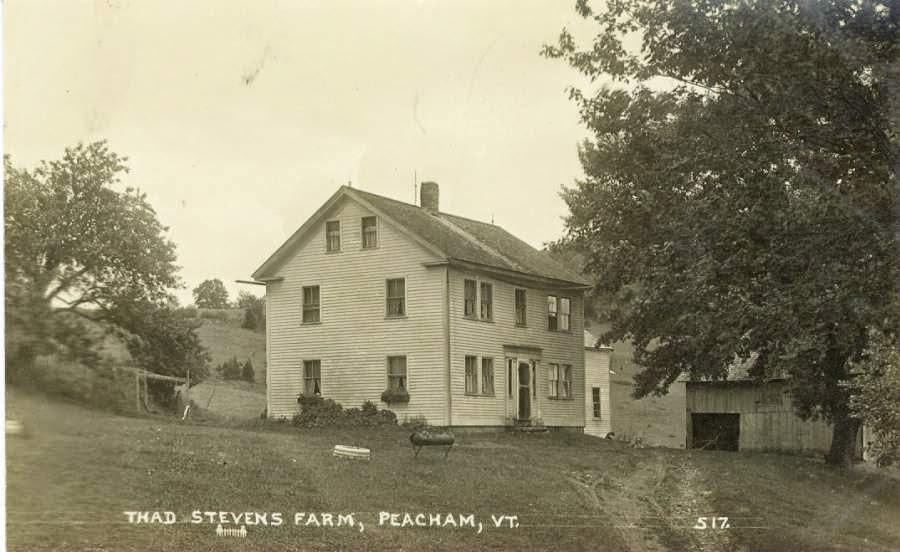
As for me, I was also thinking about Peacham history, "then" and now. I'm particularly pleased with the fresh interest locally in Thaddeus Stevens (1792-1868), who lived in Peacham as a child and became an ardent abolitionist and legislator based in Pennsylvania. The recent film Lincoln gave him a memorable face and role, played by Tommy Lee Jones. Just as important to me are the postcards Dave and I recently acquired, one showing an earlier view down "South Main Street" from where we authors stood, and the other of the house labeled here "Thad[deus] Stevens Farm."* These old postcards were the "social media" of their time, half Facebook-ish with their images, half Twitter-esque with the limited space for a message. As I collect these, along with memories of a congenial community event, I feel like a human version of a hyperlink, myself.


Our future is rooted in our past; how lovely to savor the present, and look in both of those directions.

*Note from archivist Lynn Bonfield: "The Stevens house on the hill (seen from the village) was the one he bought for his mother—he never lived there.  He was raised in a house on the Peacham–Barnet border, up the hill from the West Barnet church."

Tuesday, July 9, 2013

Imagination and Knowledge: Pillars of Good Fiction


The old adage "write what you know" is very different when applied to historically hinged fiction. There are writing days when every paragraph demands that I stop to double-check details, make sure that an easy assumption actually fits the facts. For Cold Midnight this meant compiling the small details of 1921 life in St. Johnsbury, Vermont, and some careful mapping of 1921's Chinatown layout in Boston as well.

The toughest research I've done so far was probably the five years or so leading up to The Darkness Under the Water -- in part because the emotional effects of the Vermont Eugenics Program are far from over, and people who told me about their parents' and grandparents' experience of that time often didn't want to be explicit. For example, it took a long time before someone finally whispered to me the name of a local doctor who might have performed operations in the 1920s on women whom he believed should not bear more children ... long before that whisper, I'd suspected such a presence, but it was important to confirm it.

The two photos shown here were taken just a few feet apart. One is the simple (but lush!) scenic view from the rest area on Interstate 91, just north of the Barnet, Vermont, exit. It suggests a forested landscape without many people. The presence of the county seat is well hidden -- along with the dark side of some lives in the region, as well as the thriving movement of technology and information in the towns below.

The second photo carries some details of the history of what's out there: Comerford Dam, so impressive in 1930 that for its first day of operation, the U.S. President triggered the "on" switch; there's even a description of the size of the lake formed behind the dam on the Connecticut River. But the sign doesn't mention one of the most significant aspects of this dam: It was the first on this body of water to NOT have a sluice gate for logs to pass through -- marking the end of the great river logging era in Vermont.

What we know about a landscape shapes what we believe about it. Knowledge nourishes a well-trained writer's imagination!

Saturday, May 25, 2013

Memorial Day Weekend, Concord, Vermont


Honoring the Four Chaplains.
A few weeks ago, Dave and I took a drive to Gilman, Vermont, a village of many names -- it's a village within the town of Lunenburg and was earlier named Fitzdale, but adopted the surname of the industrialist and philanthropist who changed its history: Isaac "Ike" Gilman. The lone Jew in town, Ike Gilman created employment, funded the church, provided in many ways for enrichment of village life. It's a bigger story than that, but I'm leaving it to Dave to collect the research and do the telling.

Just before reaching Gilman, we paused in another village, East Concord -- part of Concord, Vermont. Concord has an amazingly rich history, including the first teacher training school in the state (a "normal" school as the label was then), and a home where poet Robert Frost lived for a year or two. Home to many an agricultural enterprise, it also hosted Abenaki (Native American) presence, in part due to its location along the Connecticut River and its lakes and streams.

House where Robert Frost lived, Concord Corners.
East Concord has a serene white church building; a park; and a state history marker honoring the Rev. George Lansing Fox, one of the famous "Four Chaplains" whose sacrifice made such an impression during World War II. You can read the story here: http://en.wikipedia.org/wiki/Four_Chaplains

On this Memorial Day weekend, we motored over to the Concord Historical Society to see a special exhibit on Fox and the other three chaplains, including many magazine and newspaper articles, a video, and a state proclamation honoring Fox. It seemed a perfect time for the town to reflect on its homegrown hero, a man who never fired a weapon in the war but whose action saved lives.

We lingered among the other exhibits, appreciating the town's farm and logging heritage as well as its schools, doctors, and more. What I hadn't realized was the role of stone in Concord, until I saw this lovely old business sign up on the wall for Keach & Calacci -- Granite, Marble, Bronze. In Vermont history, the Italian stonecutters are usually found around Barre, where the Rock of Ages granite quarry continues to provide material for these artists. I knew they had also reached the Northeast Kingdom town of Ryegate, where there were (and still are!) also granite sheds. But I was surprised to find the Calacci family all the way over in Concord, and noted the business in records from 1928, 1930, and 1935 (listed here).

Last but not least, here are two posters that are tacked high over one of the doorways at the Concord Historical Society -- the one on the left is the shows at Tegu's Palace, one of the two St. Johnsbury theaters that I wove into my 1930/Waterford "history-mystery," The Darkness Under the Water. What a gem! And the one on the right, I am guessing, belongs with a street sign that I noticed outside East Concord during our road trip: Dance Hall Road. (It runs into Oregon Road -- more on that, another time.)

In case it needs saying, what these signs and stories say to me, more clearly than ever, is that hundreds of stories wait to be told, weaving the daily events and places of the past century into the adventures of the people, "real" and fictional, who live and lived in Vermont. I can hardly wait to discover more.

Saturday, April 13, 2013

Critical Thinking: Images and History, and Historical Fiction


When I visit groups to discuss COLD MIDNIGHT, I often point out the photo of the Chinese man that nearly led me astray when I was working out the plot of the book and its careful pinnings to the history of Chinese arrivals in northern New England in the 1880s. Here's another pair of items, located by my husband Dave, that could be deceptive. They seem to show a touring vehicle, with people on board to look around the town of St. Johnsbury, Vermont. You can see the date 1907 on the card -- the year when the noted postcard company Tichnor Bros. applied for a copyright on the clever pair of images.

However, although St. Johnsbury did indeed have plenty of tourism in 1907, these images doesn't show the "real thing." (The top one, though, has some real photo images attached to it with an accordion fold.) The cards are among many that were created where town names could be set into the card, and orders placed for "anywhere." Often the cards like this are amusing, and some are romantic, but ... they are stock images, made by the card company without ever visiting the town named on them! That also leads to another entertaining side of the cards as we collect them today: On quite a few that we've seen, the town name has been misspelled!

But it's all in fun, and it was a classic of a hundred years ago.

Just don't count on these for "pictures that show the real thing." They show effect of the tourist trade, instead!

Monday, March 4, 2013

Research for Another Novel: "The Fire Curse"

Historical fiction requires years of research for most of us who write it, and the closer we get to the time of writing, the more "picky" we get about details we need -- the length of a skirt, the exact movie being shown, a song being shared.

I'm still in the "wide open" stage of preparing for a book I've tentatively titled The Fire Curse. Recently the Fairbanks Museum & Planetarium in St. Johnsbury, Vermont, closed for two weeks to allow a team to install a "fire suppression system" -- the sensors, electronics, pipes, and pumps that can fight a structure fire before it takes lives. The museum's staff kindly welcomed me to look behind the scenes, and a couple of installation crew members paused for a few minutes to answer some questions that I had. I won't give you details now --- but I wanted to share these photos, because they show something you'll never see again: the moveable scaffold that the installing team created, to slide along the balcony railings upstairs, giving the crew access to the vaulted ceiling of the museum, where sensors and spray nozzles needed to be carefully place. Can you spot the antlers, polar bear, and other museum artifacts here and there?


Sunday, March 3, 2013

The Underground Railroad in Vermont: Call It the "Aboveground Railroad" Instead!

Jane Williamson, director of Rokeby, Vermont's premier authenticated Underground Railroad site, often points out how literal the thinking is of third graders, who arrive at her historic center, eager to see the "trains that run under the ground." She has many other things to show and teach them, but sometimes they are still baffled that they haven't yet found the train.

With adults, both director Williamson and I find widespread attachment to the romance of the Underground Railroad myth in Vermont. As she says, it would be better to call the movement of African-American fugitives here in the 1800s "the Aboveground Railroad." Most Vermonters believed slaveholding was immoral, and that all humans should own their own lives. Dark-skinned fugitives arriving in the state weren't just assisted in their travels -- at places like Rokeby, they also could polish their skills for independent living and move toward owning their own land and businesses, from earned wages that they saved. Moreover, Vermont was so far from the slaveholding states of the American South that the vision of the fugitive cowering in a hidden room while the slavehunter passed by was a fiction; African Americans worked on farms, established homes, and nurtured their families here.

Many otherwise well-informed adults still leap to the conclusion that a "hidden room" in Vermont had a connection to the heroic labors of the Underground Railroad. Usually there are other reasons for such rooms: for hiding alcoholic beverages, or money, or, much later, Chinese migrants barred from entering America from 1882 to the First World War. Sadly, some rooms may have been the final resource of family members who weren't "fit to be out in public." Increasingly, rooms found near chimneys or in much-rearranged homes are remnants of homeowner layout changes -- say, changing from a wide old fireplace to a narrower chimney for a furnace.


At the Goodwillie House in Barnet, Vermont, a site that plays a role in my book The Secret Room when Shawna and Thea visit to test some of their ideas about the Underground Railroad, there is a double-walled section of the cellar that long had a rumored description as an underground railroad hiding place. I'd rather see it as a place the Rev. David Goodwillie -- who served Barnet as pastor, postmaster, and more -- might have put a few things he didn't want all his relatives to see. Or perhaps his wife stored the best potatoes and carrots there, to still have a few by the time the winter dining reached Easter Sunday!

Here's a newly acquired portrait of the Rev. Goodwillie, as well as a photo of the brickwork inside the house. There's a lot to explore here, and a lot to discover. Historical research backs up the best of the stories of the Goodwillie House, and one of my favorite bits is knowing that the family here had the first sheet-iron stove in town, and even added pipes to bring water inside the house, quite an innovation at the time.

The Barnet Historical Society opens the Goodwillie House several times each year, and often the town's eighth graders welcome visitors. Inquire for details or make an appointment: http://www.barnetvt.org/historical.php

Friday, February 8, 2013

History Mysteries: Beverly, Mass.

Me, happily preparing for another session at The Waring School
Recently I visited The Waring School in Beverly, Mass., where students filled me in on Waring's two basic commandments ("Don't be mean. Don't be stupid.") and what it's like to take part in this intense and people-focused 15-student college preparatory school. I learned a lot -- and enjoyed sharing writing skills, revision systems, and the three books I've brought forth so far that are historical fiction, hinged where our view of "what happened then" is being changed by our culture and our ability to study the past. These books are also mysteries, with young adult protagonists fighting for truth (The Darkness Under the Water; The Secret Room; Cold Midnight).

Here are some possibilities for launching "history mysteries" set in the rich history of Beverly, Mass.; if you teach a group where your local version of this could be of use, or are a student who'd like a set of these for your classroom, e-mail me (BethKanellAuthor at gmail dot com) and I'll be glad to work up a set for your town!

BEVERLY, MASS., HISTORY MYSTERIES STARTING POINTS

1.  1626, Richard Conant and his "company of fishermen" arrive from Cape Ann, in Naumkeag territory: (a) Who were these fishermen? What secrets did they leave behind them in Cape Ann -- could one have "needed" to leave the larger town, due to a feud or other family disaster, and drawn the group along with him to disguise his real motives? (b) The Naumkeag river Native American village was "ancient" and was a "trading center" in the past. Suppose one of the traders had been immoral in some significant way -- and the new settlement reveals what he did. Who will "police" the settlement? Can justice be served? (c) (for those who like paranormal thrillers) Just how "ancient" was that Native American village? Do the voices and passions of its leaders linger? How might they appear, even today, if not yet appeased in terms of who is using their land?

2. "The John Balch House (circa 1679, but for many years was purported to have been built in 1636), located at 448 Cabot Street, Beverly, Massachusetts,  is one of the oldest wood-frame houses in the United States." The age of the house was established in 2006 through "dendrochronological testing" (that's related to trees and wood, right?). Find out the details of the testing. Who could have had a motive for wanting the house to stand as 1636? Who could have set the testing equipment (maliciously) out of kilter, or broken it the first time it was used? Maybe the testing team includes a descendant of John Balch ... and the timing of the house will determine whether this person might inherit rights to some extremely valuable land, or to a painting, or to water rights. Also, who was John Balch -- could there be a mystery about why certain people in his family die young??

3. Beverly is the "Birthplace of America's Navy" because the first US military ship, the schooner Hannah, was outfitted at Glover's Wharf and first sailed from Beverly Harbor, Sept. 5, 1775. Marblehead disputes the claim of birthplace. (a) Set a mystery on board the Hannah where an important Revolutionary War battle or declaration could depend on what or who the ship is carrying. (b) Try a modern-day feud between Beverly and Marblehead town leaders that seems to be about water treatment but in reality is about being able to claim the naval birthplace title -- for the sake of, say, being able to host a prestigious sailing regatta. Crime involves both the research into the schooner, and a drug run during the regatta.

4. Why did Beverly become the site of America's first cotton mill in 1787? Set a mystery among the child laborers there, and it can include a cache of gold dubloons from piracy (common in the early years of the nation). Add a romance component -- were women allowed to work in the mill? How could you find out?

5. Beverly's separation from Salem took place during a religious disagreement. Track down the parties who disagreed, and their descendants. Can you tie this to the Salem Witch Trials (which took place on terrain that's now part of Danvers)? (for those who want to write paranormal thrillers) Could there be something geological or geographical about Beverly that draws religious controversy? What if a witch trial arose there today, based perhaps on resistance to vaccinations (which many people now believe could affect the incidence of autism spectrum disorder)?

6. The buildings that were once the United Shoe Machinery Corporation (1902-1987) developed in the late 1990s into a campus of high-tech companies and medical offices. Suppose the x-ray and other imaging technology accidentally revealed a double wall in one of the buildings, and evidence suggested a 20th century Mafia connection, long since vanished -- who would want to silence the discovery? Who might profit from it?

7. How did President Taft decide to rent a summer White House in Beverly? (1909, 1910, 1911, 1912). What made the experience so important -- as revealed by Beverly Hills, California, being named for Beverly, Mass., in 1907, because Taft had vacationed there? What secrets do Presidents leave behind? Could the start of World War I have been avoided, if Taft had made a different choice during his vacations in Beverly? Look into whether there were German residents at the time, and whether any diplomatic visits from England or France took place in Beverly then.

8. Beverly's current groundwater pollution issues stem from (presumably) the old Nike missile site on L. P. Henderson Road, and the Casco Chemical company. Suppose a whistle-blower had brought attention to the issues earlier; what atmosphere of threat could have followed? Would the town leaders have wanted the issue covered up at a particular time -- say, when the Vietnam war protests were happening? Who might your lead characters be: perhaps a draft protester? A reclusive chemist? A fishing captain who suspects why the catch has changed?

"This Is the Real Thing": THRESHOLDS, an Exploration of Transitions

My new book of poems. Available in bookshops and online. My buddy B and I shared a long lunch at a community restaurant today, and wrapped i...