Showing posts with label writing process. Show all posts

Tuesday, September 2, 2025

How the WINDS OF FREEDOM Series Reached Book 3


Both softcover and ebook available!


Blame it on that heirloom gold locket that my dad gave to me, after my house burned to the ground. The midwinter fire devoured all the jewelry my mother gave me over the years, all her knitting projects, a half-made crocheted bedspread for my youngest brother that I claimed after her sudden death a few years earlier, saying, “I’ll finish it for you.” Raging on a twenty-three-degrees-below December night, the fire took our clothes, my work, the children’s new Christmas toys. None of that compared to the importance of the three of us escaping, with burns on our faces and frostbite on our toes, from sock-footed hike a third of a mile to the nearest neighbor.


Dad drove north to check on us, a day later. He brought some family photos, thoughtfulness that impressed me; he brought my youngest brother the contractor, who’d never receive that bedspread after all, but who brought me boxes of his spare tools; and he brought the locket. Gold, shaped like a tiny box on a short chain, it opened to emptiness. No photo of anyone inside, but I saw an intricate gold grating that flipped outward. “It’s a hair locket,” he explained. “You put a lock of hair of your beloved into it.”


During the night of the fire, a mile from where my ex-husband lived, the only “boyfriend” in my life was playing music in New Orleans. He got a busy signal when he tried to phone me, and bitterly assumed I’d taken the phone “off the hook” to silence it during a date with someone else. Days later, he’d finally phone a neighbor and learn that a fire burns through phone and electric lines. I didn’t put a lock of his hair into the locket; he left not much later, for a dancer he’d formed a crush on.


When I turned fifty, in accordance with the answer a prayerful friend of mine had received, I met and fell joyously in love with my soulmate. By then, the kids were grown and gone, but on their rare visits home, they agreed I’d finally found the right partner. Next time my darling got his hair trimmed, I collected a curl and popped it into the locket.


Historical fiction already meant a lot to me; a lifelong history writer, and a fumbling novelist, I found the combined threads satisfying. And I wanted very much to give readers a vicarious experience of Vermont’s approach to the Abolition movement and to diverse settlers (setting aside for the moment the state’s sometimes cruel treatment of Native Americans; I’d addressed that in my first work of historical fiction, and the book is a classic, The Darkness Under the Water, but also controversial). I figured, if readers followed along with the teens in my new story, they’d discover for themselves that Black people in Vermont in the 1850s were “free and safe,” as one of the state’s great historians puts it.


If you haven’t yet written a novel, this might surprise you: Often the characters stubbornly diverge from where you thought they were going. So did the girls in The Secret Room: One morning, halfway through writing, I realized at least one of them would head into a dark collapsing tunnel, in a desperate rescue effort. As dirt fell into her eyes and mouth and she moved resolutely forward, one hand landed on an object that she reflexively tucked into a pocket. Later, in daylight, she discovered it was an antique locket.


Yes, there you have it: Dad’s little locket had crept right into my story. So it felt obvious, later, that I’d write another novel, this time set in 1850, when that locket first hung at the throat of a Vermont teen. That turned into The Long Shadow, a book I’d never imagined would be the first of a series.


Yet when I turned it in for publication, the cheerful editor said, “I hope we’ll be hearing more from these characters!” Shaken, I asked, “You mean a series? How long?” She replied, “How about until everyone is free?”


It doesn’t take a lot of American history to recognize that “when everyone is free” probably means the end of our Civil War: 1865. If I wrote a book for each year from 1850 until then, there’d be 15 books in the series. A nifty idea! However: My teenaged characters from the first book would be in their thirties. That wasn’t an age I wanted to write about – I love the voice of a teen observing her world. How could I solve this?


It took another week for the idea to arrive: If the teens had a reason for vanishing from the village at the end of each book, or maybe each second book, and the next book’s protagonist became a girl who’d been younger at the start, and I kept passing it along that way — well, you see how it would work, right? Sort of a relay race, passing along the Vermont fight for human liberty to each new girl, or set of girls. Yes! On the spot, I decided (since I’m far from young) that there would be two-year jumps between the books in the series. That meant seven or eight titles, which seemed workable, as long as I took my vitamins and avoided any repeat of the disastrous housefire.


Now we are in book 3 in what the editor and I decided to call the Winds of Freedom series. Almyra Alexander, who showed up in book 2 as a fashionable girl from Boston, longs to be a minister, a difficult if not impossible path for a woman in 1854. The Vermont village, with its changing ideas about people and their roles, may give her a way forward toward her dream.


But first she’ll have to puzzle out several newly arrived women at the local tavern, what they are carrying around the county, how to handle an aging criminal who arrives while her uncle the minister is out of town, and whether she can effectively assist the cause of Abolition.


If you’re ready to find out whether Almyra is up to those challenges, and what the risks are, and what allies she’s recruiting — get ready to read The Bitter and the Sweet.

Tuesday, April 1, 2025

Amelia Earhart and My Mother: Another Reason to Write Poems

(Tap the image to read the poem.)

There are scraps of paper piled at the far right corner of my desk, bits of poems emerging. I've learned to write down "something" when the notion or metaphor or string of words comes tapping.  The more important they are, the more quickly they seem to vanish if I don't write them down.

This poem, though, came via a different route. My mother died "too soon" at age 53, while I was pregnant with my second baby. I needed to grieve and mourn, but I was also afraid to cry too much or too hard -- I didn't want the baby to arrive early, from my own stress. So that was a hushed-down, tamped-down farewell from me, while my younger sister assigned to herself the tasks of steering our father into his own new life chapter.

In the years since, one of the frustrations (of course) has been the many questions I would have asked, if we'd had more time together as two generations of mothers. But I've also learned to question the notions I had about who my mother was. We don't show our adult selves in depth to our kids when they are too young to understand.

My mother, when she was 8 years old, experienced the death of her own mother, from breast cancer. I knew that. I didn't know until pretty recently that as a child, she'd been an outcast among her New England cousins -- Joanie, the girl whose mother died, and who was fat, too. And unskilled with other children. 

Another thing I knew: that she resented being told she must touch the cold dead hand of her mother's corpse in the casket. She said it robbed her of other, warmer, memories of her mother.

What I didn't realize until this poem began "appearing on paper" was how close the timing of Mom's mother's death was to the mysterious loss in flight of Amelia Earhart. As I put them together, I began, strangely, to understand more about my mother. 

Which, of course, also means I learned something about myself.

Much appreciation to New Feathers for including the poem in its newly released anthology


Friday, March 7, 2025

Lyric, Lyrical, and Is It Poetry Yet? A Story About Writing

Barnet VT post office, Wikimedia Commons, photo by Jared and Corin (Thanks!).

I've signed up for a class this weekend on the lyric poem. The price to enroll equaled a week of groceries. Trust me, at that price, I spent some time soul-searching before pressing "Register" for the class.

The moment that changed "everything" for the way I write happened at a rural post office in a small village many years ago. And it wasn't about a poem -- but about a story I'd written, fictional but framed with things I'd experienced, and published in a very small regional newspaper.

My mail carrier was just coming out to his truck when I was entering. He stopped me at the door, beaming with pleasure. "That story of yours, that was a good one, did it really happen?'

"More or less," I said. He grinned. 

An explosion was taking place in my chest. THIS. This was why I was writing. For my neighbors to read all the way to the end of a story or poem and wonder, Did this really happen? Or, equally good, So someone else has felt the way I did, imagine that!

This episode saved me.

I'd already been to a couple of sessions of the Bread Loaf Writers Conference, where people I'd never heard of stood at the front of the lecture hall and read aloud their work, most of it so foreign to my life (like, tied to Greek heroes, or braiding together angels and the Irish with some foreign words as well) that I felt smaller and smaller. I'd brought my very best poems, the ones I really cared about, and one of them made it to a critique session. The mostly unshaven poet in charge, who lived in a city a thousand miles a way, lifted my page, waved it in the air, and said "This says nothing to me." He dropped it back on his desk and went on to someone else's poem. Frozen into stillness, I watched my page flutter to the floor.  

At the post office, though, later that year, I finally understood: When I'm writing a poem, I can't care whether a city resident from a very different culture "gets it." It would be nice, sure, but ... what I care about is whether my neighbor recognizes that same feeling about the bird feeder, or the cold spell, or the pain of wanting to fix your grown child's life and make it all better ... and knowing it's no longer your business to do that.

Literally decades later, after the death of my much-loved (much-missed) husband Dave, I took another long look at what was going on with my poems. Maybe you knew Dave -- if so, you won't be surprised to hear that he didn't really "get" my poems. But oh man, did he ever love to bask in a poetry reading by an outstanding poet like Jane Hirshfield or Galway Kinnell or Donald Hall or Ellen Bryant Voigt. No fancy language or critique from my darling, though. He'd push back in his seat afterward, look at me with glowing eyes, and say "That was the real thing."

So now, even with Dave's body out of reach, I wanted to bring my poems up to a level where if Dave were blindfolded and the sound was distorted so he didn't know it was his own spouse, he might listen for forty-five minutes and say what he said about those other poets. Not for everything I write, maybe, but for some of them. Workable goal? 

I began by applying to my stash of poems some lessons that Vermont (and nationally awarded) poet Sydny Lea gave me one afternoon on the front porch of Robert Frost's home in Franconia, NH: Circle any "new" language -- the surprising phrases and twists. Cross out bland words. Pay attention to how lines of poems end and begin, making them stronger.

It was working, I thought. But the handful of poems that I mailed or emailed to publishers and contests still resulted in polite "canned" rejection notes.

Then another Vermont poet, a woman I trust deeply, suggested that I take a class with poetry professor Ellen Bass -- thanks to the pandemic, the class would be online. This time the price, covering six sessions, added up to three weeks of groceries. In the fine print though was an invitation to explain your situation if you'd like a scholarship. I did (husband recently dead, finances a disaster, barely scraping by) and golly gee (as people used to say), a response said Yes. Scholarship awarded. Come learn.

It would take more than six weeks to explain now all that I learned from this gifted teacher, as I kept taking more of her classes, and carefully setting aside the money in advance to pay properly. But I can give you the single most important thing that I inked onto a piece of posterboard and taped to a nearby wall: 

"All poems live or die on their capacity to lure us from their beginnings to their ends by a pattern of sounds." 

That's from another poet who liked to teach, James Longenbach.

A pattern of sounds. When I added that kind of attention to how I was writing and revising, poems began at long last to get published beyond my local paper. Dave would be excited about that ... 

So that's why I'm blowing the price of another week of groceries on a class focused on "lyric" poetry, because I suspect that's the proper term for what I'm writing now. I really enjoy it.

Oxford Languages describes lyrical this way: expressing the writer's emotions in an imaginative and beautiful way.

Watch for the poems. With Dave out of the room, I'm counting on you to let me know when it's "the real thing."


Every Word Matters: A Touch of the Irish

design by Vermont's Danforth Pewter

Writing historical fiction, like my three volumes (so far!) in the Winds of Freedom series, means paying attention to all the little words. It's not automatic to "speak" in the rhythms and vocabulary of another time, and there are days when I spend more hours checking language than I do pushing the plot forward. What did counterfeiters call each other? How did Canadians talk about the "money artists" living in their Eastern Townships? If you're adapting your best dress to a new style in 1854, what do you call the trimmings that you're stitching, if you're classroom educated or if you're happier helping with your father's horses?

All of those came into play as I wrote The Bitter and the Sweet, where Bible-studying Almyra Alexander needs to reach across class and social lines to admit she needs help from Susannah Hall in order to climb into a saddle. Riding a pony in Boston certainly didn't prepare her for carrying urgent messages while perched high above the ground on a full-size horse. (Don't get me started on how tall the horse was. Thank goodness for true experts like Amanda Gustin at the Vermont Historical Society, who can talk clearly and with authority about Vermont Morgan horses.)

As a poet as well as a novelist, I also want the words to sound fluid and interesting in the reader's "ear." One result of that is that I sometimes recognize my own writing in places I hadn't expected to see it -- a description of a local town that someone borrows from my own, posted online, or a review on the back of a book, mentioning the author's earlier work. 

Yes, that's a great gift of being a published author: If you choose to, and don't mind working without pay (we can discuss that more at some other time), you can get involved in reviewing other historical fiction. I treasure the chance to do that for the Historical Novels Review. It can be a great challenge to devour 400 pages, then work out a description to guide other readers -- condensing it to 300 words,  which is a bit less than a page. (The end of that sentence reached 359 words here, just to give you a better notion.)

One book I am reading for review this week is set in the 1850s, like my work, and by 10 pages into the story, I realized its author didn't care about language in the same way that I do. Probably the most shocking moment was when one of the characters, of Irish heritage, referred to Irish immigration to the United States as caused by "the potato famine." That raised two problems: First, Irish immigration began much earlier than that, and Irish Americans were well represented in our patriots of the American Revolution. Second, and what drives me to write about this today, is I knew that the Irish didn't say "the potato famine."

At least, I was pretty sure. But it's part of my way of writing and researching, that I needed to check. So I pulled out one of the vital books on my reference shelf: The Story of the Irish Race by Seumas MacManus. It came to my collection during the writing of Cold Midnight, a novel set in 1920 in St. Johnsbury, Vermont, when many people working for the well-to-do came from Ireland. And I bet you might not ever have heard of Seumas MacManus, because he died in 1967, but here's how he's been described: "Seamus MacManus is considered by many to be the last great seanchaĆ­, or storyteller of the ancient oral tradition. He wrote down and interpreted traditional stories so that they would not be lost to future generations." (Wikipedia summary.)

Sure enough, his chapter LXX starts on page 602 (people did write longer books then), and is titled The Great Famine. It begins:

The Great Famine, usually known as the famine of '47, really began in '45, with the blighting and failure of the potato crop, the people's chief means of sustenance. 

You'll search long and hard for a copy of that book. But you can get a marvelously well-written modern (2015) exploration of America's relationship with that part of Irish history in Maureen O'Rourke Murphy's book Compassionate Stranger: Asenath Nicholson and the Great Irish Famine. Are you hooked on Vermont and its history? Asenath Nicholson was born Asenath Hatch in Chelsea, Vermont, on February 24, 1792.

Give yourself an adventure for this month of St. Patrick's Day: Look up a bit more about Asenath Nicholson. Let me know what you think, when you discover what she did. 

And I hope you noticed the phrase "the Great Irish Famine." Not the potato famine. See, you're already gaining an ear for the well-chosen words of  well-written historical fiction. Go ahead, tell someone else what you've discovered!


Friday, January 17, 2025

MAPS: Poetry, Historical Fiction, and My Mind


It feels like I've always loved maps: looking at them, figuring out how places are connected, planning trips, and with historical fiction, discovering more about how things used to be. One of my pleasures has been trying to re-draw maps of the two neighborhoods I lived in as a kid, seeing how many family names I could still place on the houses.

So I was very surprised to learn, some years ago, that maps are not intuitive -- someone has to sit with you and show you how they represent places and distances and relationships. Ever since then, I've tried to include them in school presentations, and once helped a kindergarten/first grade create a map of their town and the bus routes, on an old white sheet.

This map of my home town of Waterford is such a big reference item for me that I have it on the refrigerator, not on the front (where grandkid items and medical appointments may cluster) but on one side, all to itself. Even the smallest notes and family connections on it remind me of things I should make clear in my 1850s historical fiction. I depended on "old" maps of Peacham and Danville for THE BITTER AND THE SWEET. I needed to know the turns that Almyra would make with the horses, and what she'd see along the way.


In the past few months I've tried writing poems in clusters around themes, and MAPS became one of them. So I was tickled when Hole in the Head Review published this one. If the type here feels too small, look on their page at this link.

What kinds of things might you "map" about your life -- as a kid, or now? 


Wednesday, January 8, 2025

"Day Job" + Poem = A Winner ... in Lit Shark Magazine's "The Best of 2024 Anthology"

Where do poems come from? Each one comes differently for me. My "day job" is copyediting articles and books written by other people, often in the sciences, and one day I noticed some writing about resilience in nature -- how it happens, how to plan for it as you work with your yard or woodlot or forest. 

It sounded good, but I was having a tough time that day on the personal side, really missing my late husband Dave and the way two people do things so much differently from one alone. So I felt a bit skeptical about "resilience." And maybe a little guilty, too, because I don't want to feel sorry for myself. Dave and I had a great "run" of 17 years and there are plenty of great memories. Plus I grew into a different kind of person through that marriage and his constant curiosity and encouragement.

So the poem became both a talking-back to the article, and another bit of the grief process. Lit Shark Magazine's editor chose it to be one of the Poem of the Month group last summer, and she also pulled it into this year-end anthology.


Then the editor had the notion of asking for an "old" poem from each of her poets, to add to the anthology -- actually she asked for three so she could pick one -- and that's how Never-Ending List also slid into the pages!

 There are such varied and tasty poems in this anthology. To pick up your own copy, here's a link to the paperback version (you'll see a hardcover is available too, for an extra $5). Let me know if you opt to buy one ... I'll be thrilled.

Friday, January 12, 2024

"Ekphrastic Challenge" and the Moon Shot

Dave and I went to Littleton in January 2016 to hear Chris Christie in person—Dave's way of listening and inquiring.

The literary journal Rattle offers a monthly "ekphrastic" challenge, where poets write from what the presented artwork suggests. The challenge was on my to-do list today. I shocked myself by writing a political campaign poem, nothing I'd ever considered doing.

But the roots of this action were clear: Earlier today, to provide support for a very ill teen, I looked up some of the memorable quotes from John F. Kennedy, whose years as US President marked my life. Well, I was young and naive! It hurt, years later, to learn some of his flaws, see the shadowy nature of his "feet of clay." 

Yet many of his words (yes, co-written by Ted Sorenson) still inspire me:


So here's a relevant (and now "vintage") postcard image, showing how JFK's moon program continued, after his assassination:


Friday, August 11, 2023

The Writer, the Page, the Reader: A Magical Triangle


If you were a shy kid in elementary school, you will see entirely different things in a poem than your neighbor will, who arrived in first grade with friends from the neighborhood.

If the first time you made love was with the person you married, romance as a thread in the mystery you're reading may feel familiar and make you chuckle; when you've just concluded an acrimonious divorce, you might skip over those pages.

That's why I think of a piece of writing as one point on a triangle; the other two are who I am, and who you are. Good writing leaves room for the triangle to spin in different directions, expand, make a fresh angle, and rise into a second dimension. Yet the triangle, the bond between story and reader, must remain resilient and still touch all three anchors.

On August 12 at 5 pm (Eastern time), I'll bare my reviewer "chops" on Medium.com and offer a tips session for writers of haiku to short story to novel -- even applicable to nonfiction feature articles. There'll be some time for questions and answers, maybe even controversy.

Please do stop in and check it out! Scan the offerings for Medium Day and register here.

Meanwhile, a couple of sites with intriguing material on "endings":

https://www.masterclass.com/articles/how-to-write-the-perfect-ending-for-your-novel

https://www.emwelsh.com/blog/find-best-ending-story

https://scribemedia.com/write-book-conclusion/

Make A Promise In Your First Chapter: How-To Tips And Q&A For The Writing Life

Whether you’re writing a segment about your life, insight into history, a feature article, a novel, or a poem (yes, even haiku!), you’re laying out a path, an adventure, for your reader. There’s a reason for every ending: It seals the promise you make in your first line or paragraph or chapter. Then satisfaction makes your reader say, “Ah, that was good!” This seasoned author and reviewer shows how crafting your opening builds a promise to a reader. Discover the power of a beginning and ending that fit together (even when they have to fit head to toe). Gain a strategy for writing stronger and more memorable work. You’ll shape your writing with fresh insight from this chat.

Tag:Writing
Beth Kanell Writing That Braids Loss, Joy, Love

Friday, June 9, 2023

Book Recommendations: A New Review Feature on This Author Blog

Grieving under the wildfire smoke.


This 'n that, first: As usual, I'm working on four writing projects at once. One's a mystery novel that's gone through a couple of major revisions -- since the focal point of the crime had to change entirely, when Vermont laws changed. I'm looking for a publisher for book 3 in my Winds of Freedom series; the one who'd eagerly said "yes please" discontinued its Frontier Fiction line as the pandemic wrapped up. I've always got poems underway and am taking a course in ekphrasis, poems that respond to or interact with visual art. Wild! And in that magical moment just before sleep recently, I saw a way to entirely rewrite Queen of the Kingdom (a Northeast Kingdom contemporary novel) that I think I've got to indulge, for the fun of it.

That's the "output." I need good "input" to do all this -- some comes from daily walks, some from friendships, some from sorting the past in my ongoing memoir on Medium.

But for me, the biggest and best influences are conversations about books, and reading good ones. Here are some I'm recommending:

Tom Piazza, The Auburn Conference. A young college professor in 1883, Frederick Olstead Matthews, is desperate to make his mark and impress the college (and wider public). So he invites a handful of prestigious authors to come talk about The Future of America. Do you expect Mark Twain to get along with Frederick Douglass? Walt Whitman to treat well Harriet Beecher Stowe? What about Herman Melville's personal despair ... and what may happen when a local and equally eager journalist decides to spark things up by personally inviting a group of suffragettes, or when Twain turns mischief maker? At just under 200 pages, this short lively novel turns out to be a perfect frame for merriment, grief, and a timely look at American Dreams. University of Iowa Press (bless their heart).

Nilima Rao, Disappearance in Fiji. No sign here of being a debut novel -- Rao, a Fijian Indian Australian author, spins a deft tale of a religious Sikh whose police career has self-destructed, landing him in a racist work environment on the island of Fiji in 1914, as the world heats up for major war. Akai Singh holds human values and justice dear, which takes him digging more deeply than desired into the case of a disappearance: searching for a vanished immigrant worker, a mother from India, practically enslaved on a plantation where Akai's investigation is totally not wanted. Timely in its framing of the evils of colonialism, the book offers both a tidily told mystery and multiple cultural perspectives. From Soho Press under the ambitious and global Soho Crime imprint.

Rebecca McKanna, Don't Forget the Girl. What have true crime TV shows and books done to us? Hardened us about victims, fed a fascination with killers? McKanna's thriller poses one nasty situation after another. I hated reading it, because every chapter made me more miserable, but ... it sure gave me a lot to think about. If you're a true crime junkie, grab a copy. Sourcebook Landmarks.

I'm also re-reading A God in the House: Poets Talk About Faith, a set of interviews with poets about their religious backgrounds, discoveries, and passions. Ukrainian-American Jewish poet Ilya Kaminsky (find his poems elsewhere, online and in his books) and New Hampshire novelist Katherine Towler asked hard questions, and persuaded Carolyn ForchƩ, Gerald Stern, Kazim Ali, Jean Hirshfield, Jean Valentine, and other heroes of modern narrative and lyric poetry to answer from personal experience and heartache -- and joy. I keep adding more bookmarks to my copy, for provocative assertions that I want to consider further. The book came out in 2012 from Tupelo Press; I should schedule another re-read for myself every couple of years. SO worth it.


Monday, May 22, 2023

Where Poems Come From


A few weeks ago, I wrote a bluebird poem for an old friend. He makes bluebird houses. Also he makes poems. Later he asked me: "Did you just sit down and write that poem, just like that?"

"Nope," I answered. "It had been brewing for a few weeks."

For me, that's how it goes. One morning the last straw lands on the camel's back, or a spark catches on a shred of paper under a heap of sticks, and it's time to shut the visiting dog into her crate for a bit, so I can focus on the keyboard instead of delivering scratches, pats, and "good girl" crooning.

Today three poems erupted, after a long-ish dry spell (long for me, anyway). There's fourth one stuck in my chest, like a burp that refuses to escape. Well, maybe later.

At any rate, to reassure those of you who panic about when and where poems "come": I've had a self-assignment of topic for these, for about a month, with no lines crafted at all. Reading an essay this morning on how passages in the Torah are crafted, I found a Greek-rooted word that was new-ish to me: chiasm. By the time I'd looked up several aspects of it, I'd also found a poetry structure I wanted to try out, and realized that it's the word for the way our eyes and brain cross over information, inverting it into what we "see" in front of us.

Which led, at last,  to an opening I could step through, into a poem.

When I didn't care so much, it was easier to "toss off" a poem. Now, though ... it's a day's work, and more. Which, I admit, is how I like it.


Optic cabling -- a graphic by Ratznium. [Ratznium at en.wikipedia, CC BY-SA 3.0 <http://creativecommons.org/licenses/by-sa/3.0/>, via Wikimedia Commons]


Tuesday, November 1, 2022

Not Every Poem Will Be a Great One ... but Still ...


Tis the season -- poetry classes have resumed, and I'm awake in a new way. Yes, the brisk November air helps, and so does the temporary end of garden labor. But to spend hours with a gifted teacher, being shown what works, what makes a poem strong, vibrant, joyful or tragic -- that's a whole other kind of awakening, and I'm thriving with it.

There are "exercises" after each class, and they've become my favorite homework. Sometimes they lead me to write poems that I'm really excited about, leaps in skill that mean a lot. At other times, like today, I step onto uncertain ground, and craft a "first try" that's heartfelt but not yet powerful. And yet, I love this stage, too: reminiscing, trying to pull out strands that (if the last class is anything to go by) will in turn pull up other feelings and images, and in a week or so, I will make a new discovery.

For today, I figured I'd write about missing my mother. It's a normal part of life to have one's parents die —we don't like it, but it's part of how time works. My mother died when I was just 28, heavily pregnant with my second child. I would have loved more years with her, but ... it didn't turn out that way.

Still, I hold her close.

Singing Your Songs


Clementine and “Wait for the Wagon,” ballads and longing

and lullabyes—after your sudden death, I searched

the secondhand stores for a copy of your book, Mom:

American folk songs. Jeannie with light brown hair. Old Smoky.

Lines that rhymed and endings sweetly certain.


In the key of C, you’d lift each tune till Dad could not resist:

his deep rumble, half a note off, happily sharing the car’s front seat.

Down by the old mill stream. John Henry. “In the evening

by the moonlight,” music that once soothed raw throats, tended

sore bodies, beside long-ago fields. If a mother sang it,


or a worker made it ring out freedom, you did, too. No regrets.

No holding back. You made your choices (a man, some babies),

planted black-eyed Susans, pressed tiny purple wildflowers

between the soft pages of old phone books, taught us all the verses

though I needed the book afterward, so many words. So many.


Sing with me now? Death’s still the same, four decades on.

I miss you, Mom; I’m walking with all of your songs.


-- BK

Tuesday, July 26, 2022

Poem after Poem ... on a Blue-Sky Day in July


Last night just before I dug into my late-night reading, an email arrived, accepting three of my poems for the summer 2023 issue of Soul-Lit Magazine. What a wonderful gift to the evening! 

And today, "Do the Next Right Thing" was published beautifully in As It Ought To Be Magazine (https://asitoughttobemagazine.com/2022/07/26/beth-kanell-do-the-next-right-thing). Talk about glowing with joy!

It reminded me that I should explain something new in what I'm doing. Day upon day, I'm writing poems as I find the language for feelings and experiences that matter to me, some light-hearted, some discovering new parts of the grief journey (more than 3 years now since Dave died). And many, of course, celebrating this place: high on a ridge in northeastern Vermont, listening to the wind, the birds, and an occasional neighbor in action.

But I'm not always putting the poems out publicly right away (like, on Facebook or this blog), because it's my season to reach for wider groups of readers. Most of the publications that I'm sending poems to have a rule: It can't have been published (even on Facebook) before their chance to present it.

Since the poems aren't reaching you "as written," you might look at one and think it describes "today," when actually it began a year ago, was rewritten and revised "about 50 times" (as Donald Hall described it), and then crept out under cover of darkness to make a new friend.

So I thought I might give you something quite fresh from the writing desk this week. A lot of friends, and friends of friends, are going through the newest round of Covid variants. Sick for a few days, and then miserable for a few weeks afterward, drained. I ache for them (and know one of these days it will probably be my turn, too). This is called VARIANT, and now you know why:

Variant


Crawling through the long pandemic

death’s come closer than it used to:

masked, vaxed, boosted, still we shiver

at the risk—strange and incalculable as

the meteors crossing the night. Raw beauty

like the sequenced chain of DNA

potent and seeking.


Thanks for walking with me, friends. See you here again soon. -- BK 

Tuesday, July 12, 2022

Writing to Save the World: A Project With My Grandsons

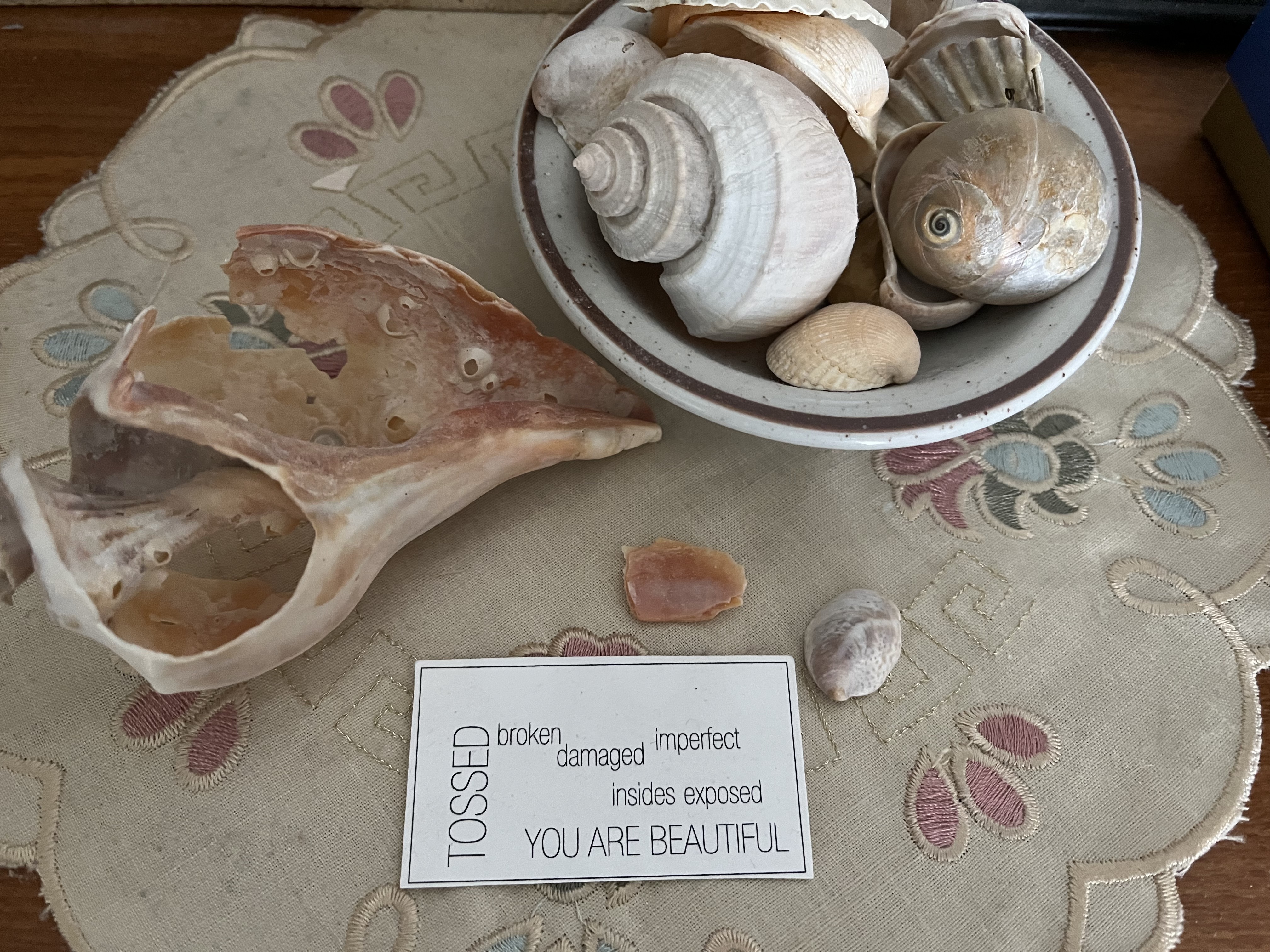
Broken shell (at left) and label from my blessedly optimistic sister-in-law Cheryl.

My grandsons' mother is doing a great job getting her sons educated, and each youngster is moving to a new school in the fall. This careful parent is already thinking about college as the long-term goal for her sons, and she's brought me into the process this summer because she wants them to write more often and with more attentiveness.

They travel in summer, which raises the challenges -- but of course, thanks to the pandemic, we have all learned to cope with that sort of distance. So the boys and I are writing something each week on a topic that I propose (although I'm open to them raising a topic; for now, they prefer that Grandma does this).

This week, I offered the website https://www.oceanoptimism.org, which I learned about through an On Being podcast. I thought it provided a good change from the doom and disaster we've all been discussing -- and the boys did, too. Each one wrote a really good piece on why we can harbor optimism about cleaning up our oceans. Each also indicated some level of personal commitment. They "get" why we are all trying to reduce our use of plastics, for instance, and they are "on it."

The same day I offered that challenge, I also received an email from Seth Godin that included promotion for his Carbon Almanac -- subtitled "It's Not Too Late." I think that's what we-who-want-to-save-the-planet need to internalize: Our choices matter, need to take place now, and are effective.

Here's the piece I wrote with the boys. I'd proudly share what the grandsons wrote, but ... that's THEIR writing, and they'll find their own way to share it. (That will have to be a topic for the end of the summer.)

Hope this gives you a boost today.

When I first heard about the #OceanOptimism tag and website, I felt skeptical. Ocean pollution seems so out of control! And every time I purchase a piece of fish to eat, the price reminds me that there is a crisis in ocean fish, as desperate as the crisis of America's western lands burning (not to mention the fires in Italy). With such a global sense of catastrophe, does optimism make any sense at all? Then I looked at the "tweets" that are tagged with #OceanOptimism, and other things came to mind. For example, one of the featured items right now quotes a scientist who is successfully bringing about change. She reminds us: "Take advantage of the unexpected. Trust your intuition. Learn to tell your story. Don't neglect the positive." None of those are spoken often by the people around me, but they reflect the best moments of my life, the times when I've felt that I enabled good results among people and organizations. They remind me also of the work of business guru Seth Godin (I learned about his work from my son Kiril), whose new Carbon Almanac is subtitled "It's Not Too Late." I learned from his writing, and from some examples around me, that people are capable of enormous amounts—if you help them to focus on their strengths and celebrate their achievements. Go positive ... go with optimism. Let's help our oceans recover.


-- With love from Grandma

Saturday, February 19, 2022

Telling the Story: "Narrative Therapy," the Arc of Narrative, and Long Grief


[Not a riddle.] How do you know when your relationship really, really matters?

[Answer.] You'll know after it's over.

Telling the story of a partner's death is a necessity for a while. For me, it helped make sense of the drastic changes in my life, the rainstorm of sorrow, and the questions that pop up. Like, did I do everything I could? From the person that I am, that is?

A year and a half after Dave's death, which was expected but no less tragic, I found myself stuck on a very big decision that only I could make. Sell the big wonderful house where we'd spent most of our married time, in order to move into something small and more affordable? Or do everything else possible to hold onto it, from renting out the garage to hosting an air b'n'b to endless garage sales and round-the-clock work schedules?

Each option involved pain. Neither guaranteed relief from grieving, either.

When I realized I was "deciding" twice a day, frantically flipping from one choice to another -- and I am a person who usually has no problem making decisions -- I searched online for a counselor who could pitch in. It was the first autumn of Covid, which for me yielded a very specific blessing: therapy via Zoom meetings. No commute time wasted, no problems with road conditions, and no need to leave the house empty, either. (I was starting to feel as worried about any time away from the house, as I had felt about time away from Dave as his health slid, and slid, and slid. I didn't want him to face fear alone. And I didn't want the house to be damaged by any absence.)

My life is framed in stories: written, told, present, past, truth and decorative. To my utter astonishment and amusement, the counselor prescribed "narrative therapy." I'd never heard of it but it seemed "genius" for a novelist ... When I looked it up, here's what I found:

Narrative therapy is a style of therapy that helps people become—and embrace being—an expert in their own lives. In narrative therapy, there is an emphasis on the stories that you develop and carry with you through your life. (Jodi Clarke, MA, LPC/MHSP)

It Worked
 
Within a month I'd reached a decision I could live with (sell the house, tackle the huge challenge of taming an abandoned piece of land nearby, create a new home). I knew a lot more, too, about what factors in my life were driving my decisions, and which ones were constantly causing me pain. I discovered that I could stop pressing down hard on the inevitable wound of grief and loss, and breathe a bit better as a result.

Because stories ARE my life, eventually I started to play with the narrative arc -- oh, if that's not a familiar term, check out the MasterClass article on these. Here are the parts of the narrative arc that the the article describes:
  1.  Exposition: The reader’s introduction to the story, providing background information to prime the audience.
  2. Rising action. This usually begins with a triggering event that puts the story in motion.
  3. Climax.The highest point of tension in the storyline, often forcing the main character to face a truth or make a huge decision.
  4. Falling action. The conflict gives way toward resolution.
  5. Resolution. This is not always happy, but shows how the events of the story have changed the characters and the world around them.

How could I fit that idea to the stage of my life opening up -- that is, surviving without Dave? If my decision to let go of the house was stage 3 of the narrative arc, was everything after this "falling action"? Just aging in place, alone? Look out, I could weep over that, pretty easily.

Even worse, maybe I was in the resolution part. What a terrible thought! All the good parts of the story were done, and I could "look forward" to simmering grief in solitude, with nothing much changing again, because the changes were done.

Another Approach

Although I'm not "seeing" the counselor as often, I rely on her backup. And in this case, she reminded me about something we'd outlined together, a year ago. Brace for it: I have a team. And on my team (I may have foreshadowed that I'm a nerd, didn't I? in some ways??) are the books and characters that I embrace. Sometimes that's George Smiley; sometimes Rivers in the Regeneration Trilogy; sometimes Katniss, or even (and in another medium) Phryne Fisher. There are more. 

A few weeks ago, the counselor reminded me to lean on my team.

So I opened a few books in a row, and found one divided into PARTS. Three of them. Each part had its own arc of narrative. And none of them functioned without the others.

This is what I've chosen for my narrative today:

Part I: Life before meeting Dave. Adventurous but with some serious lacks.

Part II: Life with Dave. Not always easy, including his illness, but omigosh varieties of fun and a resolution that let me see how much I changed, how much his life reshaped mine and strengthened me.

Part III: Life with Dave out of reach. He'll never stop being present as a force in the next part of the character arc. (And missing him won't end.) But there are chapters ahead, and I am not at "the end."

As the expression goes, "That's my story." For today.

Friday, December 31, 2021

Just a Little Further: Writing the Novel and Learning the Horse and Buggy


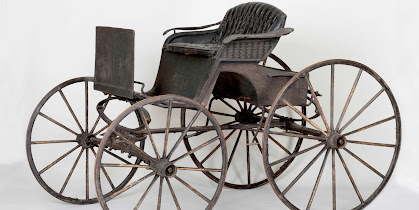
In the collection of the Shelburne Museum. No brake!

Within the next week or so, I expect to finish writing the third book in my Winds of Freedom series. It's set in Vermont in 1854, and it's had a working title of Kindred Hearts, but I'm quite sure that will change. I'm waiting until the last plot twist, passion for the future, and page of dialogue are done.  Then I'll brainstorm titles.


Meanwhile, I've been working hard at learning how to hitch a horse to a buggy and drive it! Somehow this was not mentioned in any of my history courses. Luckily, although Vermont winter isn't exactly conducive to asking a neighbor to show me the reins, there are many engrossing YouTube videos that show how to put on a harness, how to attach the "hames," and much more.

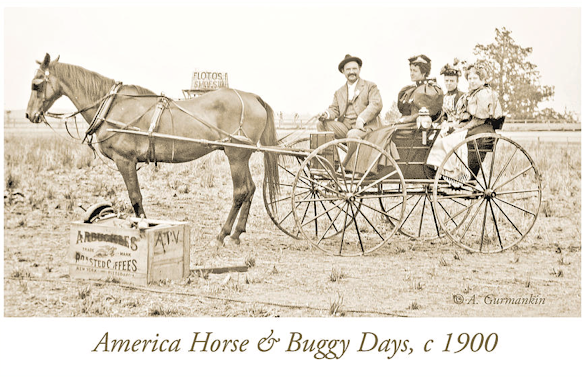
Then I've also been taking a crash course (self-taught) in buggies themselves. My protagonists, Almyra and Susannah, are fortunate to have access to the resources of a small livery stable at their village inn. That means that sometimes they don't have the kind of buggy or carriage they want -- and sometimes they end up on horseback themselves. Learning about riding with a sidesaddle was another treat of this book!

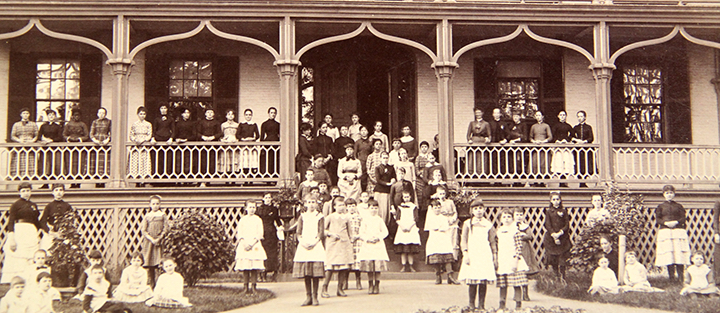
Here are some of the images I've studied, working out who puts her foot where, how much risk there is that she'll show a shocking amount of her ankle or petticoat, and more.

Thanks in advance to Fran and Bert Fissette, neighbors who've loved their horses and have answered some of my questions via text, so I could keep typing!

Circ1 1915:

Late 1850s:


Sunday, October 10, 2021

Cotton Mather: From Salem Witch Trial Disaster to Hybrid Corn Experiments to Immense Loss

Check out these early provincial boundaries, via a Creative Commons map created by Kmusser.

I'm about halfway through writing KINDRED HEARTS, and every surface around me is covered with research. Not very tidy, but how exhilarating!

At this stage, also, almost everything around me spurs fresh inquiry ... 

Neighbors up the road just took their daughters to visit Salem, Massachusetts, and that sent me to reviewing the Salem Witch Trials and the notorious role of Cotton Mather (1663-1728) in them.

In turn, that sent me to Wikipedia for a quick review -- I often find Wikipedia to be a great jumping-off site for research, loaded with footnotes. I don't take the view of the Wiki writer as necessarily "valid" but I find a lot to explore from, after looking at this, from https://en.wikipedia.org/wiki/Cotton_Mather—and the last paragraph made me very sad:

Mather was born in Boston, Massachusetts Bay Colony, the son of Maria (nĆ©e Cotton) and Increase Mather, and grandson of both John Cotton and Richard Mather, all also prominent Puritan ministers. Mather was named after his maternal grandfather John Cotton. He attended Boston Latin School, where his name was posthumously added to its Hall of Fame, and graduated from Harvard in 1678 at age 15. After completing his post-graduate work, he joined his father as assistant pastor of Boston's original North Church (not to be confused with the Anglican/Episcopal Old North Church of Paul Revere fame). In 1685, Mather assumed full responsibilities as pastor of the church.[1]: 8 

Mather wrote more than 450 books and pamphlets, and his ubiquitous literary works made him one of the most influential religious leaders in America. He set the moral tone in the colonies and sounded the call for second- and third-generation Puritans, whose parents had left England for the New England colonies, to return to the theological roots of Puritanism. The most important of these was Magnalia Christi Americana (1702) which comprises seven distinct books, many of which depict biographical and historical narratives.[3]

Mather influenced early American science. In 1716, he conducted one of the first recorded experiments with plant hybridization based on his observations of corn varieties. This observation was memorialized in a letter to his friend James Petiver:[4]

First: my Friend planted a Row of Indian corn that was Coloured Red and Blue; the rest of the Field being planted with corn of the yellow, which is the most usual color. To the Windward side, this Red and Blue Row, so infected Three or Four whole Rows, as to communicate the same Colour unto them; and part of ye Fifth and some of ye Sixth. But to the Leeward Side, no less than Seven or Eight Rows, had ye same Colour communicated unto them; and some small Impressions were made on those that were yet further off.[5]

In November 1713, Mather's wife, newborn twins, and two-year-old daughter all succumbed during a measles epidemic.[6] He was twice widowed, and only two of his 15 children survived him; he died on the day after his 65th birthday and was buried on Copp's Hill, near Old North Church.[1]: 40 

Wednesday, August 4, 2021

Poetry and September—My Time of Year


Summer in Vermont is a glorious time. But in August it flashes warnings of change—and just like when I was a kid eager for new clothes (that back-to-school treat), I feel September pushing toward me. It's harder to stay in the moment. Plans for the change of weather get scribbled, in notes here and there, and on the calendar.

I am more than two years out from the death of my husband Dave, and to most people who knew him, that probably feels like a very long time. For me, it's still a season of deep change, locating the parts of myself that "changed forever" in the years of our marriage, and figuring out how to do, solo, the things we so much enjoyed doing together. Moving to a new home is the most dramatic change in all this. But the emotional shifts are just as big.

That pushes me into poetry, day after day. Poetry and gardening are my anchors, the areas where I know growth will take place. (Historical research and writing the articles and novels related to that are good, too, but they are by definition less emotional, aren't they?)

One Day in Early August


One day in early August, a fresh wind out of September

swept out of the northwest and pulled me out the door, ready

not for frost or snow, but for relief—let the heat wave flee,

let the garden race toward golden melons and squash, let the birds

begin to gather and remind each other: We rise. We fly.

No longer courting or even nesting, but practicing for height.


And I? Despite the brisk air, I’m bound to stay, an old cap

pulled over my hair, a fresh swipe of mink oil over my boots—

my best memories wrapped around me like some familiar

thick sweater, like a snug zipped jacket, like (not yet) gloves.

This is the back road I’ve walked for years, tracking the leaves

in their bold thick greens then slow hint of gold, of crimson.


I saw a tuft of red leaves wave to the corn field;

a cluster of small purple asters, late-summer frills, danced.

Racoon scat I almost stepped on, and deer tracks, and scrapes

from eager turkey feet, from bears, til the low stone wall

interrupted—and a thicket of raspberries rose from rocks

that hid the tiny burying ground beyond. Like last night’s deer


I wedged my toes between the rocks; tiptoed up them

eyes on the red fruit; reached a cautious arm, fingers gentle

as a doe’s soft lip, teasing the swollen berries from the stems

too soft to carry away—quick to my mouth, sweet delight.

If you were waiting at home, babes, I’d find a way to carry

this to you: a photo, a song, a few protected sweets.


Berries from bones? Life from stones? I face a dozen winters,

maybe more, without the warm constant of my true love

at my side. Many things I do not understand, do not see

in the bright swift sunset and the tinted clouds, this edge

between the day and the star-pricked night. Hands in pockets,

tasting the fresh cold air, I call to you, wanting you to hear.


-- BK

Thursday, June 24, 2021

How Magical!: THIS ARDENT FLAME and Harriet Beecher Stowe

This Ardent Flame is now in print, and the magic continues. 


This is the second in my Winds of Freedom series of historical mysteries, seeing the approach to the Civil War through the eyes of Vermont teenaged girls. In 1852, to be 14 was to be on the verge of womanhood—and to contemplate big questions, like Abolition, Temperance, and votes for women. Also, if you are Alice Sanborn, to confront the wickedness of a man who beats a horse and probably does the same to humans.

Writing This Ardent Flame became magical for me as Alice and her bosom buddy Caroline, deaf from childhood and newly home to Vermont after years of boarding at the School for the Deaf in Hartford, CT, were riding the train north from Boston. Their mission at that moment was to help provide a merry family distraction around two Black men traveling with Alice’s brothers. The men were freemen, but still at risk even in New England, due to the horrors of the Fugitive Slave Law.

As the girls were “conversing” in their adapted language of American Sign Language, lip reading, and already being well attuned to each other’s thoughts, a woman paused to observe and then to ask them about the exchange of Sign. Fascinated, she assured them she’d be following up on this, then leapt off the train for her connection to Maine.

I suddenly knew who it was, before the girls were aware, of course: Harriet Beecher Stowe, author of Uncle Tom’s Cabin, a woman who would later meet President Abraham Lincoln, who supposedly said to her, “So this is the little woman who started this big war.”

Students and teachers at the American School for the Deaf

Abashed at my own hubris in walking such an important person into the scene, I emailed one of my consultants: the historian at the American School for the Deaf. “Do you mind,” I asked with shaking typing fingers, “if Harriet Beecher Stowe walks through a scene? Could that be historic?”

The quick reply was basically: “Go for it!” Harriet Beecher Stowe and her sister Catherine, it turned out, had been close friends of Alice Cogswell, who ran the school! And in Alice’s scrap book was (gulp) an unpublished poem by the famed Hartford author of Uncle Tom’s Cabin! Here is the actual response from the school historian:

Alice Cogswell kept a scrap book, which we [were] fortunate to inherit from one of her relatives back in 1936.  The scrap book is a collection of poems, letters, and drawings from friends and family members.  She certainly did have a connection with the Beecher family because her scrap book includes a poem from Harriet Beecher Stowe and one from Catherine E. Beecher.  I have no documentation of the circumstances, but it stands to reason.  Both families were prominent in the same Hartford circles, and both women were activists in their own right.  Especially Catherine’s crusade for the education of women.  I imagine Alice’s education at ASD would have been of particular interest to Catherine.

And that, my friends, is the magic of writing historical mysteries—that every now and then, an unexpected guest walks into the scene, and turns out to uncover a real-life revelation.

"This Is the Real Thing": THRESHOLDS, an Exploration of Transitions

My new book of poems. Available in bookshops and online. My buddy B and I shared a long lunch at a community restaurant today, and wrapped i...