Showing posts with label 1800s. Show all posts

Friday, December 31, 2021

Just a Little Further: Writing the Novel and Learning the Horse and Buggy


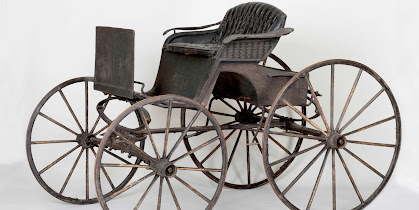
In the collection of the Shelburne Museum. No brake!

Within the next week or so, I expect to finish writing the third book in my Winds of Freedom series. It's set in Vermont in 1854, and it's had a working title of Kindred Hearts, but I'm quite sure that will change. I'm waiting until the last plot twist, passion for the future, and page of dialogue are done.  Then I'll brainstorm titles.


Meanwhile, I've been working hard at learning how to hitch a horse to a buggy and drive it! Somehow this was not mentioned in any of my history courses. Luckily, although Vermont winter isn't exactly conducive to asking a neighbor to show me the reins, there are many engrossing YouTube videos that show how to put on a harness, how to attach the "hames," and much more.

Then I've also been taking a crash course (self-taught) in buggies themselves. My protagonists, Almyra and Susannah, are fortunate to have access to the resources of a small livery stable at their village inn. That means that sometimes they don't have the kind of buggy or carriage they want -- and sometimes they end up on horseback themselves. Learning about riding with a sidesaddle was another treat of this book!

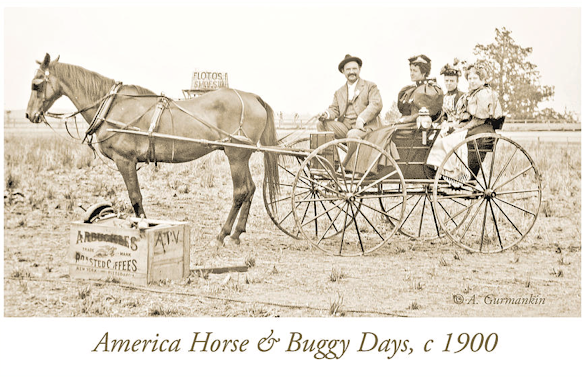
Here are some of the images I've studied, working out who puts her foot where, how much risk there is that she'll show a shocking amount of her ankle or petticoat, and more.

Thanks in advance to Fran and Bert Fissette, neighbors who've loved their horses and have answered some of my questions via text, so I could keep typing!

Circ1 1915:

Late 1850s:


Monday, November 16, 2020

"Aging in Place": Eliza Ann Ide Henry, Wife of a Timber Baron


Because I live on the Vermont side of the Connecticut River, I focus more on the history of the Green Mountain State. But when we're talking about the decades of timber harvesting, both sides of the river have complex and fascinating stories to tell.

For the Vermont side, the books by Waterford native Robert E. Pike, Tall Trees, Tough Men and Spiked Boots, narrate the winter lives spent in the northern forests, followed by the perilous spring adventures of bringing the logs down the swollen rivers. River log transport ended on the Connecticut as Waterford watched construction of the Comerford Dam in 1930. It can still be witnessed on occasion in Maine, but the risks outweigh the benefits and need most of the time.

 On the New Hampshire side, J. E. (James Everell) Henry undertook construction of railroads that penetrated deep into the forested landscape. Not only did his timing mesh with the willingness to spread out the rail network, but it also coincided with the use of shorter logs that could fit onto rail cars.

Littleton, NH, author Mike Dickerman compiles material on Henry, along with a vast knowledge of the high peaks of northern New Hampshire. In August 2014, he visited the Waterford Historical Society to talk about Henry and his own book on this ambitious and accomplished leader.


Today, as Dickerman prepares a new book on history of the high peaks, he shared a photo of the Waterford woman who would marry J. E. Henry: Eliza Ann Ide (daughter of Joseph and Almira), who was 20 years old when this photo was taken. Her marriage would follow two years later.

Eliza Ann Ide, 1912, before marrying J.E. Henry.

Since the photo was taken in 1852, it's a perfect mesh with the historical fiction series I'm writing, Winds of Freedom. I can absorb from this image of Eliza's face a reminder of both the lack of experience and the determination to enfold life that so many of our New England young women combined at age 20 in the nineteenth century. It reminds me, too, of my own early adult years, the mistakes and successes, the surprises, the constant learning, from kitchen to garden to babies to how a marriage works and how to sustain love over the long term. (That takes a lot of learning!)

Mike Dickerman also shared this photo of Eliza (Ide) Henry taken 60 years later, in 1912 -- I think she looks younger than her 80 years in the photo, and clearly she's still industrious and creative.

Eliza Ann Henry, 1912, after her husband's death.


It seems to me that in this pandemic year, as we shelter in place while waiting for medical science to develop the vaccines we so desperately need, we mustn't overlook that we are also "aging in place." Such a close relationship with place is a traditional resource and value of this northern area, where family roots may go back a century and more, and even newcomers begin to bond with the terrain, the light, the plants and animals, as they struggle through their early seasons here. It's been a joke to "city folks" that we in rural areas talk about the weather so much ... but it defines each day's opportunities and necessities. So we have to pay attention.

Living beyond the years of a beloved spouse or child also change our relationship with time, in my observation. Instead of the calendar being significant for upcoming milestones, it has more to say about counting from major events: I am in my second year after my husband Dave's death. Through the long powerful rope of love and "missingness," I am tethered to what has been an anchor for me. 

 In the 1912 photo, Eliza had been a widow for only days or months. I wonder how she saw her past, and how she looked ahead. She would live nearly 20 years longer, dying at age 99 in Pasadena, California, so at some point she clearly decided to stir up excitement in her golden years, and travel across the nation (by rail, I trust!). 

That's a good reminder for today: We are sheltering in place, and aging in place -- but the years ahead will include freedom from the pandemic, and amazing adventures, if we choose. 

[Hope you'll make time to browse more of my tales here of historical research, writing, and life! Tap the link to reach the rest of the material: https://bethkanell.blogspot.com]
Monday, February 12, 2018

Lincoln's Birthday ... and Thaddeus Stevens on My Mind


"President's Day" is still a week away, but today, February 12, is the date that is Abraham Lincoln's birthday. When I was growing up, schools celebrated it -- not as a day off, but as a day to pay attention.

Today in our era marked by harsh political conflict and skyrocketing awareness of the way America's centuries of enslavement have injured our people, it's a good day for learning more about our past and choosing ways to make the present and future better, I believe.

So I paused this morning to check what Abraham Lincoln was doing in 1850, the year when my "Winds of Freedom" series opens with the book The Long Shadow (publication date April 18, 2018). In that year, Lincoln was still practicing law in Springfield, Illinois, where he took on quite a few transportation cases. He also gained a patent of his own for a boating invention. He'd already served one term as a legislator, and opposed the land grab of the Mexican-American war; that war ended two years earlier, marking his first contribution to national affairs. He wouldn't speak out again until 1854.

But in 1850, an ardent freedom fighter from Vermont, transplanted to Pennsylvania, took a powerful stance in Congress to oppose slavery. That voice came from Thaddeus Stevens, and it echoes many others, especially the voices of America's Quakers, who pointed bluntly to the evil of humans being "owned" by others. "Chattel slavery," they spoke of -- "chattel" refers to personal property, and unlike, say, indentured servants, chattel slaves could be transferred by will or by bill of sale.

Yes, you'll find actions by Thaddeus Stevens influencing Vermont village life in The Long Shadow. Importantly, the choices taking place in this book are made by women who choose to take action -- protagonist Alice Sanborn, her best friend Jerusha, and their younger and very dear friend Sarah, with her dark skin and desperate longing for her family, still enslaved but with hope of purchasing their freedom. And Miss Ruth Farrow and the Mero family -- historically "real" Black Americans who lived in my part of Vermont in 1850.

Each of us has something to contribute to making the world a more just and valued place to live. For me, it's speaking of how things really were in 1850 -- here in the Green Mountains of Vermont, where reading the words of Thaddeus Stevens gave a fierce and upright example.

Wednesday, January 17, 2018

An Update to Eleanor Perry Conwell's Provincetown Story


Research always makes up the background of the Vermont fiction that I write. A few years ago, I pulled out "consumption" statistics for this area in the early 1900s -- that was the final stage of tuberculosis (TB), in general. Last week, I found the death record for 4-great grandmother Eleanor Perry Conwell, whose "portrait" (by William Matthew Prior) goes to auction at Sotheby's this week. What a shock to see the cause listed as consumption. I hope the sale of her portrait will help her story of courage and New England initiative to live on.
 

School Days, School Days -- in Poetry School

Although I've lived in the Green Mountain State for almost half a century (!), I didn't grow up in Vermont.  My father, an industria...