Showing posts with label writing life. Show all posts

Wednesday, October 29, 2025

Coming Soon: Audiobook of THE BITTER AND THE SWEET -- Plus Nov. 20 Presentation


Almost all of my "spare" time for the past two weeks has been spent listening to a very skillful "audiobook" reader create the spoken version of THE BITTER AND THE SWEET, checking that the words move smoothly from the pages. It's taken a huge amount of time and has been fascinating. Kathy, the professional reader, clearly prepares for each chapter ahead of time, so that she's ready with separate voices for the different characters, and moments when someone "drops" their voice to keep quiet in a scene. She even inserts small chuckles of her own when they are laughing!

I am so excited about this, and grateful to All Things That Matter Press for investing in this version of the book. People often ask whether there are audio versions of my novels. Now I can give a resounding YES for this latest title. As soon as the version is available to order, I'll let you know ... it won't be much later, I think. (Locally, Boxcar & Caboose bookstore in St. Johnsbury and Green Mountain Books in Lyndonville are carrying all three books in the Winds of Freedom series, in softcover.)

In another direction, I've learned over the years to develop an engaging public presentation, and loved the way the audience connected with my talks recently, first this summer on the 1800s immigration into Barnet, Vermont, and then in September on "The Poetry of Transitions," as an approach to my poetry book THRESHOLDS that will be published in 2026 (recording here!). 

So when the St. Johnsbury Athenaeum asked me to take part in their November consideration of mysteries, of course I said yes! Here's the planned approach: the various subgenres, how mysteries are changing, the inclusion of more women and minorities as both authors and characters, and I'll provide a list of suggested authors for people to check out. Of course I'll mention THE BITTER AND THE SWEET, with a quick explanation of how I learned this region's role in counterfeiting in the 1800s. But this talk also dips deeply into the 17 years of learning the mysteries and crime fiction field with my late husband Dave Kanell, as we created Kingdom Books and traveled the United States, meeting authors and learning more.

I hope you can join me! November 20, at 7 pm, at the St. Johnsbury Athenaeum. I'll let you know if it's also recorded for viewing afterward. 

Wednesday, October 22, 2025

Would You Change a Famous Line of Poetry?

Work room, with art in progress, year 7 of the "after."

I'm walking into my seventh winter without Dave, my late husband. The pain is muted now, a low hum of missing spiced with surprising joy, as I recall the fun times we made and had.

But the transition (as you'll see in 2026 in my book Thresholds) surely colors my poetry, so I feel grateful this week to write about other things, including raking autumn leaves as a kid, and my mother's endless supply of nursery rhymes and children's songs. Good memories! These fed into a poem I'm calling "Half," and it took shape around a memory of something Mom used to chant at us when she wanted a kiss from one of her children: "Half past kissing time, time to kiss again!"

I thought she might have made it up, but it turns out to be part of a poem by Edward Field, and I found a list of his poems on Wikisource, an online compendium that I don't think I'd ever visited before. Find it here: https://en.wikisource.org/wiki/Author:Eugene_Field

Coincidentally (and in 12-Step programs we say, "Coincidence is God acting anonymously"), one of my relatives called when the poem was almost done.  He told me he plans to get a poetry tattoo dedicated to his wife: "We were together. I forget the rest." (Yes, it caught me in the heart as he said it.) He said it's Walt Whitman's poetry, then added that he'd recently learned it is a paraphrase -- the original line, which I looked up as we chatted, said:

"Day by day and night by night we were together,—All else has long been forgotten by me."

 So, a poet's question to you readers today: Do you like the shorter version better, with that hint at modern language? (It is concise, packs a punch, and fits well on shoulder perhaps.) Or would you hold to the original? And for extra credit: Would you add a line of poetry to the landscape of your back or shoulder? Or have you done so, already ...

Sunday, October 19, 2025

What If Aging Means Less Juggling? Novels, Poems, Feature Articles, History ...


I have never learned to juggle. I've watched a few people learn it, and it didn't seem terrible -- but as someone who can barely catch a basketball, grabbing smaller items out of the air isn't likely. Actually I don't throw very well, either. (Don't ask about the company baseball team, back in 1973 or so.)

Maybe you have read the "how" of juggling? I leaned on such book-learning for writing "Juggling Parenthood at Seventy," which is in the most recent issue of New Feathers Anthology - you can read it here (it's short). I was thrilled that New Feathers asked for a second poem, too, which again is set in my part of parenting "adult children." (Yes, it's here.)

With the onset of my seventies, I notice changes in how I move, which is no surprise. I'm losing some speed and coordination, but not, thank goodness, determination.

What scares me more than the physical changes are mental ones. I worry each time I can't pull up a word or remember why I was headed into another room. It seems that most of my similar-aged friends have the same worry ... none of us want to become dependent on others for basic life, and that's what those little glitches seem to threaten.

But I can't live under threat as a mood. It's terrible for writing. So I'm trying to be practical, the way I was when I got rid of the last throw rug (I loved it, but throw rugs are a Big Problem in terms of falling, "they" say.)

For writing, that means sometimes narrowing the range of what I'm working on. With the gracious collaboration of editor/publisher Justin Lavely, I'm taking a break from feature articles for The North Star Monthly for a few months at least, and I'm not rushing to write another novel. Instead, I'm making a lot of room for poems. There are scraps and Post-it notes and lists all over this home, with metaphors, bits of lines, ideas for structure. It's working! Maybe I should have tried this sooner.

Meanwhile, though, I'm watching how the novels are reaching readers. If you live in Vermont's Northeast Kingdom, you can buy a copy of The Bitter and the Sweet easily in St. Johnsbury or Lyndonville (thank you, Boxcar & Caboose, and Green Mountain Books). But you might not have heard: I was able to regain rights to the first two books in the series, The Long Shadow and This Ardent Flame, and Speaking Volumes has them back in print, with covers that match the ebooks. You can get the lovely softcovers at those same two bookstores -- and of course, order them in any other bookshop, in person or online.

There's some relief in not juggling as much: I don't worry about hard rubber balls landing on my head. But can I stick with just poetry? Umm, no. Watch for news about a huge historical research project in the wings. 


Wednesday, October 8, 2025

Some Days Are Meant for Poems


I have a new routine that I call "Tuesdays are for poetry." It's a way to break the hold that "paid work" has on my schedules, and admit that I need, for all my soul, to spend enough time writing poems. Yesterday was Tuesday, and that's what I did with the time.

But even though today is Wednesday, this poem came along as I paced the wet sidewalks of a nearby town, waiting for my car to be ready at "the shop." You'll see things in this one that may become themes of many poems ahead. Thank you to this day, and to Emma, for starting this rolling.

I Remember: for Emma


When I slipped (again) to your sister’s name it was only because

those memories were laid down when I was a young mother—

a time so fraught with peril that hypervigilance felt normal

(there must have been ways to stay safe)


and I hope you can forgive me (again) for what must seem

like I do not know you for who you are: But so many times

each year now, as I scan the images of who I’ve been and where

this aging brain is headed,


I’ve seen you again in your leather chaps, chainsaw ready,

your confidence on a mountaintop and the carefully blank

gaze you gave to some demanding young man, bare chested,

muscles rippling,


who practically dragged the saw out of your hands, started

showing off with the fallen trees. There were reasons we had

for not shouting at him. I remember those, too. And the moment

I pulled my supervising motif


up from my boots, interrupted him, said “I am paying this woman

to do this job, give the saw back. Now.” Plus your calm patience

guarding the lake (its wide waters ample as a woman’s hips) from

invasion at the boat dock. See?


Now every morning through an Alice-in-Wonderland view

I marvel at your blossoms, herbs, eggs, invitations to strangers

as well as friends, the way you share your journey in biscuit-

sized morsels, feeding the world.


You will understand, on this cold and rainy Wednesday, how

my mind goes to biscuits, and lighting the oven, making magic

with flour and cream: Baking may become my enduring skill

as bits of thought crumble behind me


trails laid out for grandchildren to follow if they are quick

because there are always crows ready to sample what’s left

behind. Crows recognize faces. The ones around me call out

when I pass, walking briskly,


trying anything and everything that may maintain my mind.

Aging comes with funhouse mirrors, thickening the waist,

creasing the face, tugging at eyelids that never will go back

a quarter century and more.


I am willing to give up youth and nimble knees. To wake

repeatedly each night, rolling the seized-up shoulder muscle

easing the hip, taking care not to think in the darkness

(because it triggers insomnia)


and then to meet the stranger reflected in the bakery window,

telling her she looks seasoned, capable. I talk to the crows. One day,

I may not notice when I mouth the wrong name. But today

is not that day. I do remember, Emma.


BK 10-8-2025


Monday, September 22, 2025

The Poetry of Transitions: Where Do Poems Come From?


The earliest poems in my life were lullabyes and nursery rhymes, and I remember them well. In fact, I still sing them. But I've never quite gotten used to the shivery side of this one, which somehow reappeared around bedtime:

Rock-a-bye baby on the treetop.

When the wind blows, the cradle will rock.

When the bough breaks, the cradle will fall

and down will come baby, cradle and all! 

Come on, who would sing that to a baby? A baby they cared about? Well, my parents sang it to me, and somehow the melody and the arms around me took away the sting. 

On Thursday Sept. 25, I'll be leading a discussion of the Poetry of Transitions, at Catamount Arts, 115 Eastern Ave, St Johnsbury, starting at 1:30 pm. I hope you'll come and bring with you some ideas about the poetry that stays with you -- poems that are memorable -- and why and how that happens. And I'll share with you some of my ideas, as well as some poems of others and some of my own new-ish ones, and a taste of my 2026 book, THRESHOLDS.

We can figure out this puzzle! 

Tuesday, September 9, 2025

The Poetry of Transitions: Re-Shaping for an After-School Group


There's always someone creative taking charge of after-school groups of students who want to spend a few hours doing something "interesting."

So when one reached out to me a few weeks ago, asking what I could offer to her eager and probably very active students, I spilled out my enthusiasm about this new niche of mine, the poetry of transitions. I explained how it could become a nifty activity after school. I guess I had seventh and eighth graders in mind.

But these kiddos are younger than that, it turns out. So, the leader asked, what did I have up my sleeve that might suit that crew instead?

It took me back to my early years of poetry, when my mother modeled how to craft a birthday or Christmas card by making up a rhyme about the person, the occasion, or the things you love, like snow falling on a quiet evening or the first ringing bells of a holiday.

I emailed back:

How about "poems for special occasions" -- where we could lay out a range from birthdays and Christmas to completed homework, awesome book reports, new friends, broken friendships, and more. 

And that, of course, spun me into wanting to write some of those childhood rhymes again. It's always fun, and often surprising. The following is NOT, of course, for an after-school program, but thoughts on where my own poems have been wandering.

Over Labor Day weekend, one of the poets I studied with, Rachel Richardson, suggested ways to make a collage out of lines that others had already written. Using lines from e.e. cummings, Walt Whitman, Ted Kooser, Dyaln Thomas, and Nick Laird (new to me that day), I put this together:

my father moved through dooms of love
Captain, oh my captain
although I miss you every day
do not go gentle into that good night
what are the ceremonies of forgetting?

It's actually not a bad place to start, as I approach another anniversary of my father's death. And indeed, what a "transition" that was, 27 years ago, for me and for my siblings. 

Now, where will I take this? Where will you take your own? Can you still talk with your father face to face, or do you summon up his spirit for conversations while you're making a long drive? What would he say if you surprised him with --

Go ahead. Let a line form in your thoughts. That's the point of poetry ... or one of them, anyway. 

By the way, if you're curious about what poet Rachel Richardson achieves with her poetic collages -- check out her newest collection of poems, SMOTHER. I bought a copy to treat myself. 

Sunday, August 31, 2025

The Poetry of Transitions: How to Splurge on a Holiday Weekend


Today it seems to me that nurturing poetry skills is a bit like childrearing: If your kiddo grows up well enough and heads out into the world, you don't say it's because you learned something in the last week and that made it all work out. It's the long haul, the small things like food allergies and birthday cakes and helping the unexperienced hand to shape a perfect O or the teen to question and improve an essay. It's being willing to let them try evenings in town with friends, and not flinching (much) when you accidentally overhear those first romantic diversions. No parent can do a perfect job -- we're human -- but bringing a child to maturity, reasonably healthy and brave and independent, is worth the years leading up to that.

When THRESHOLDS is published in February 2026, I expect I'll feel much the same way about that. But there's always the next poem and wanting it to be better, and that's a difference, for sure. Most of us don't start a second family, just to see whether we can do it better ... or have I missed something?

At any rate,  I opted to spend most of my Labor Day weekend pinned to my seat in Zoom'd poetry classes led  by five outstanding poets. There's still one more class to go, tomorrow. For the evening I'll be mulling over the lessons this afternoon about the power of short poems (if you want them to have power). It amazed me that I recognized the first poem that the teaching poet offered, an anonymous one:

“Western wind, when wilt thou blow/That the small rain down can rain/Christ, that my love were in my arms/And I in my bed again!”

And it amazed me even more to find online material from a class taught by Allen Ginsberg, opening with that very poem. Incredible to discover what those students were then exposed to. Check it out here

Okay, I'm off to scribble a bit. Or peel some of today's apples. Or take a walk first. Yep, that sounds about right. One beautiful day to be a poet, looking at life's transitions and wondering how to spill them and rearrange them in words on a page. 

Sunday, August 24, 2025

The Poetry of Transitions: When and Why


When I say I've been writing poems ever since I could shape the letters of the words, well, that was really my second stage. The first came as soon as I could repeat the lines my mother spoke or sang: "Jack and Jill -- went up the hill -- to fetch a pail of water," we repeated to each other. And very soon, I began to protest about that particular poem: "Mommy, water and after do NOT rhyme." 

But they almost do, and that too was something to learn.

In The Art of the Poetic Line, James Longenbach teaches that "All poems live or die on their capacity to lure us from their beginnings to their ends by a pattern of sounds." 

Reading that, more than sixty years after Mom and I began poetry together, brought all the strands together for me. California poet Ellen Bass pointed to Longenbach's book during one of her classes that I first enrolled in during the Covid pandemic. Between her lessons and the resources she listed, I found new strengths.

And now a book of my poems, THRESHOLDS, will be published in a few more months. 

Starting with an OLLI (aka Osher) talk on September 25, I'm inviting you to join me to explore the poetry of transition. After all, autumn in Vermont practically defines transition: blazing with color, gusting with northwest wind, stripping the gardens and toughening our word-winged selves for winter.

As they say: Watch this spot for more.

Eve in Vermont


She sits on the front step

potato in her hand, peeling

turning the round cool white

and brown form, rubbing off

the traces of soil, rejoicing—

“potato, potato,” naming it.

When the bird flies past it calls

and again she says “potato” but then

she looks up, shakes her hair,

follows the angled wings in flight.

She grins and calls out “blue jay”

and it answers.


Tuesday, April 1, 2025

Amelia Earhart and My Mother: Another Reason to Write Poems

(Tap the image to read the poem.)

There are scraps of paper piled at the far right corner of my desk, bits of poems emerging. I've learned to write down "something" when the notion or metaphor or string of words comes tapping.  The more important they are, the more quickly they seem to vanish if I don't write them down.

This poem, though, came via a different route. My mother died "too soon" at age 53, while I was pregnant with my second baby. I needed to grieve and mourn, but I was also afraid to cry too much or too hard -- I didn't want the baby to arrive early, from my own stress. So that was a hushed-down, tamped-down farewell from me, while my younger sister assigned to herself the tasks of steering our father into his own new life chapter.

In the years since, one of the frustrations (of course) has been the many questions I would have asked, if we'd had more time together as two generations of mothers. But I've also learned to question the notions I had about who my mother was. We don't show our adult selves in depth to our kids when they are too young to understand.

My mother, when she was 8 years old, experienced the death of her own mother, from breast cancer. I knew that. I didn't know until pretty recently that as a child, she'd been an outcast among her New England cousins -- Joanie, the girl whose mother died, and who was fat, too. And unskilled with other children. 

Another thing I knew: that she resented being told she must touch the cold dead hand of her mother's corpse in the casket. She said it robbed her of other, warmer, memories of her mother.

What I didn't realize until this poem began "appearing on paper" was how close the timing of Mom's mother's death was to the mysterious loss in flight of Amelia Earhart. As I put them together, I began, strangely, to understand more about my mother. 

Which, of course, also means I learned something about myself.

Much appreciation to New Feathers for including the poem in its newly released anthology


Friday, March 7, 2025

Lyric, Lyrical, and Is It Poetry Yet? A Story About Writing

Barnet VT post office, Wikimedia Commons, photo by Jared and Corin (Thanks!).

I've signed up for a class this weekend on the lyric poem. The price to enroll equaled a week of groceries. Trust me, at that price, I spent some time soul-searching before pressing "Register" for the class.

The moment that changed "everything" for the way I write happened at a rural post office in a small village many years ago. And it wasn't about a poem -- but about a story I'd written, fictional but framed with things I'd experienced, and published in a very small regional newspaper.

My mail carrier was just coming out to his truck when I was entering. He stopped me at the door, beaming with pleasure. "That story of yours, that was a good one, did it really happen?'

"More or less," I said. He grinned. 

An explosion was taking place in my chest. THIS. This was why I was writing. For my neighbors to read all the way to the end of a story or poem and wonder, Did this really happen? Or, equally good, So someone else has felt the way I did, imagine that!

This episode saved me.

I'd already been to a couple of sessions of the Bread Loaf Writers Conference, where people I'd never heard of stood at the front of the lecture hall and read aloud their work, most of it so foreign to my life (like, tied to Greek heroes, or braiding together angels and the Irish with some foreign words as well) that I felt smaller and smaller. I'd brought my very best poems, the ones I really cared about, and one of them made it to a critique session. The mostly unshaven poet in charge, who lived in a city a thousand miles a way, lifted my page, waved it in the air, and said "This says nothing to me." He dropped it back on his desk and went on to someone else's poem. Frozen into stillness, I watched my page flutter to the floor.  

At the post office, though, later that year, I finally understood: When I'm writing a poem, I can't care whether a city resident from a very different culture "gets it." It would be nice, sure, but ... what I care about is whether my neighbor recognizes that same feeling about the bird feeder, or the cold spell, or the pain of wanting to fix your grown child's life and make it all better ... and knowing it's no longer your business to do that.

Literally decades later, after the death of my much-loved (much-missed) husband Dave, I took another long look at what was going on with my poems. Maybe you knew Dave -- if so, you won't be surprised to hear that he didn't really "get" my poems. But oh man, did he ever love to bask in a poetry reading by an outstanding poet like Jane Hirshfield or Galway Kinnell or Donald Hall or Ellen Bryant Voigt. No fancy language or critique from my darling, though. He'd push back in his seat afterward, look at me with glowing eyes, and say "That was the real thing."

So now, even with Dave's body out of reach, I wanted to bring my poems up to a level where if Dave were blindfolded and the sound was distorted so he didn't know it was his own spouse, he might listen for forty-five minutes and say what he said about those other poets. Not for everything I write, maybe, but for some of them. Workable goal? 

I began by applying to my stash of poems some lessons that Vermont (and nationally awarded) poet Sydny Lea gave me one afternoon on the front porch of Robert Frost's home in Franconia, NH: Circle any "new" language -- the surprising phrases and twists. Cross out bland words. Pay attention to how lines of poems end and begin, making them stronger.

It was working, I thought. But the handful of poems that I mailed or emailed to publishers and contests still resulted in polite "canned" rejection notes.

Then another Vermont poet, a woman I trust deeply, suggested that I take a class with poetry professor Ellen Bass -- thanks to the pandemic, the class would be online. This time the price, covering six sessions, added up to three weeks of groceries. In the fine print though was an invitation to explain your situation if you'd like a scholarship. I did (husband recently dead, finances a disaster, barely scraping by) and golly gee (as people used to say), a response said Yes. Scholarship awarded. Come learn.

It would take more than six weeks to explain now all that I learned from this gifted teacher, as I kept taking more of her classes, and carefully setting aside the money in advance to pay properly. But I can give you the single most important thing that I inked onto a piece of posterboard and taped to a nearby wall: 

"All poems live or die on their capacity to lure us from their beginnings to their ends by a pattern of sounds." 

That's from another poet who liked to teach, James Longenbach.

A pattern of sounds. When I added that kind of attention to how I was writing and revising, poems began at long last to get published beyond my local paper. Dave would be excited about that ... 

So that's why I'm blowing the price of another week of groceries on a class focused on "lyric" poetry, because I suspect that's the proper term for what I'm writing now. I really enjoy it.

Oxford Languages describes lyrical this way: expressing the writer's emotions in an imaginative and beautiful way.

Watch for the poems. With Dave out of the room, I'm counting on you to let me know when it's "the real thing."


Monday, September 23, 2024

Apples and Autobiography

Cortland apples.

This is a classic "writer's autumn" for me: bringing out a novel in print at last, while also working on a book version of the Vermont memoir I began after Dave's death. (Segments piled up on Medium; if you're curious, read them here.)

In writing the memoir as segments that I placed online, I excavated a heck of a lot of trauma. That turned out to be healthy for me -- but only, I think, because I grew through it, and now I'm in a stage of life that I loosely label "getting off the trauma merry-go-round." Life is good, and I want to pull the pieces together and show how that happened.

So the working title for the book is LOOKING FOR THE LIGHT, and today in chapter 2, I'm writing about apples and related recipes and reasons.  Here's a scrap:

Today I still rely on a shelf of traditional cookbooks, but it’s leavened (that’s a baking powder term!) with vegetarian ones, a paleo gem, international and ethnic compendiums, and, most important for this region, the Bentley Farm Cookbook.

This astonishing volume, eight and a half by twelve inches across the front and more than an inch thick, contains the hand-lettered recipes of one of the region’s beloved home cooks, Virginia Bentley. When I complimented a slice of pie at a community dinner last year and (as we do here) asked for the recipe, the baker said, “Oh, it’s Virginia’s, from the book. You have the book, of course.” She wasn’t asking me whether I had it—she knew I must.

Here's the cookbook, with a bit of the apple portion of the index, and a recipe to show you how different Virginia Bentley could be in how she talked about cooking.


Friday, August 9, 2024

Two Poems Recently Published -- Four More "Accepted for Publication"

A poem begins like a wild apple growing -- from a delicate blossom that's around briefly.


A good day for me is when I write a poem that I feel is -- yes, good. It's also nice to have them published. That's the whipped cream on the hot fudge brownie sundae. Or, with the upcoming Caledonia County Fair and the Robillard family's historic gifts in mind, the vanilla ice cream on the apple crisp.

If you haven't taken time to follow the links that I place on Facebook, here are the two most recent published poems of mine. I hope they echo in your thoughts to something vital of your own.

In the summer issue of New Feathers Anthology, which I hope you'll visit by tapping here to see the amazing image they've paired with this, is "My Mother, 1937."

My Mother, 1937


Bewildered farm girl with a dying mother (cancer, too late):

ignored, she clung to Lucky Lindbergh’s transatlantic flight,

hoarded newspaper articles about Amelia Earhardt,

refused to beg her cocky cousins for attention—

she could claim the future, sky high, better than theirs. When

death landed as predicted, love retreated into

the unreal hardness of one frozen knuckle (they made her

kiss it). Amelia, she told herself. Amelia would do this

without falling. Her cousins watched, whispered.


Amelia, a borrowed badge, a resonant insistence. Next month

her father said “Your mother’s cousin Ruth arrives on Tuesday,

to be your new mother.” Thrust a photo into her hand. That night

she lay sleepless in the bed, next to where her real mother

used to sit, stroke her hair, sing good night. The next evening

the radio hissed, coughed, spat out news: Earhardt lost. Airplane

vanished. Fog. Feared drowned. Lost, lost, lost.


“Stepmother” came just like Hansel and Gretel’s story, strict, tall,

declining soft clothes or embraces. Never call her Mommy!

Be a lady, little Joan. No more running or jumping. No lady wears

goggles or a helmet. Gloves are for Sundays. Not air controls.


Each night, after dark, her heart and mind refused to behave.

Flying, falling, weeping.


BK


This will also be available in print! Watch for news of that.


There's a very different poem in After Happy Hours Review, inspired by the gift of a 3-inch wooden box with hinged lid that contains three sand dollars. (Thank you, neighbors!) It keys in with a very dangerous experience I've described in my memoir pieces on Medium, where someone I now call The Villain hoped to terrify me on a small boat out in Casco Bay, Maine. It was quite effective but not as quickly as he wanted. Well, we all make some bad choices, and learn from them to make better ones.


Sand Dollars in a Small Wooden Box 


This is wealth: three delicate sand dollars, gray, pale,

tucked in a tiny wooden box. Souvenirs of a friend’s

beach rambles. Surfaces shedding fine gold-gray sand

with every touch. See, she whispered, here is the mouth

centered within the five-petaled surface. And here,

the anus. Algae in, remainders out. I, who never held

a live sand dollar, never witnessed one propel itself

through wet sand,  spurting, spined, moist, stroked again

the rough emery finish, the grained surface, and settled these

(three, for luck or love) into their container.


The mind, they say, is a curious thing; the brain, surely so.

Wet, questioning, curled in its own tidal pool, saltwater

and moon collaborating. My fingers are sliced open by a net

of knowledge; dampen my morning with dreamy details.

In its dry casket, a sand dollar is a skeleton of a sea urchin

bereft of nourishment and moisture. Of impulse. It had spines.

It digested. It explored, left larvae, expelled exhilaration

plucking a single note of life, life, life. Hunger accompanies

harmony. Lift this to the tongue. The sand dollar tastes of

salt and secrets. See, here is my mouth. Lost on a raw

Atlantic beach, say in Maine, where cold winds rip

and the surge of water overwhelms, I screamed. Once,

someone tried to drown me. Now my fingers, five parts

scratching and scrabbling, spread like the sand dollar—

scrape at the sand, scramble toward skeletal certainty.

When I’m finished, I’ll wait in that little wooden box.


BK


If you like to listen to a poet's voice with the words, tap here for the read-aloud version


And oh yes, I have four more "accepted for publication" in the future. That's like, umm, homemade chocolate chip cookies waiting in the freezer for a special moment.


At the Caledonia County Fair ...


Wednesday, June 26, 2024

Little Fish, Big Pond: An Honorable Mention from the National Federation of Press Women


Writing is such an emotionally fraught sort of journey, at least if you're not one of the Big Fish. There's no certainly that any given piece will get into print, and if you're doing it right (at least, for me), there's a bit of your heart in each one. You really want to see it be welcomed.

So I'm "bookmarking" for myself that this is a Good Week. Although I haven't seen a poem move into publication this week, I got another very generous "hey you almost made it" rejection letter from a publication that I value. That's huge encouragement.

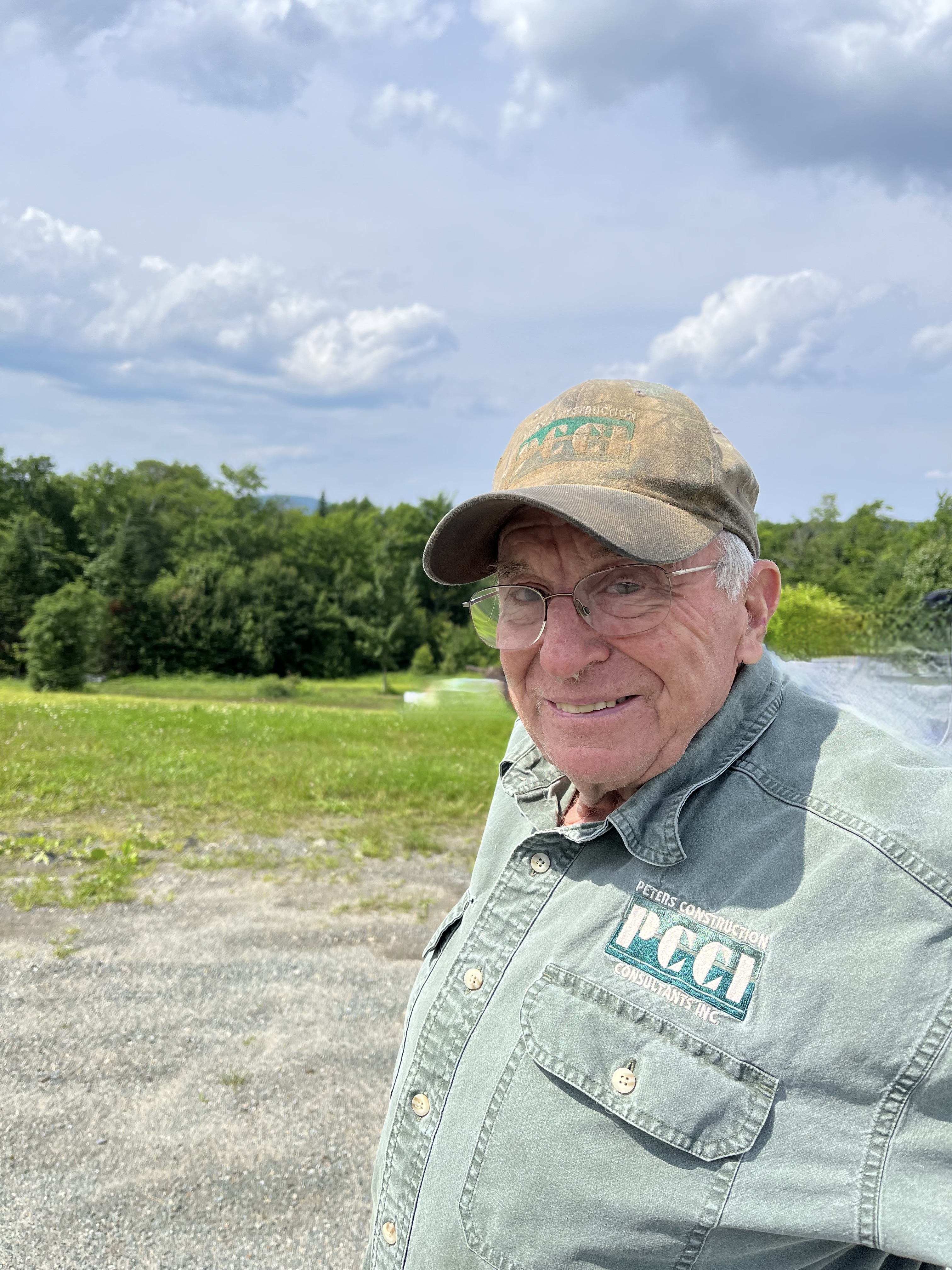
Plus some of my writing DOES regularly get into print -- the one-a-month feature articles on Northeast Kingdom people, traditions, and explorations that I write for The North Star Monthly. This week the National Federation of Press Women -- professional "communicators" from all over the United States -- gave an Honorable Mention award to my 2023 article on Bob Peters of Granby. It's a thrill to know that people across the country are taking a look at this story. He was a wonderful person to interview and I'm delighted to know that the judges caught that feeling.


Saturday, April 20, 2024

Identity: Nature, Nurture, and Choice


My grown sons are rarely interested in my "family tree" discoveries; I think that's probably healthy! On my mother's side, I'm 75% New England and 25% Philadelphia-centered Quakers, all dating back to America's earliest days; my father's side is European Jews, and one of my second cousins has taken that tree back to the Middle Ages. I've found that interesting, but not necessarily life-changing.

Finding Dave in 2002 (we married a year later) changed my identity in much deeper ways. I reflect on this especially in the Jewish holiday seasons -- Passover is about to start on Monday evening, and I think about how I've shaped my own observance of this important piece of Jewish history and identity. Mostly I'm on the quiet end of that holiday spectrum: I'll prepare a few traditional foods for Passover, and of course keep writing pertinent poems.

When my novel The Darkness Under the Water was published in 2008, it faced some fierce online attacks from three Native American women who assumed that the facts of the story were wrong, because I didn't have a Native American identity myself, and also assumed that I was trying to "make money" off a story that didn't belong to me. Neither of those was true: The facts in the story are particular to this part of Vermont and were thoroughly researched. And I only lost money on the book, including the part of the story that was "mine" in some ways.

But I wanted to write it for two big reasons. The first relates to my mother's Quaker ethos: I'd discovered the terrible injustices (horrors, really) of the Vermont Eugenics Project and wanted to bring attention to those through a "relatable" story -- that's how I often pay attention  to history myself. The second was my entry into Jewish identity as Dave's wife, my father's daughter, and an absolute beginner in absorbing traditions and culture of this venerable faith. I crafted the character of Molly in the novel with a similar position: a bit curious about the Abenaki culture that remained around her, but not well informed. That was also a good way to follow the instructions of esteemed Abenaki author Joseph Bruchac, who had warned me not to try to step inside a culture that I didn't and couldn't grasp.

Now I have indeed formed a full Jewish identity, one that reflects my father's family journeys. I honor the Sabbath, participate in a Jewish congregation, study texts in groups, write related poems, and can prepare a lot of Jewish recipes, including some challenging ones that belong to this Passover season. I know the names of five members of my father's family who perished by murder in the Holocaust. (Far more of Dave's relatives were killed then, too.) I've invested years and passion in this long change, which after Dave's 2019 death became increasingly vital to me. I love what I've learned and how it's forged my identity.

Recently one of my siblings and one of my sons asked about the Native American part of my mother's family history. It dates back to the late 1600s, to the Wampanoag. At my age, and having already committed myself to one cultural path, I still want to know more about this small corner of my birth family. So, watch for details this summer, when I explore this. It didn't play a role in writing The Darkness Under the Water, which feels appropriate -- it's never been a culture that I lived within or chose, and the Wampanoag identity doesn't include Vermont, but instead the New England coast -- but it's time to catch up with another thread of how I came to be this person, in this very American life.


Wednesday, February 7, 2024

More Than One Road to Get There


I've been writing "segments" of my life, most of them taking place in northeastern Vermont, for more than three years now on the platform Medium.com. A gap in my usual copyediting labors in January gave me "bandwidth" to begin a second set of strands there, on Code Like A Girl. It probes how I've related to and worked from my STEM background -- I'm a chemist by training, as well as a writer.

What I'm discovering as I lay out this second pathway through my life is that "telling the story" from any chosen direction is very different. It's like taking the interstate from one end of Vermont to the other, or relaxing on old Route 5, or (most time-consuming of course) taking detours when they appeal. Obviously, the journey takes different amounts of time. But it also seems to glow in different colors, maybe different wavelengths. 

I'm enjoying discovering that the telling of a life is a rainbow of words. Or, on my best days, fireworks.


Sunday, November 5, 2023

Dad's Side, Mom's Side, and Poems Linked to Each


Although my parents thought kids should find their own way to religion when they grew up, they each explained briefly their own backgrounds: Dad came from a German Jewish family with little religious attachment (and Dad himself refused any form of belief, he said, due to the Holocaust). Mom grew up with a Quaker mother, valued what she knew of that form of worship, but added that she felt closest to God in her garden. And New England was her core.

For the past couple of decades, as I've investigated Dad's life, with leading questions from my Jewish and much-loved husband Dave, my poems have explored more of Jewish tradition and culture. But when I'm in my garden, I'm my mother's daughter, inhaling the scent of soil and plants.

It seems I've arrived at a life point where I want to probe my mother's side of things more deliberately, so you'll be seeing more of that. In fact, it's sort of obvious in the two poems of mine published this week.


Here's one that seeks to find light in the darkness, as Israel and Gaza continue their war -- you'll see it's especially about Dad.

And this one, told from the point of view of Henry David Thoreau's sister Sophia, digs into my mother's New England heart, into the wonders of the natural world, and into the determined sense of women's "agency" that Mom taught me.


Friday, October 6, 2023

More Poetry Publications on the Way


I've probably spent too much time today, trying to figure out how to convert a recorded poem from one format into another -- and failing the tech aspect! But I have hope that the digital natives at The Post Grad Journal will figure that out for my poem "Teen Summer," lined up for their next issue.

Plus this morning I had the amazing experience of learning, before being fully awake, that two other poems of mine, "Crossing Over the Moose" and "This Tree of Ripened Fruit," earned honorable mentions from the Northwind Writing Award, sponsored by Raw Earth Ink

In this amazing interior + exterior season, I also am excited that "Diatribe from Sophia Thoreau (His Sister)" is scheduled for the November issue of Does It Have Pockets

None of the links above will show my poems yet -- but as soon as there are links for you to see them, I'll let you know! Now I need to get my feet back to earth, for today's exploration out on a back road in Danville, for my next North Star Monthly feature. Which will NOT be poetry!

Wednesday, July 26, 2023

Summer Books, and Summer Writing -- and Sweating


Summer in Vermont is glorious, and this year it's also scary -- that steady drumbeat of climate collapse becoming part of the pulse of my body and mind. The torrential rains with floods tore apart roads, homes, businesses. And, because "this is Vermont," they also bound many of us more closely in compassion and determination. When you face Winter together (the capital W is intentional), you value the arrival of others who can tow you out of a snow-filled ditch. So when you look at what remains after flooding, with the structures already starting to grow mold and the smothered fields stinking of decomposition, you add Summer to what we need to handle together somehow.

I've been mowing and planting, "grocking" my way to gardens that will eventually thrive without much attention and bring my rehabbed land, which was scraped bare just two years ago, to something loved and lovely. Writing comes slowly for me in the heat, but I wrapped up two trios of polished work and am constructing something about bears. Yes, the ones we live with. 

In the next couple of weeks I'll post reviews of a new birding mystery from Donna Andrews, and a strange direction for Alexander McCall Smith. Yesterday my review for a new trade edition of a James Patterson thriller posted at the New York Journal of Books:


The Perfect Assassin: A Doc Savage Thriller
by James Patterson and Brian Sitts -- review by Beth Kanell


“The perfect start to a pulp-fiction series brought into the 21st century.”


Pretend you don’t know who Doc Savage is or was, and you’ve opened The Perfect Assassin for its promise of being a James Patterson thriller. You’re ready for espionage, battle, comparison of weapons, intrigue.


Instead, Pattison, with Brian Sitts, offers a double narrative: The first involves a baby kidnapped 30 years earlier in eastern Russia, confined within a brutal boarding school that removes human affection and demands total attention to mastering skills, both in the classroom and in deadly physical situations like swimming in mid winter under ice on a lake. The second begins as a perverse echo of that: A harsh and powerful woman in Chicago kidnaps a wimpy anthropology professor, Dr. Brandt Savage, and cages him in a see-through cube, forcing him daily to complete agonizing physical training, eat only the disgusting nutritional smoothies she issues to him, and be punished with a shock to his bottom whenever he doesn’t do what she tells him.


Just before the story disintegrates into some strange BDM session, the narrative abruptly widens and the connection between the kidnapped baby and the dominating trainer named Meed becomes clear. When “Doc” Savage finally dares to ask why he’s been detached from his own life and is being rapidly remade, the answer makes no sense: He’s there to save the life of—this trainer? No way.


But he’s stopped resisting her demands, and even at strategy he’s more than catching up with Meed, as an intense game of three-dimensional chess reveals:


“’Check,’ I said. … ‘Nicely done, Doctor,. she said. I could see that she was annoyed—but also impressed. Part of her liked that I beat her. I could tell. So I decided to push my luck. … I slid out the throwing knife that she had hidden there. Before she could react, I held the knife up and whipped it at the man-shaped target across the room … Kill shot. My first. I could tell that Meed liked that even better.”


When the strengths and capacities of Savage’s remade body show up as irrational and, let’s say, far above human capacity, the penny may drop (as they used to say), if you’re a fan of the original Doc Savage from the pulp magazines. Or, of course, if you’ve stopped to look him up.


Like another series Patterson is masterminding featuring “The Shadow,” a long-ago radio show hero battling the forces of darkness, this one takes a notable heroic character from American life in the 1930s and redevelops him for today’s readers. How would you change your body in order to display a six-pack of muscles? What could modern science do to remake your senses of vision and hearing? How much could you learn in your sleep, if forced to?


At its midpoint, The Perfect Assassin switches direction and mood, from this mingling of attraction and torment, into a mission focus. The thriller mode that Patterson’s developed takes over, with attacks, angles, weapons, and more. Brace for deadly peril, of course, and devotion to crimefighting, as well as chase scenes, explosions, and espionage.


But there is also an underlying mission focus to the story, as well as links in the deep past that explain why Doc Savage and his tormentor/savior “Meed” must connect, and then must align themselves with a near-impossible challenge. It’s one that seems likely to require many more books of adventure and thrills—the perfect start to a pulp-fiction series brought into the 21st century.

* *

Later today I'll remove the latest set of delights from the flower press. Here's a portrait of my mother. Mixed media, mixed feelings -- check out the chapters as they accumulate on Medium. There will be a new one later today, I'm pretty sure. If the heat doesn't flatten me first.


"This Is the Real Thing": THRESHOLDS, an Exploration of Transitions

My new book of poems. Available in bookshops and online. My buddy B and I shared a long lunch at a community restaurant today, and wrapped i...