Showing posts with label Soho Crime. Show all posts

Tuesday, March 11, 2025

Book Recommendation: THE AMATEUR by Robert Littell, an Espionage Classic


Soho Crime, a Soho Press imprint, today releases a reissue of Robert Littell's 1981 espionage classic, THE AMATEUR. What a gift! Littell even catches the tang of some sardonic Russian fiction of that time, as he positions one angry coding analyst, Charlie Heller, as an American geek who find he just has to do something about the murder of his darling fiancée. When Heller discovers that the CIA -- to him, the Company -- knows which three terrorists have killed his sweet and beautiful Sarah Diamond, jeering at her for being a Jew, and knows where those three are, yet plans to do nothing about this, his unexpected emotions lead him to an insistence on action.

Heller's quickly aware that no action will come from his employer. In fact, he's subtly demoted, moved away from the urgent daily coding and deciphering that have been his area. He's been managing communication for an embedded spy located near where the killers now reside. What can he do about all this?

His geeky decision to take matters into his own untrained hands leads him to blackmail his boss into letting him train to go after the murderers. Even the Company's trainer thinks he'll fail -- a gun in the hands of such an amateur is less than fifty percent likely to hit what he fires at. And as a desk jockey, he's not in the physical shape to choose other killing methods, is he?

But Heller's almost father-in-law, Sarah's father, is a Holocaust survivor who already lost his first family, and tells Heller bluntly, "To survive the death of people close to you, you need ritual. ... I spent three years tracking the doctor who sent them to the gas." Mr. Diamond confesses that he strangled that doctor. When Heller says, "it didn't bring them back from the dead," the old man gives him the real point: "It brought me back from the dead!"

Even the Company shrink seems to agree: "From a medical point of view, revenge is very therapeutic." So Heller feels he has all the best reasons to pursue his new plan.

Things get tangled up, of course. The spy he chases isn't who he thought it was. His feelings aren't manageable. He is, indeed, a clumsy amateur, and when the Company tries to control his actions, things get quickly even more dangerous.

Littell's delightful plot takes Heller into highly satisfying changes and actions, and reveals slyly the other meaning of amateur that we've known all along: One who loves.

Pick up a copy for the pleasure of this still great story, for insight into how Littell cut a path for today's espionage authors, and for the foreword by Mick Herron. Totally worth it!

Sunday, September 1, 2024

Billy Boyle World War II Mystery #19: THE PHANTOM PATROL, James R. Benn


Sure, autumn is great for crisp air, colorful leafs, and seasonal sports. But when cold rain or darkness (or needing a break) sends you back indoors, one of the big treats of the season is a new Billy Boyle mystery from James R. Benn. And number 19 in the series, THE PHANTOM PATROL, comes out this month. 

Apparently the publisher suffers from mild autumn flu or something, and has pushed back the release date to September 24. Definitely a nuisance for the author, as well as for bookstores hosting release events! But it will all work out. And I've got an advance copy, so I can fill you in and you can place a pre-order now, for delight in three weeks.

Yes, the new Billy Boyle is a keeper! This series has moved slowly through World War II, digging up extraordinary pockets of history that this young Irish cop turned wartime detective (working for "uncle Ike," General Eisenhower) discovers in assignments, official or not. His powerful friendship with Kaz, a Polish baron also working in his corps, his alliance with his boss Colonel Harding, and his romance with the very British Diana, who has even engaged in espionage behind German lines, have all lit up the books and given them emotional resonance.

In that way, THE PHANTOM PATROL cuts new ground for Benn. Although Kaz and a few others are with him as the book opens in the darkness of a Paris night, December 13, 1944, in the enormous Père Lachaise cemetery, much of the action depends instead on how Billy interprets what's going on a round him. We get to track his experience, his questions, and his choices, smart or not, as he sorts things out.

"I fired at the afterimage of the muzzle flash, then ducked as another burst slammed into the mausoleum. Kaz let off two more shots and I backed up, taking cover behind a tree as a gunman fired into the position I'd just vacated. I didn't have a clear shot at him, but as I scrambled between the graves, I realized these guys must be soldiers." 

Most of these enemies escape—leaving only one behind, neatly executed so he won't talk. "Excellent planning and ruthless approach," comments Billy's friend Kaz. ""Who are we dealing with here?" 

"And what the hell was in that grave?" I asked.

A quick bit of perspective: At this point in the war, the German occupying forces in France knew they'd been licked, and most officers invested in personal aspects of retreating. That included carrying away the spoils of war, which notoriously included priceless artwork. But others may have a stake in the profits. Soon it's clear that the gang activity Billy's hunting down must be engaged with masterful paintings. The obvious questions are, how are they being moved and how can the American team cut the supply lines?

Lightening up the action are cameo appearances from some of the American noncombatants embracing Paris and sometimes reporting for newspapers or enlarging their careers. Watch for J.D. Salinger and Ernest Hemingway, as well as British actor David Niven, drawing on his own military expertise from between the two wars. (I found myself pausing often to look up some of the surprises, and Niven's career was one of the really remarkable ones.)

David Niven (Wikipedia).

Benn is fully trustworthy as a historian and researcher, and deftly braids his details into Billy Boyle's investigations and personal stakes. It's hard to guess how long this series will run, as Benn's been adept at mining the war, month by month—but readers know the war will end, maybe not as soon as Billy and Kaz and Diana would like, but as even the Nazis know, the tide has turned and can't be resisted. Ramping up the suspense of this period is Benn's subtle threat to the relationship between Billy and the love of his (young) life: Will a Boston cop and an English aristocrat find a way to sustain their love and purposes when peace finally arrives?

Billy's own comment near the end of the book sums up what's at stake, and I can quote it without spoiling the plot: "When this is over, it damn well better have been worth it. We deserved a world worthy of both the sacrifice of the dead and those exquisite paintings. We deserved a world of love and beauty."

Don't miss this episode; it's the footing for the remaining Billy Boyle volumes, a rich platform of meaning and suspense garbed in the significant history of our time.


Sunday, July 7, 2024

Book Notes: Dark, No Sugar—from Eli Cranor, Scott Phillips, Stuart Neville


These three crime novels are all from Soho Press: two from the Soho Crime imprint, and one from a new imprint called Hell's Hundred. Brace yourself. And note that the blue links are usually to reviews I've posted earlier, often on our Kingdom Books blog.

BROILER by Eli Cranor came out last week (July 2) so you may have missed it, considering the fireworks both physical and political. I reviewed Cranor's two earlier books, Don't Know Tough and Ozark Dogs, and this new one follows his curve toward increasingly bitter exposure of hard lives in Arkansas. Being ground down by circumstance, poverty, and the power of your boss is a classic situation that breeds thoughts of revenge. "Hardworking, undocumented employees" Gabriela Menchaca and Edwin Saucedo suffer some of life's terrible losses ... and that's before you add the horrors of their work at a chicken plant.

What they can't imagine is that the rich and powerful in their lives might also have wounds. And it takes the women to sort this out. There's a lot of "ugly" to wade through in this very new take on a kidnap crime -- but there's a lot of beauty, too, in Cranor's resolution of the hot mess.


THE DEVIL RAISES HIS OWN (August 6 release) is  Los Angeles noir at its richest and funniest, set in 1916 as photographers fumble with the new film technologies available—and the shocking delights of the mild porn called blue movies. Scott Phillips is known for his Midwestern noir but his 2020 That Left Turn at Albuquerque was already shifting the locale westward ... and isn't the classic noir often rooted i n LA?

When the photo would-be professionals cross paths with Bill Ogden and his studio, not to mention Bill's strong-willed granddaughter Flavia, complications multiply. Still, each of the men in this tangle has his own ways of keeping calm:

On the streetcar home from Pasadema Bill sat next to a handsome woman wearing spectacles, a basket full of vegetables at her feet. After a while she turned to him and spoke. "You hurting, mister?"

"What makes you say that?"

"You keep wincing."

He hadn't been aware of it. "I pulled a muscle in my back."

She looked him up and down, mouth pinched tight. "You look like a man's been up to some mischief. ... You have a look I recognize. A cheat. ... I can smell her eau de cologne on you. And I'll bet she's married, too, isn't she?"

Love noir, especially LA noir? Or dipping back into the start of the Golden Age of film? Pull this one onto your summer reading shelf and get ready for a lot of sneaky grins.

I would read almost anything by Belfast author Stuart Neville. His Belfast Noir books have been compelling, often threaded with the paranormal, and fisted with the generation-to-generation wounds and darkness of The Troubles. So I grabbed BLOOD LIKE MINE without realizing the shift of genre. It's quickly obvious: This is an all-American Western plus horror crossed into crime fiction, with that bloody tang of the Donner party in the background. (If you don't recall that from history class, take a moment to look at what took place back then.) It's compelling and gruesome ... and I hope that Neville isn't going to take this as an ongoing theme for a series about the historic burdens of growing up in the United States!


Almost anything else I could tell you about BLOOD LIKE MINE would be a spoiler -- you need to roll into it and figure out the twists as you go. I'll just tip my hat to Neville's unusual positioning of a mother and daughter and their very unusual motives for their Western journey. Shudder ....

The book's release (August 6) marks the second of the "Hell's Hundred" collection (it started in June with youthjuice by E.K. Sathue. Follow, pre-order, do all that important planning if the mingling of horror with crime and noir is your cup of ... certainly not tea!

Saturday, July 6, 2024

Book Notes: Fresh Books from Hugh Laurie and Rex Stout

1996 hardcover


When I heard Hugh Laurie's crime novel THE GUN SELLER was being re-released this summer by Soho Press (which published it originally in 1996), I found the advance review copies were missing the hyped "introduction by the author" and "foreword by Stephen Fry." I bought one of the first edition hardcovers -- marked up by a library -- and dug into the story. 

Laurie is a noted actor, and in the US best known recently as Dr. House in the eponymous TV series House. I was tickled to find that his sense of plot and pacing in this book, his first novel, is first rate. Either he absorbed the rhythms of his performances (also including Blackadder on TV, and 101 Dalmations among films), or he's been reading and soaking up crime fiction for a long time. Or both.

2024 softcover
When former Scots Guard officer Thomas Lang receives a pitch for contract murder, he declines immediately and goes above and beyond the ethical call by going to see the prospective victim. That gets him into several kinds of trouble, from legal to physical, and at the same time makes him the target of an old-fashioned "honey trap" enterprise. The first half of the novel plays out as expected, with plenty of that familiar wry humor familiar from Blackadder. The second half is frankly unbelievable, but still a fun and lively read.

And now that the new edition's in print, you can read the very short intro material. But if you can grab the earlier edition, you might as well, because there's nothing of note in those added segments. The "Discussion Questions" in the new version are pretty funny, though. 

Espionage fiction shelves and British humor shelves should both include THE GUN SELLER.

*

As a devoted fan of Rex Stout's Nero Wolfe series (if you ever met my darling extra-large husband, you can appreciate one reason), I rushed to pre-order HOW LIKE A GOD when it was announced in January that a never-published Stout book would be released by Hard Case Crime. It arrived as promised at the start of June. After several attempts, I've passed it along elsewhere. It's a cross between an existential exploration of a potential murderer's mind, and a grim LA-style noir, narrated as if it were an existential pseudo-novel. Not my cup of tea. If you like very dark noir and can put up with a slow pace and many diversions, give it a try and let me know your thoughts afterward. I'm going back to the Nero Wolfe series, which often warms my heart, as well as providing classic mystery narrative.


Wednesday, April 24, 2024

One Traditional Crime Novel, One International Thriller

"Genre" fiction still has to meet the standards of good writing: strong characters, a sense of place, and in a plot that makes you want to open the next chapter. When you reach the last page, there should be some form of satisfaction -- and if there's frustration too, that's got to fit with an expectation that developed while you were getting acquainted with the author's temperament and motives.

But genre fiction —in this case, crime fiction, mysteries, and thrillers — also has to meet more criteria, because readers understand them as "game rules." For example, the mystery can't be solved by a walk-on character saying "Oh, didn't I tell you, I saw my uncle buying that rifle?" As another example, crime fiction doesn't generally allow ghosts into the picture (unless you are reading Stuart Neville; yes, highly recommended but, as we say in New England, it's wicked dark).

These two books are classic genre fiction, but "deeper, stronger, better," because the authors bring a powerful motivation to shape your experience and have the well-honed skills to do it.


First, consider THE HOLLOW TREE by Philip Miller. Don't judge this by the cover, which looks a bit like a desert cactus in color shades speaking of Arizona ... the actual setting is a small gritty town in north England where crimes can linger unsolved for a generation and memories and resentments can reach even further.

With his second crime novel, Edinburgh author Philip Miller comes into his prime. The first sentence of THE HOLLOW TREE offers a perfect example of this book's engrossing pattern of laying out one truth, then pulling it back: "Shona Sanderson was going to a wedding. The day would end in death."

Sandison is an investigative journalist, now saddled with a permanent disability that forces her to maneuver with a supportive cane ("stick" in British) and leaves her always off balance. So does the case she tumbles into, as she witnesses the gory suicide of a wedding guest. Miller presses Shona into overwhelming conflict when what she witnessses threatens to destroy her valued friendship with the bride-to-be. An as a caustic, insightful, and probing person, Shona's got very few close friends. The more she pushed for answers to a set of hidden crimes, the more she risks devastating consequences to the people she treasures—and herself.

Reading THE HOLLOW TREE parallels eating a globe artichoke, leaf by leaf. Your teeth scrape the sweet richness at the bottom edge of each, but you can't reach the aromatic heart of the 'choke until you complete the disrobing. In a steady accretion of toxic loyalties and occult dangers, Shona exposes how a core of evil has infected the community across time and can shatter strong bonds of love. Shona's body can't always do what the circumstances demand. But her insistence on revelation becomes the core of Miller's demonstration that the texture and questioning of crime fiction create an ideal lens for the dobt, anger, and passion of our time.


Though it's also "genre" fiction and even published by the same firm (Soho Press under its Soho Crime imprint), Andromeda Romano-Lax's THE DEEPEST LAKE couldn't be more different. Revolving around an upscale writing retreat in Guatemala on the shores of Lake Atitlán, complete with a charismatic writing teacher known for unpleasant memoirs, the story quickly establishes a mode of threat, danger, and deceit. Alternating points of view in the present tense, although they may reflect different time periods, challenge readers to stay alert and pin the evidence together around the disappearance of Rose's grown daughter Jules. Rose's ex-husband already funded a conventional search for their daughter at the lake, and concluded she was dead. Rose pretty much believes that too, but can't leave the loose threads alone as she mourns and faces her own despair and helplessness.

Experienced thriller readers may see the fierce psychological darkness that Ruth Rendell instituted in British thrillers under her pen name Barbara Vine. These frightening books (best not read at bedtime) exposed the horrors a twisted psyche can impose on others. Because of how Romano-Lax plays out her various points of view, readers know what's going on and where the threats are coming from, long before Rose does — which can be frustrating. But it's also playing fair with the traditions of thrillers, which pin the reader into a form of helplessness like that of the victim or victims in the book. 

Another parallel to this work, set on the American side of the ocean, is the Maine paranormal mystery series offered by John Connolly, where again it's the wickedness of some human hearts that drives the threats and harsh disasters of the fiction. Hat tip to Romano-Lax for probing a fresh setting at a time when Central America is becoming part of a prevailing US nightmare of difference and greed.

Friday, November 24, 2023

Most Unusual Serial Killer Novel Yet: DAUGHTER OF ASHES by Ilaria Tuti


November is almost done; today's unexpected glimpses opf blazing blue skies hint at the brighter, coler weather ahead here in Vermont. Winter is a time to be selective, to pick up only the best mysteries and crime fiction, ones that will pin us into snug reading rooms and give us heartfelt potential growth.

Serial killer crime fiction often settles into one of two categories: either bloody and horrific and terrifying (those Hannibal Lecter types), or hard-pressed beahvioral analysis against a ticking clock (some Jeffery Deaver books, and every episode of Criminal Minds).

Italian author Ilaria Tuti, in a powerful and flowing translation from Ekin Oklap, concludes a remarkable crime fiction / police procedural trilogy with DAUGHTER OF ASHES. Her protagonist is police superintendent Teresa Battaglia, who battled her way to a Northern Italy superintendent slot despite her gender, holding a firm grip on a department of mostly men and using her personal losses as added incentives to break open cases.

As Teresa arrives at a maximum security prison, her staunch ally Inspector Massimo Marini awaits her. The pair haven't seen each other in two weeks, since they broke the case featured in book 2 of the series, The Sleeping Nymph. Their presence at the prison is because serial murderer Giacomo Mainardi wants Teresa's help and has called for her to come see him. After all, he'll never be out of prison—where she helped confine him 27 years earlier.

The narrative alternates between "Today" and "Twenty-seven years ago." Tuti maintains fierce suspense in both timelines, and each offers a poignant sense of loss: Discovering how much Teresa lost in the past won't happen until there's a workable explanation of what Giacomo is up to now, however. And Marini isn't just there to back up his superintendent—Teresa wants him to learn how the brilliantly insightful Giacomo can assess and attack emotionally. It is, after all, the core of how he's chosen his victims and what the coded clues he lays out indicate.

And Teresa wants very much to both teach and protect Marini, who's become part of her "family of choice" (or maybe of necessity) in her later years:

Now that they were finally face to face again, they took a moment to study each other. It had scarcely been twenty days since they'd closed the case of the Sleeping Nymph, and they both still bore its scars: a bout of sciatica for her, a few burns and bruises for Inspector Marini. But how his eyes blazed. Teresa saw in him the young officer she had once been, sleep-deprived and desperately eager to prove herself. He was already primed to dive into a fresh case, and he wanted Teresa to go with him—unaware that she had already fallen into this particular vortex before, nearly thirty years ago.

Although Teresa will struggle throughout this new case with her own ailments, physical, mental, and emotional (doing her best only to reveal the physical), instructing and protecting Marini drives her to keep taking risks. What Marini can't understand or accept, however, is her apparent bond with the killer. Is this what it takes to analyze a serial murderer? He's repulsed by the notion that his policing mentor might think she has something in common with the monster behind bars.

It's increasingly clear that this is likely to be Teresa's final effort on the police force, although how she'll convey the reasons to Marini is still unclear. When Giacomo sends them chasing evidence at an archaeologically significant crypt, she learns how serious her disabilities have already become. But still, she needs Marini to understand Giacomo the way she already does:

"Most people think of Giacomo as a sadist, but I never got that impression." She hadn't spoken at all for the last two hours, not since her blunder at the crypt—a moment which, like all decisive acts, had proven to be revelatory. Her voice sounded hoarse, and guilty. She cleared her throat. "The amputations always occurred after the victim's death; the aim was never to cause suffering, but to take the life of those who were deemed—symbolically—not to deserve life at all."

Not only are readers walking into dark places with this investigator, but she will have to draw Marini along into how she approaches criminal analysis. In the process, she may be forced to reveal her private losses and damage, because they may be part of what drives Giacomo Mainardi. And it seems he has the capacity to keep on killing.

Immaculately plotted and intricate, DAUGHTER OF ASHES sets a new bar for fictional investigations of  murder. Whether Teresa can convince Marini, or us, that empathy for Giacomo is both humane and important to solving his crimes acts as an added strand of powerful suspense, in a book that also probes the most painful and enduring of our losses.

From Soho Crime, an imprint of Soho Press, releasing on December 5.

Sunday, November 19, 2023

How Bad Could Things Get? Chris McKinney's WATER CITY Trilogy Tests the Answers


Climate collapse, floods and fires, political divisions, wars and devastation—in America, it's not uncommon for people to feel like it's going to take a great leader to get us safely out of these very hard times.

But that's not where Chris McKinney heads in his WATER CITY trilogy. After the earlier Midnight, Water City and then Eventide, Water City, where a synesthetic former detective's been tackling the crushing issues around him in an effort to save his too-talented daughter from being coopted, McKinney and Soho Press collaborate to move rapidly into the last volume: SUNSET, WATER CITY. 

In a radical switch from the nameless not-quite-hero of the first two books, the third one (set in the year 2160) spins from the point of view of that talented daughter, Ascalon, whose experience at age 19 includes both armed resistance and a lot of forms of tech destruction. Battling both her US neighbors in the toxic lands of the Great Leachate, and the overwhelming technological dominance of the near-deity Akira Kimura, Ascalon's courage and defiance take root in her anger at her father, as well as her love for her vanishing family.

As I read SUNSET, WATER CITY a second time, I thought a lot about trilogies. The one I grew up with was The Lord of the Rings (Tolkien); then there's the Hunger Games trilogy. But also there's a trilogy at the start of Ursula Leguin's Wizard of Earthsea books: A Wizard of Earthsea (1968), The Tombs of Atuan (1970), and The Farthest Shore (1972). And I'm one volume into reading Cixin Xiu's formidable Chinese space trilogy right now.

On reflection, I wonder whether world-building requires a bigger canvas than a single book. Building the pressure points needs to extend beyond that first volume, and the most intriguing and memorable characters, whether heroic (Frodo, Katniss) or antiheroic (Ascalon's father and Akira Kimura herself), need years to mature and deepen, in order to provide a meaningful resolution to another world's issues. And maybe that's especially true when, as with McKinney's trilogy, the issues are so clearly unsolved in our own present time: environment, antagonism, excessive power.

So my second reading of SUNSET, WATER CITY looked for how McKinney (who by the way is a native Hawai'ian with ethnic threads that are Korean, Chinese, and Scottish) asserted the solutions to the trilogy, not just to one book. What I found is that this third volume is as much a statement of human value as it is an adventure. Ascalon asks herself, "It this what it always is to be with other people? To not understand each other? To harbor trauma? To bottle anxiety, probe, and flinch before another even responds? I feel lost." When she decides to tackle the bigger issues of her world, she's aware that it's also an escape from this inner lack of certainty; "I will try to bury my grief and rage for now. I will try to fix this. I will take my father and Jon6J to Ascalon Lee. It's time to return to Water City."

A return to Water City demands unusual physical capacities, and many will feel especially strange to "mainlanders" reading the series -- but less so to those who live with islands and oceans. Over time, the presence of this trilogy and the inevitable film versions to follow may bring Ascalon's adaptations to some level of expected adaptation, like Frodo's interaction with the Ring. But expect a first reading to feel uncomfortable; expect to utilize your capacity to "listen" and to "suspend disbelief." Ascalon's discoveries, at first framed in her perceptions of her father, are worth reaching: "He should've known that it's impossible to sleep to the future to change the future. One needs to be awake to change that."

Without spoiling the plot, I can say that Ascalon clarifies her own motives as she battles for what she feels is right. Unlike the three leaders around her -- her father, her mentor Ascalon Lee, and the overwhelming Akira Kimura -- this young woman intends to protect her world, if she can just figure out which elements of it merit that protection.

In a time of chaos and pain, it may seem counterproductive to dip into a trilogy that proposes that Earth's issues are so extreme that only interplanetary settlement and technological unity will pull us through. But McKinney's narrative is so compelling that it's well worth entering his speculative world and his painfully maturing protagonists. Besides ... isn't it time, after so many decades, to step beyond Frodo and Gandalf's solution for Middle Earth?

[For some extra insight from the author, look here: https://www.watercitytrilogy.com/building-water-city.]

Detroit Crime Novel Sees "the Church" at Fault, in Stephen Mack Jones's 4th August Snow, DEUS X


For me, part of the point of working hard (and creatively) is the pleasure I can take later, collapsing into a fictional world that's totally apart and full of eventual triumph. So a well-plotted crime novel with characters I can care about, well, that can be quite a gift. And it's a thrill to let people know about the award-winning fiction coming from a "Michigander" like Stephen  Mack Jones.

You haven't read his August Snow series yet? Wow, you've got a big treat in store! This ex-cop in Detroit lives at the edge of multiple ethnicities — especially Hispanic and Black — in the Mexicantown neighborhood he and his friends have been steadily rehabbing.

When the local Franciscan priest, Father Michael Grabowski, suddenly retires and appears to be dying, August is convinced there's more at stake than physical illness. Father Grabowski's abrupt withdrawal from friendships and his 40 years of community care signal a spiritual collapse that's got to be related to another nearby priest's suspicious death. 

When August starts probing, he meets his match in a fierce (and armed) investigator from the Vatican who wants the local priest to take all the blame for a string of other abuse and deaths. And that's where the crimesolving rips into action.

Still, the deep pleasure of DEUS X is in Jones's rich descriptions of the neighborhood and of August and his allies, like Tomás: "Tomás handed me a mug. Like me, it was dangerously dark, slightly bitter, yet oh so satisfying." Yes, there's a woman in August's life, Tatina, who feels that way about him, but in this adventure, she's mostly off scene ("Somali and German, living in Norway").

Which is just as well for Tatina's sake, considering what August and Tomás are up against. The Vatican has its own enforcement team? Who knew? Is there a rational explanation for how some of the related menacing men seem to vanish when cornered? Although August tries to reassure himself that real deaths involve physical results, even he is worried about whether there's a scientific or technological explanation: "If not, I'd have to seriously reassess my position as an agnostic Mexican-American Catholic with African-American Baptist metaphysical leanings."

Jones takes this fast-paced crime novel across several boundaries of old magic and traditional healing, as well as Catholic priesthood abuse issues. So it's a compelling page-turner, excellent for a winter weekend of escape and questions, framed in sturdy friendships with plenty of firearms and other defenses. You don't need to read the other three books in the series first, although if you do, this one will resonate more—but you can pick them up afterward, because chances are, August Snow's fierce urban loyalties will leave you wanting more of his adventures.

Wednesday, August 30, 2023

A Little Wobble on a Rainy Day; and PROUD SORROWS by James R. Benn


It's raining ... again. A quick look at online records suggests that in Vermont, in August, you have a 50/50 chance of rain on any given day. But it feels this year like the rainclouds slip around on a fairground track, headed back toward us the moment we think they're gone.

That's good for anything I've transplanted this month, since the roots are being steadily wetted down. On the other hand, I've started resorting to the dryer to get my towels back to useful status, instead of hanging them on the porch. We'll remember this wet and often flooded summer, as we look back on it.


Speaking of looking back -- well, isn't that one of the functions of historical fiction? For the hours that I am "inside" a well-spun story, I'm no longer comparing then and now, but I'm experiencing a different time altogether.

The Billy Boyle World War II Mystery series presents its 18th title next week (Sept 5, Soho Crime imprint of Soho Press): PROUD SORROWS, by James R. Benn. The title comes from a Shakespeare couplet in the play King John, referring to the force of grief. In November 1944 in Britain, surely everyone had a reason to grieve: The war hadn't destroyed Britain, Germany hadn't defeated the proud island nation, but death, crippling injuries, and residual trauma affected all.

Benn's first chapter swiftly reveals all the English village characters who'll have potent roles in the murder investigation ahead of Billy Boyle and his colleagues. Poor Billy! He's supposed to be taking a long-overdue break at the country home of his girlfriend Diana's father -- it's damp and chilly, a classic English November, but he comments, "I shouldn't complain. I was dry and no one was shooting at me."

Trust a big dinner group to show the cracks in family and friendships, though. Soon enough, Billy's worrying about the tensions that surround him. Some vacation! Series readers know he grew up in a Boston "cop" family and landed in Europe as a criminal investigator working for one of General Eisenhower's teams. Benn, however, is a straightforward author who won't leave you guessing about that, and about Billy's skills, in case you're new to his books:

Curiosity is the curse of any decent cop, as my dad and Uncle Dan, both detectives with the Boston Police Department, had drummed that into my thick Irish skull on many occasions. Always wonder why things happen, they'd say. Figure things out, even little things.

Billy's not-a-vacation-after-all involves a retrieved German bomber, some local feuding, injured and missing persons, and eventually the discovery of a murder. Will the little things help solve the crime? Trust Billy to see what's not obvious, even when looking at a ransacked home: "When a house has been gone through so thoroughly, it's usually because the object in question wasn't found."

A good part of the pleasure of Benn's Billy Boyle books is discovering what quirky, politically forceful, and culturally mystifying historical forces this author has unearthed in his march through the years of World War II. This time, the focus is on the Ritchie Boys and on right-wing politics. Benn provides a fascinating set of notes at the end. As usual, what cracks the case will be what Billy and his allies pull together, in this case about Nazi prisoners of war, but also about the land and nearby ocean. 

PROUD SORROWS offers an exhilarating and often emotional adventure, with hints at what lies ahead for the series in its inevitable movement toward the final year of the war. Now I think about it, re-reading this well-told mystery is just perfect for another Vermont rainy day. Time to make a cup of tea and tip back into the armchair.

Saturday, August 26, 2023

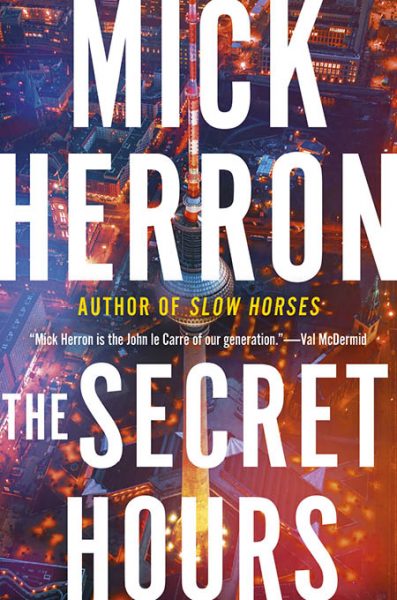
Slow Horses, Dark Discoveries: THE SECRET HOURS, Mick Herron (Sept. 2023)


My favorite characters from the Slough House/Slow Horses series are River Cartwright and Catherine Standish. I identify with each of them for a different set of reasons. (No, I am not going to whine about my father or my past here! I do that in memoir pieces, here.) And I can't stand Roddy Ho, with his endless primping and overweening self-esteem.

But the ones that obsess me are Jackson Lamb, Molly Doran, and Diana Taverner. Why? Because I'd love to have learned from each of them, and I wish I were as brave or as smart, and I know that I'm not. As a small child, when I began to realize that my parents kept secrets from me, I hoped with a deep unholy thrill that one of them was my identity as a Genius. By ninth grade, I knew that wasn't on the map. In the Slow Horses/Slough House series, though, each of these three has special incisive mind and, as a result, a degree of power that I'd now hate to have in my hands. The books let me peek into the inner selves of these characters, though, and there's a marvelous illicit thrill to that past-the-curtain view.

Hence the absorbing, impelling fascination of Mick Herron's 2023 offering, THE SECRET HOURS. Breaking the tradition of the reader knowing the sneaky secrets, this London/Berlin espionage novel offers a kaleidoscope of work names, job positions ("First Desk" at MI5), and hidden motivations as if the story unfolded in a very foggy neighborhood where any sighting of a spy on the sidewalk ahead could actually be the local bartender lost outside his terrain—and vice versa. 

Because the narrative involves so many hidden identities—some for the sake of anonymity among espionage professionals, some for political manipulation, some due to multiple identities either on British soil and foreign, or while publicly appearing "kind and wise" and secretly shown as manipulative and wicked— THE SECRET HOURS offers a shadow dance at first. Naive young "spooks" experience real life; political hostages slowly notice their bondage. Series readers will get the most from this novel, as they'll be alert for signs of which First Desk is hiding in the shadows, who could be a traitor, and small character traits long since revealed among the so-called slow horses. As one mask after another is lifted, the masquerade turns deadly. Yet, of course, this is Mick Herron writing, so deadly is also simultaneously funny and heartbreaking.

There are also delicious asides into evocative description, slipping in mention of the book's title phrase: "Even when apparently peaceful the [MI5/MI6] hub is alert for disturbance, whether in the world at large, on the streets of the safeguarded cities, or at the next work station along, because—as the whispered mantra has it—You never know. You never know when treachery might strike, or from what quarter. This is true whatever the time, but especially true after dark, since how we act in the light of  day is largely for other people's benefit, but what we do in the secret hours reveals who we really are."

Or the revelations of character in the face of rude awakening: "There was a big rip down the centre of everything now. It wasn't fair, she absurdly thought; wasn't fair that people should expose the violent terrors history held, and expect you to know how to respond." 

In the deliciously balanced double time spans of the book, the same character in another era will reflect: "The events she is recalling took place years ago, decades ago, but there is no statue of limitations on remembered damage, if that is what this is. And how can it be anything else? Happiness takes on a different shade in the light of  its consequences."

Don't let the "literary" phrasings mislead you -- this is also a book of fistfights, kidnapping, death threats, and some murder-for-politics. The difference is, in Mick Herron's hands, the questions asked by the ordinary people doing the footwork really matter. And ache. (And sometimes make you snort with an unexpected laugh.)

I often tell people to plunge into a book without worrying about whether they've read earlier work in a series. And you can do that with THE SECRET HOURS, of course. But if you do, then dip into some of the earlier Mick Herron books and come back to this for a second read. Then you, too, will double your time periods of engagement, and perhaps see, and feel, the movement of the world more clearly.

Release date from Soho Crime, an imprint of Soho Press: Sept. 12, 2023.


Monday, August 14, 2023

A Last Round of Summer Reading: Book Recommendations


I've recently taken photos of leaves turning red and yellow and landing lightly on the back roads or new-mown grass. It's still summer here in Vermont, where mowing the lawn with the walk-behind mower means working up a good sweat, but the cool evenings glitter with shifting constellations. Orion will rise in a few more weeks, and we'll start worrying about frost.

One of the unexpectedly moving crime novels on my summer reading stack has been WHERE THE DEAD SLEEP by Joshua Moehling (Poisoned Pen Press). This is his second book and takes a deeper look into the life of Sheriff Packard, introduced in And There He Kept Her. Significantly, it opens with an "inconsolable" three-legged dog whose nightly share of Packard's bed was taken by a visiting lover. Within a few paragraphs, it's already clear that Packard isn't handling his personal life well, while trying to be a small town's first gay (acting) sheriff. This personal confusion inevitably interferes in his crimesolving, and in his insight into why a local gambler turns up murdered in a home invasion.


Moehling is a gifted storyteller who sets up situations that clarify how greed, anger, and frustrated love can all become motives for crime. Packard's strengths depend on his ability to enlist loyalty and honesty from people who may not readily offer them. He also captures a twist of information and character in a few well chosen words, as in this fragment of a poker game: "When the river card turned, Jim raised and Richard folded. Alan shuffled his chips, then finally called. Jim took the hand with a three of a kind. Alan tossed his cards, showing a low pair." Minutes later, Packard will clear the high-stakes table with a haul of $75,000 that he can't accept, but that buys him enough respect to get some of the truth of the crime at last.

This book interfered seriously with my work plans. I wish you the same experience.

Also in the August heap has been EVERGREEN, the second crime novel of Japanese internment and anti-Asian prejudice surrounding World War II, by Naomi Hirahara and published by Soho Crime, imprint of Soho Press. I wasn't a huge fan of Hirahara's first, Clark and Division, finding it a bit too stilted (tasting like a translation despite the California birth and life of the author) and without a lot of character. 

To my delight, I found Evergreen smoothly written, intriguing, with strong development of determined Aki Ito and her struggles with both family and the unwelcoming nation, and with a complex strand of crimes involving both the plight of "second-class citizens" and the postwar new growth of America. Here's one of the polished turning points as an example:

The next meeting was going to be held in the Japanese-operated flower market on Wall Street in a few weeks.

"It's going to take time, Pop," I said.

"Those son-of-a-bitches," my father cursed. "They are not going to get away with it."

I sat quietly in the passenger seat, clutching my pocketbook. I knew that he wasn't just talking about the produce market. I couldn't bear to say out loud what I felt: Pop, they already have.

You'll want this one for any collection that circles World War II and the aftermath, or hate crimes, or American history, as well as Japanese culture and well-plotted urban crime fiction.


Later this evening I'll be working on my new memoir segment at Medium; I really enjoyed sharing some writing tips with other authors on the platform last weekend, using my extensive reviewing background to point to what makes a strong piece of writing and offering tried-and-true tips to get there. Every day, I'm aiming to deepen my own writing; it gets easier to make time after Vermont's first serious frost arrives, but until then, I've got a yard and garden to tend, as well.

Wednesday, July 5, 2023

Wait, What Century Are We In? Radical New Fiction from Sujata Massey, Mick Herron, Chris McKinney

Book recommendations! My recent reading has been all over the timeline and globe, thanks to three summer releases from the Soho Crime imprint of Soho Press. NOTE the release dates, please, for ordering and pre-ordering. I'm not exaggerating when I say that each of these books has given me insight into the mastery of important stories, as well as intrigue and adventure.

1920s India, Courtrooms and Crime (JULY Release)


The 1920s gave women freedom of dress, dance, and hair in the United States, as well as the vote -- but social change moved differently in India then, and Perveen Mistry, British-trained daughter in a Bombay law firm, can't find her footing. She should be recognized as a solicitor. But when she rashly tries to stand up before a judge on behalf of another family's injured servant, her credential aren't good enough: "I completed the bachelor of civil law education at Oxford University. Following this, I clerked at Freshfields which granted me the rank of solicitor." The judge traps her with an inquiry into her grades on the law exams, which of course she hasn't taken. "Female law students were not permitted ..." A very embarrassing move by the judge banishes Perveen from the courtroom, threatens the liberty of the woman she'd tried to rescue, and sweeps her career faux pas onto the gossip mill.

Death, poisonings, and legal manipulations with the upper-class that used to hire that now-injured servant as a baby nurse escalate the crises around her. Despite its supposedly sedate setting, THE MISTRESS OF BHATIA HOUSE turns into a page-turner of betrayal, dishonesty, and by necessity, bravery, as Perveen risks her most important relationship—with her powerful father—for the sake of her surging principles. 

Followers of the series (this is the fourth of Massey's 1920s India mysteries) will get little more of the romance between Perveen and the British man who's won her heart in earlier books. But oh, what an education in customs, cruelty, and courage!

Cold War Refresher for Awkward Spies (SEPTEMBER Release)


The "Slow Horses" Apple TV series has brought fresh attention to Mick Herron's addictive espionage series set "today" (more or less) in London. Although THE SECRET HOURS is billed as a stand-alone, it's slowly revealed to be a Cold War back story to some of the most compelling characters of the book series. Discovering which of the ardent young people from 1994 Berlin match the partners in the current investigation of MI5 is half the fun. When they start to key into the Slough House itself, though, forget putting the book down. As the unnamed "First Desk" at MI5 refects, "You never know. You never know when treachery might strike, or from what quarter. ... What we do in the secret hours reveals who we really are." Soon various forms of skullduggery, including betrayal and murder, rack up: "Killings happen It is not a matter of whether this is true or not; it is more a matter of whether it is justifiable." 

Herron's crime novels feature sharp threads of wry humor, and every triumph gained by his spooks and "joes" come with a huge serving of regret. THE SECRET HOURS gains double poignancy if you've been reading the earlier titles (I actually re-read them, almost annually). But if you're a novice, plunge in anyway. Odds are you'll then email the local librarian for earlier books in the series, and work your way back to this 2023 release with delight and escalating appreciation.

What Could Go Wrong With Artificial Intelligence That Hates You? (JULY Release)


My grown sons speak Asian languages—it's unusual for Vermonters, granted, and they've been given quite a few side-eyes in Asia for the unexpected sounds coming from their mouths. I think that enhances the fascination I find in Chris McKinney's "Water City" series, with its multiple scenes of Japan and more. McKinney, despite the sound of his surname, is native-born Hawai'ian and his ocean savvy formed the fabric for the first book in the future-utopia neo-noir of Midnight, Water City. With EVENTIDE, WATER CITY,  the threads of manipulation that might have been excused on the part of world-saving science in the first book start to bite ... and draw blood.

McKinney's protagonist, whose name we still don't have, served as risk-it-all detective in the first book. But now he's retired, letting his wife do the career climbing, and instead he tackles the daunting task of teaching and then keeping up with his daughter Ascalon—who, like her father, is a synesthete, someone whose perceptions arrive in the form of colors, sounds, even messages that don't mirror everyday reality. 

The idyllic life of water exploration with Ascalon ruptures under the intrusion of the potent and often cruel (needlessly? or correctly?) Ascalon Lee. By the time this strange villain-rescuer is captive, the roles of father, detective, bounty hunter, and world-saving hero have whirled into enormous confusion for McKinney's narrator: "She's got her gun raised to my belly. This should be easy. So easy. How many times have I pulled a trigger before? Then a single thought floods my mind. Anger. Rage. It's this emotion that makes it possible for me to make everything all about me. The thought melts and oozes into a deep self-loathing." There, bet you didn't see that coming — but if you savor well-written noir, you should have guessed. 

In this year of ChatGPT and other mixed monsters, the role of artificial intelligence in McKinney's series can't avoid a mix of promise and menace. Keep your eye on both Ascalon and Ascalon Lee, to gather hints of where this frankly terrifying series is headed for its finale, as the last of the trilogy, Sunset, Water City, will release in December.

I'd like to send all three of the books to my Congressional delegation. If only I thought they'd read them. Well, at least we the voters can be forewarned.

PS: Looking for more mystery reviews, from cozy to very dark? Browse the Kingdom Books mysteries review blog here.

Sunday, June 25, 2023

Book Recommendations: Back in the [Writing] Saddle Again


It's not true that I got NO writing done while Tilly the Lovable Dog was here ... but every bit of writing time was hard-earned, with Tilly often licking my elbows as I typed. So it's been all about priorities. She went back to NJ on Wednesday, and I think I've done the inevitable grieving at not being able to keep her (the scariest part of her knocking me down was being afraid I'd fall on top of her and hurt her). So, onward.

First, writing itself. I've got a couple of novels out being read by editors, which is always a good feeling (if also totally unpredictable). Memoir segments will catch up soon. Poems always underway. I've been taking a Zoom'd class in poetry-in-response-to-art, and I've learned nothing in it about how to do strong poetry in this framework, but I've made the most of the art end.

Now for some Book Recommendations!


Love a relaxed summer mystery that plays fair with the clues and keeps you feeling good about the amateur sleuth? Pick up Barbara Ross's new Maine Clambake mystery, releasing June 27; I have a review of it in the New York Journal of Books and will add the link here when it posts: Hidden Beneath is the title, and the action takes place on an island off Maine's rocky coast. This is a good one for a summer hostess gift, too.

Most important book of the year (IMHO): Eventide, Water City, by Chris McKinney (Soho Press). You want to know what damage AI like ChatGPT can do? This is the ultimate nightmare, framed in a highly readable action adventure. I couldn't put it down. Release is July 11 but don't wait. Pre-order now if you've got a moment ... it's book 2 of a trilogy but even if you haven't read Midnight, Water City, you'll get right into this speculative near future and the powerful sense of agency of the dad who's got to save his kid (and incidentally the world). Soho is releasing book 3 this fall, an unusual move of two books packed into one year, so you won't have long to wait for the finale of the series.


Historical mystery with punch and a great feel for how women's roles were changing at the end of the 19th century: That's Katharine Beutner's Killingly, a title that didn't light up for me but with a very unusual plot involving college-age girls, illicit love, missing person(s), even abortion access. It's set at Mount Holyoke College, in western Massachusetts. Although I wasn't a complete fan of the plot pacing, the issues make this a must-read for women's fiction in particular, and it's definitely a worthwhile response to all those Boston-based college murder books, with extra insight on effects of class at the time. Also from Soho.


If humorous mysteries with good twisty plots tickle you, try Death Comes to Marlow by Robert Thorogood. Ignore the lame cover. I love the author's comment about the seventy-somethings he's tapping as amateur sleuths in a British village group of aging friends (the earlier title was The Marlow Murder Club, also funny): Thorogood said, "They solve the murders without reference to any forensics or the science that goes behind it all. It's proper old-fashioned Agatha Christie, walking around a town and solving the crime by talking to people." Right, what he said ... with some memorable scenes in the nearby river, some naked. Already available from Poisoned Pen Press.


My reviews of historical material -- mostly novels but sometimes nonfiction -- usually run in Historical Novels Review, where the (in press) summer issue includes my attention to Ravage & Son by Jerome Charyn -- a must if you love New York Jewish history, in this case framed around The Forward -- and a remarkable and hefty novel of Denmark's resistance in World War II, Hamlet's Children, from Pulitzer Prize-winning author Richard Kluger. The lightly fictionalized The Girls Who Fought Crime by "Maj. Gen. Mari K. Eder" didn't suit me (how women entered the NYC police force; the writing wasn't my cup of tea).

You've caught me in another re-read of books 1 and 2 of William Gibson's latest trilogy: The Peripheral, and Agency. Gibson's books give me a shuddering awareness of the perils of our time -- and a very small crumb of hope. Plus they're an amazing read, powerful and lively and full of expressions that brand themselves into my thoughts. 

Summer is for reading. And a bunch of other stuff. Don't get me started on my gardens.


Friday, June 9, 2023

Book Recommendations: A New Review Feature on This Author Blog

Grieving under the wildfire smoke.


This 'n that, first: As usual, I'm working on four writing projects at once. One's a mystery novel that's gone through a couple of major revisions -- since the focal point of the crime had to change entirely, when Vermont laws changed. I'm looking for a publisher for book 3 in my Winds of Freedom series; the one who'd eagerly said "yes please" discontinued its Frontier Fiction line as the pandemic wrapped up. I've always got poems underway and am taking a course in ekphrasis, poems that respond to or interact with visual art. Wild! And in that magical moment just before sleep recently, I saw a way to entirely rewrite Queen of the Kingdom (a Northeast Kingdom contemporary novel) that I think I've got to indulge, for the fun of it.

That's the "output." I need good "input" to do all this -- some comes from daily walks, some from friendships, some from sorting the past in my ongoing memoir on Medium.

But for me, the biggest and best influences are conversations about books, and reading good ones. Here are some I'm recommending:

Tom Piazza, The Auburn Conference. A young college professor in 1883, Frederick Olstead Matthews, is desperate to make his mark and impress the college (and wider public). So he invites a handful of prestigious authors to come talk about The Future of America. Do you expect Mark Twain to get along with Frederick Douglass? Walt Whitman to treat well Harriet Beecher Stowe? What about Herman Melville's personal despair ... and what may happen when a local and equally eager journalist decides to spark things up by personally inviting a group of suffragettes, or when Twain turns mischief maker? At just under 200 pages, this short lively novel turns out to be a perfect frame for merriment, grief, and a timely look at American Dreams. University of Iowa Press (bless their heart).

Nilima Rao, Disappearance in Fiji. No sign here of being a debut novel -- Rao, a Fijian Indian Australian author, spins a deft tale of a religious Sikh whose police career has self-destructed, landing him in a racist work environment on the island of Fiji in 1914, as the world heats up for major war. Akai Singh holds human values and justice dear, which takes him digging more deeply than desired into the case of a disappearance: searching for a vanished immigrant worker, a mother from India, practically enslaved on a plantation where Akai's investigation is totally not wanted. Timely in its framing of the evils of colonialism, the book offers both a tidily told mystery and multiple cultural perspectives. From Soho Press under the ambitious and global Soho Crime imprint.

Rebecca McKanna, Don't Forget the Girl. What have true crime TV shows and books done to us? Hardened us about victims, fed a fascination with killers? McKanna's thriller poses one nasty situation after another. I hated reading it, because every chapter made me more miserable, but ... it sure gave me a lot to think about. If you're a true crime junkie, grab a copy. Sourcebook Landmarks.

I'm also re-reading A God in the House: Poets Talk About Faith, a set of interviews with poets about their religious backgrounds, discoveries, and passions. Ukrainian-American Jewish poet Ilya Kaminsky (find his poems elsewhere, online and in his books) and New Hampshire novelist Katherine Towler asked hard questions, and persuaded Carolyn Forché, Gerald Stern, Kazim Ali, Jean Hirshfield, Jean Valentine, and other heroes of modern narrative and lyric poetry to answer from personal experience and heartache -- and joy. I keep adding more bookmarks to my copy, for provocative assertions that I want to consider further. The book came out in 2012 from Tupelo Press; I should schedule another re-read for myself every couple of years. SO worth it.


Wednesday, August 28, 2013

Explosive Material: The Young Adult Mystery

Did you ever read Tom Sawyer in the original version -- not condensed or modernized? How about Huckleberry Finn? These are now mentioned often as prototype "young adult" novels, along with To Kill a Mockingbird. And the reason they are classified in this way is simple: The characters in them are not yet grown up, and they experience a marked change in their lives: one often described as a loss of innocence.

I think it's important to notice that these labels and even this "loss of innocence" are relatively recent concepts. When I was a kid, the Mark Twain books were seen as accessible (if you were willing to work hard at reading them), but not sorted into "adult" and "young adult." Life on the Mississippi and A Connecticut Yankee in King Arthur's Court could be fit reading for anyone who could stick with the pages -- although clearly, you'd get more from Twain's bouts of satire if you were a more experienced reader.

Today's "young adult" (YA) category is generally recognized as especially the creation of librarians (as well as teachers) who wanted to offer worthwhile material for teens without pushing them into emotions they weren't yet ready to experience -- like the self-doubt that can result from reading sexually explicit material at too young an age, or the callous disregard for loss of life that marks some thrillers. YA material also has often involved recognizing the challenges most teens face: how to stay true to yourself in the face of peer pressure, how to avoid the cost of substance abuse, how to separate from parents without losing "home."

One of the books most recognized as an enduring YA novel is A Wrinkle in Time by Madeleine L'Engle. It shaped some of my ideas about what it is to be a young woman, a scientist, and a brave person. I still keep a copy on my shelf. In her 1983 Newbery Award acceptance speech for this book, the author said:
Because of the very nature of the world as it is today our children receive in school a heavy load of scientific and analytic subjects, so it is in their reading for fun, for pleasure, that they must be guided into creativity.
She added, quoting from another author, that we help our children avoid a limited universe "by providing them with 'explosive material capable of stirring up fresh life endlessly.'"

Even newer than the YA novel is the special genre of the YA mystery.  A good one has to include the elements that make a mystery for "grownups" worth reading: a plot that makes sense, twists that are both surprising and believable, characters who risk something and who make choices that matter. And a good dash of suspense and tension! Plus for the YA area, the mystery also has to be what L'Engle called "explosive material." I can stand behind that statement firmly. "Explosive" in this way doesn't need to mean objectionable or even shocking -- but it must mean that the reader experiences a possibility of change and growth.

With those challenging aspects in mind, I'm glad to welcome two new YA mysteries to the shelf. One, by Michelle Gagnon, is sci-fi crossover, in which a half dozen teens from various nations find themselves abruptly waking up in an emptied world where dinosaur-size monsters are hunting them. Published by Soho Crime, Gagnon's STRANGELETS compels the teens to share their pasts and wrestle with each other, to discover what has pushed them into this frightening situation -- and whether there is a chance to have their familiar world back again, ever. Criminal activity has indeed taken place. And courage is required. I like Gagnon's earlier thrillers very much, both the adult ones and the YA medical thrillers (Don't Turn Around and Don't Look Now). To me, STRANGELETS pushes the boundaries of the medical thriller, with plenty of intriguing science and tons of suspense. Seventeen-year-olds Sophie and Declan became part of my world while the book lasted. I do think this one is closer to sci-fi than to the traditional medical thriller, but ... it didn't bother me after the first few pages. Above all, Michelle Gagnon is a powerful storyteller and if she wants to call this one a thriller, well, I'll bend a bit.

The second is a firmly traditional mystery, in a less conventional setting: Jacquelyn Mitchard's WHAT WE SAW AT NIGHT. If the title evokes a hint of The Curious Incident of the Dog in the Night-Time (Mark Haddon), I think that's no accident -- because in Mitchard's book as well as Haddon's, the people we care about are separated from the rest of "us" by conditions of difference that arrived with their genes. In Mitchard's book, Allie Kim and her best friends Rob and Juliet suffer from xeroderma pigmentosum, a "severe allergy to sunlight." (The scientist part of me insists on clarifying: The condition actually means that the body cannot repair damage caused by ultraviolet light. But hey, if we can call alcoholism an allergy to alcohol, I guess the allergy motif works here, too.) The result of this shared disorder is that the three teens mostly emerge at night. Add their fascination with the discipline and daring of parkour -- an extreme sport -- and Allie, Rob, and Juliet take to climbing tall buildings in the dark. Inevitably, they see something criminal. But they're up against a very crafty psychopath with the skills and knowledge to make the teens appear to be the guilty ones. Not only that: It looks like Juliet is being compelled to submit to abuse, with her friends as hostages.

Mitchard demonstrates that the ages of YA protagonists can actually increase the tension and risks of a thriller; the decisions that Allie Kim faces are indeed explosive, stirring up fresh importance of life. I'm glad there's clearly going to be a sequel!

So, let me wrap up this long-ish post by saying: If you have a favorite YA mystery or novel ... is there something about it that's explosive in this way? Share, if you feel so moved.


The Poetry of Transitions: What Is Poetic Language?

On Thursday July 16 at 6:30 pm in the Davies Memorial Library in Lower Waterford, Vt., I'll be chatting about my new book THRESHOLDS (fr...