Showing posts with label research. Show all posts

Friday, December 31, 2021

Just a Little Further: Writing the Novel and Learning the Horse and Buggy


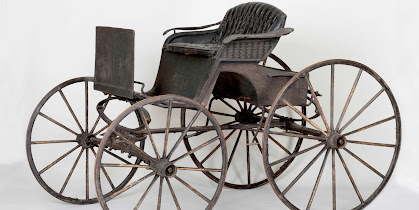
In the collection of the Shelburne Museum. No brake!

Within the next week or so, I expect to finish writing the third book in my Winds of Freedom series. It's set in Vermont in 1854, and it's had a working title of Kindred Hearts, but I'm quite sure that will change. I'm waiting until the last plot twist, passion for the future, and page of dialogue are done.  Then I'll brainstorm titles.


Meanwhile, I've been working hard at learning how to hitch a horse to a buggy and drive it! Somehow this was not mentioned in any of my history courses. Luckily, although Vermont winter isn't exactly conducive to asking a neighbor to show me the reins, there are many engrossing YouTube videos that show how to put on a harness, how to attach the "hames," and much more.

Then I've also been taking a crash course (self-taught) in buggies themselves. My protagonists, Almyra and Susannah, are fortunate to have access to the resources of a small livery stable at their village inn. That means that sometimes they don't have the kind of buggy or carriage they want -- and sometimes they end up on horseback themselves. Learning about riding with a sidesaddle was another treat of this book!

Here are some of the images I've studied, working out who puts her foot where, how much risk there is that she'll show a shocking amount of her ankle or petticoat, and more.

Thanks in advance to Fran and Bert Fissette, neighbors who've loved their horses and have answered some of my questions via text, so I could keep typing!

Circ1 1915:

Late 1850s:


Sunday, October 10, 2021

Cotton Mather: From Salem Witch Trial Disaster to Hybrid Corn Experiments to Immense Loss

Check out these early provincial boundaries, via a Creative Commons map created by Kmusser.

I'm about halfway through writing KINDRED HEARTS, and every surface around me is covered with research. Not very tidy, but how exhilarating!

At this stage, also, almost everything around me spurs fresh inquiry ... 

Neighbors up the road just took their daughters to visit Salem, Massachusetts, and that sent me to reviewing the Salem Witch Trials and the notorious role of Cotton Mather (1663-1728) in them.

In turn, that sent me to Wikipedia for a quick review -- I often find Wikipedia to be a great jumping-off site for research, loaded with footnotes. I don't take the view of the Wiki writer as necessarily "valid" but I find a lot to explore from, after looking at this, from https://en.wikipedia.org/wiki/Cotton_Mather—and the last paragraph made me very sad:

Mather was born in Boston, Massachusetts Bay Colony, the son of Maria (née Cotton) and Increase Mather, and grandson of both John Cotton and Richard Mather, all also prominent Puritan ministers. Mather was named after his maternal grandfather John Cotton. He attended Boston Latin School, where his name was posthumously added to its Hall of Fame, and graduated from Harvard in 1678 at age 15. After completing his post-graduate work, he joined his father as assistant pastor of Boston's original North Church (not to be confused with the Anglican/Episcopal Old North Church of Paul Revere fame). In 1685, Mather assumed full responsibilities as pastor of the church.[1]: 8 

Mather wrote more than 450 books and pamphlets, and his ubiquitous literary works made him one of the most influential religious leaders in America. He set the moral tone in the colonies and sounded the call for second- and third-generation Puritans, whose parents had left England for the New England colonies, to return to the theological roots of Puritanism. The most important of these was Magnalia Christi Americana (1702) which comprises seven distinct books, many of which depict biographical and historical narratives.[3]

Mather influenced early American science. In 1716, he conducted one of the first recorded experiments with plant hybridization based on his observations of corn varieties. This observation was memorialized in a letter to his friend James Petiver:[4]

First: my Friend planted a Row of Indian corn that was Coloured Red and Blue; the rest of the Field being planted with corn of the yellow, which is the most usual color. To the Windward side, this Red and Blue Row, so infected Three or Four whole Rows, as to communicate the same Colour unto them; and part of ye Fifth and some of ye Sixth. But to the Leeward Side, no less than Seven or Eight Rows, had ye same Colour communicated unto them; and some small Impressions were made on those that were yet further off.[5]

In November 1713, Mather's wife, newborn twins, and two-year-old daughter all succumbed during a measles epidemic.[6] He was twice widowed, and only two of his 15 children survived him; he died on the day after his 65th birthday and was buried on Copp's Hill, near Old North Church.[1]: 40 

Sunday, February 21, 2021

Vermont History Comes Alive -- on the Pages, and in Short Videos

Photo by Darcie McCann

A huge joy in my writing life is researching and writing articles for the North Star Monthly that focus on remarkable people of this region of Vermont, whose lives and adventures have become part of our history.

Many people ask me, "How did you get the idea to look into that one?"

So I've started a series of short videos on "where this story came from." If you're curious, you can check them out at my YouTube page, or go directly to one of these:

The Fur Farms of Vermont

Pioneering Aeronauts of the NEK (Northeast Kingdom of Vermont)

I'll add another each month. Hope you enjoy these!

Sunday, October 11, 2020

My Eight-Greats Grandmother Valued Her Clothes!


It's Vermont Archives Month, and that's taken me into sorting many letters and photos from my mother's side of the family, and updating the family tree a bit further. 

Women's clothing in the 1850s and 1890s keeps coming back onto my research schedule, for a couple of books that I'm writing, one set in each decade. (The 1850s one will be book 3 in my Winds of Freedom series, published by Five Star/Cengage.)

But I was totally amazed to discover today the will of my 9-great grandmother Sarah Littlefield Sawyer, 1649-1734, who lived in Wells, Maine, when it was still part of the Massachusetts Bay Colony. Check out item 12 in particular!

If, like me, you have no idea of what "calaminco" means here -- check out this handy article by Leimomi Oakes, a textile and fashion historian, who says "Calamanco (also spelled callimanco, calimanco, and kalamink) is a thin fabric of worsted wool yarn which could come in a number of weaves: plain, satin, damasked, and was even brocaded in floral, striped and checked designs.  The surface was glazed or calendered (pressed through hot rollers)."

The Will of Sarah Sayer

   To All People to whom these Prestns shall come Greeting. Know ye, that I Sarah Sayer of Wells in the County of York in the Province of the Massachusets Bay New England Relique of William Sawyer late of Wells aforsd Decesd (thô weak of Body, yet of sound & well Disposing mind & Iudgment) Do Committing my sperit in the first place unto God the Father of it thrô Jesus Christ, & my Body into the hands of my Executors hereafter named to be by them decently Interred in hopes of A Blessed Resurrection, Dispose of the Temporall Estate with which God has been pleased to bless me in the manner following vizt

   1. My Will is that all my Iust & honest Debts, together with my Funerall Charges shall be paid out of my Estate by my Executors hereafter Named.

   2 I Give & bequeath unto my son John Wells Eight Pounds to be paid him by my Executors within six months after my Decese. I Will also that A Bond of thirteen pounds given by him to me, shall be freely surrendred up unto him by my Executors within the aforsd term of six months after my Dece'se And I Will that the Eight pounds I herein give unto this my sd son John Wells be laid out by him in procureing A Funerall Coat after my Disc.

   3. I Give & Bequeath unto my son Thomas Wells Eight pounds to procure A Funerall Coat after my Decese the which sd sum shall be paid him by my Executors within six months after my Decease. I will also that A Bond of thirteen pound given from him to me shall be freely surrendred up to him after my Dece'se.

   4. I Give unto my Daughter Patience Clark five pounds (besides five pounds I have already given her) to be paid unto her by my Executors within six months after my Decease.

   5. I Give & Bequeath unto my Daughter Sarah Sayer of Newbury two pounds & four pounds A piece to Each of her two sons Vizt Jonathan Sibley & Samll Sibley these several sums to be paid vnto my sd Daughter Sarah Sawyer & her aforesd two sons by my Executors within six months after my Decease.

   6. I Give & Bequeath unto my son Francis Sawyer thirty pounds to be paid unto him within six Months after my Decease by my Executors.

   7. I Give & Bequeath unto my Grand son William son of my son Daniel Sayer De'csd thirty pounds, to be paid him by my Executors within six months after my Decease.

   8. I Give & Bequeath unto my Daughter Hannah Chesley thirty pounds to be paid her by my Executors within six Months after my Decease.

   9. I Give & Bequeath unto my Daughter Ruth Sampson Thirty pounds to be paid her by my Executors within six Months after my Decease.

   10. I Give & Bequeath unto my great grand-Daughter Mary Clarke Daughter of my grand son Nathall Clarke A Certain Feather Bed that has an homespone Tick to be Delivered to her by my Executors within six Months after my Decease.

   11. I Will that what ever Use or Interest shall be found due upon my Bonds that any of my Children or Grand Children have Obliged themselves unto me by, shall be freely wholy and absolutely remitted released & given up unto such from whom it may be found due by my Executors at my Decease.

   12. I Give & Bequeath unto my four Daughters my wearing Cloths as follows vizt I give to my Daughter Patience Clark A black Calaminco suit & my black blew searge Petty Coat. I give to my Daughter Sarah Sawyer my silk Crape suit & my red & Yellow under Petty Coat. I give unto my Daughter Hannah Chesley my silk suit. I give to my Daughter Ruth Sampson my striped Calaminco suit, & A striped Calaminco Gown & A black silk Petty Coat. all the Rest of my Cloths I will shall be Equally Divided among these my four Daughters. And if either of these my Daughters shall Decease before I shall, then I will that their Daughters shall have such Clothes as their Mother would have had by Vertue of this my Will if they were Liveing.

   13. I Will that four pounds shall be paid by Executors unto the Church of Christ in Wells, within six months after my Decease, to be distributed by them among some of the poor Members of sd Church.

   14. I Will all my Estate of what nature or kind so ever not already disposed of in this my Last Will & Testament unto my two grandsons & my two Daughters hereafter mentioned vizt Joseph Sayer, Wm Sayer, Hannah Chesley & Ruth Sampson to be delivered up unto them & equally Divided amongst them within six months after my Decease.

   15. finally I Do hereby Ordain Constitute & appoint my son Francis Sayer & my Grand-sons Joseph Sayer & William Sayer to be the sole Executors of this my last Will & Testament and Do hereby revoke & Disannull all former Wills & Testaments heretofore made by me & Declare this to be my last will & testament : As Witness my hand and seal this twenty seventh Day of April Anno Domini 1734. Annoque R R Georgii secundi magnæ Brittanniæ &c septimo.

Signed sealed & pronounced
   in presence of
   Hans Dalzel
   Jeremiah Storer
   Jeremiah storer Jur

NB : the words or grand Chil-
   dren were interlined be-
   tween, ye sixth & seventh
   Lines from ye top of the
   second page before signing
   & ye word between will &
   all in ye thirty first line from
   ye top of the second page
   was erased before signing
   Sarah Sayer : (seal)

   Probated, 10 Feb. 1734-5. Inventory returned 2 June 1735, at £540: 2: 6, by John Storer, Samuel Wheelwright and Daniel Morrison, appraisers.

[Source: Maine Wills, 1640-1760 (Portland, Me., 1887), p. 356]


Saturday, July 4, 2020

The Fourth of July in America's Past—and Today

Daniel Webster in 1835, portrait by Francis Alexander, courtesy of the National Portrait Gallery.
An 18-year-old country boy studying at Dartmouth College in 1800 was asked to give a speech at the Hanover, New Hampshire, Independence Day ceremonies. His words and his passionate delivery rocked the crowd, and the speech began his national career of service to the nation and summoning vivid language and performance, to in turn call people to action. Here is a bit of Daniel Webster's first public speech:
It becomes us, on whom the defence of our country will ere long devolve, this day, most seriously to reflect on the duties incumbent upon us. Our ancestors bravely snatched expiring liberty from the grasp of Britain, whose touch is poison... Shall we, their descendants, now basely disgrace our lineage, and pusillanimously disclaim the legacy bequeathed to us? Shall we pronounce the sad valediction to freedom, and immolate liberty on the altars our fathers have raised to her?
My second book in the Winds of Freedom series, This Ardent Flame, reveals how Vermonters took on this challenge after Webster betrayed their abolitionist goals, in forging the Compromise of 1850. It's fair to say that his legal maneuvering that year cost America dearly, in delaying the end of chattel slavery in the nation.

But the impact of giving speeches on the Fourth of July has been embraced by many another American leader. I reflect today on Abraham Lincoln's proclamation of war on behalf of the Union of American states -- which he gave on April 16, 1861, after Fort Sumter was seized by the Confederacy forces. Knowing the strands among the states were ever fragile, Lincoln deliberately called Congress to gather on July 4 to endorse his action.

In hindsight, it can feel like an intolerable delay, from April 16 to July 4. But Lincoln, portrayed by historian Doris Kearns Goodwin as a master in politics (giving, giving, and giving, until he'd call all to gather and get a task done), calculated that the patriotism of the Fourth of July would move the fragmented Congress to stand together. And he was exactly right.

The Ardent Flame was scheduled for autumn publication this year, but the COVID-19 pandemic has delayed the release until June 2021. Even so, I'm already grappling with book 3, Kindred Hearts, set in 1856 in "North Upton" (a pen name for North Danville, Vermont). In every page, in every shift of plot and character, is my own awareness that the nation was a mere five years from the war that would devastate it, far beyond any initial guesses. And I am walking with my protagonists, especially the teenagers, as they wake up to the cost of having deferred the abolition of slavery.

We, like they, are challenged to take action to address the damage done. It's a good thing to ponder on this 246th anniversary of the Declaration of Independence. May God bless our efforts to unite this land and people in liberty and justice for all.
This portrait by Joseph Alexander Ames, believed to also be of Webster, hangs a mere 6 miles from my writing desk, at the St. Johnsbury Athenaeum.

Tuesday, March 17, 2020

Irish Soda Bread, and Some Vermont Irish History

The best of St. Patrick's Day to you! And may your luck be cheerful and in all the right directions on this fine March day.

It's a day that I like to celebrate by making Irish soda bread, and this year, just for the fun of it, I tried out the whole-grain boxed mix provided by King Arthur Flour, one of our Vermont-focused businesses. Very tasty, and it didn't cut much into my work time this way!

It's a good moment to remember that being Irish once meant a great deal in St. Johnsbury, Vermont. Just a few decades ago, the town's residents in response to the Census notched up 30% with Irish heritage. Significant in the area was the presence for decades of two Catholic churches: one "French" (mostly French Canadian, with Mass provided in both Latin and French), and "Irish" (Mass in Latin and English). The "Irish" church was St. Aloysius, pictured here; after the "French" church, Notre Dame des Victories, burned (yes, arson), the congregations merged and renamed the new church group St. John the Evangelist. Here's the building, from one of my late husband Dave Kanell's postcards.

The most recent available Census data, from the 2017 American Community Survey (the newer name for this batch of Census detail), showed 10.1% of Americans mentioning Irish heritage; 17.3% of Vermont residents; and 14.4% of those responding in Caledonia County (where another 14.4 percent mentioned French, 11.1% French Canadian -- should we add those together? -- and 18.2% English heritage; yes, Scottish comes in at 5.9%, and Italian at 5.5%). That's about one-seventh of the county with Irish heritage!

When I visit my New York City grandsons, I like to step across to their neighborhood's amazing Irish Hunger Memorial. Here are two photos of the structure, taken by Wally Gobetz and shared on flickr (thank you!); there's a description of the memorial added below, and if you don't have time to read it all, just keep this in mind: It's built from an actual stone cottage from Ireland, like the ones people lived in at the time of the potato famine there. I imagine the mud and stone and starvation made these homes feel terribly, frighteningly cold.


In fact, we have some great descriptions of exactly that, from Asenath Hatch Nicholson, a woman originally from Chelsea, Vermont, who left what comfort she'd found in New York City to go and see the starvation conditions for herself back in 1844. See my earlier discussion of her work here.

Now, before I go spread some good Vermont-branded butter on my next chunk of Irish soda bread, one more important history item: The first to use "baking soda" in bread recipes were not the Irish, but Native Americans, says noted food writer Gillie Houston -- see her explanation here -- and the recipe drifted to Ireland, as that region adopted agriculture and recipes for locally grown "soft" wheat.

You just never know what you'll come across, when you start digging into history. Or baking!

***
[memorial explanation originally published at https://www.atlasobscura.com/places/irish-hunger-memorial]

A winding path is lined with blackthorn, foxglove, and ling heather, marked with 32 rocks each engraved with the name of an Irish county. The quarter-acre of Ireland on the edge of Manhattan is a memorial to the over one million Irish who died during the Great Famine of the 1840s, as well as those who continue to suffer from hunger.

Designed by artist Brian Tolle, the Irish Hunger Memorial in Battery Park incorporates a Famine-era stone cottage brought over from County Mayo, Ireland, and reconstructed as the heart of the monument. Visitors can enter directly from the street up a path through the suspended field, or through a tunnel lined with granite and words behind glass remembering worldwide hunger crises, while a ghostly recording plays voices recounting famine.
Room has been left for more words to mark new hunger crises. From the top of the field at 25 feet in the air, there is a view of the Statue of Liberty and Ellis Island, the first stop for many of the over two million Irish immigrants to the United States.

Sunday, October 20, 2019

Maternity Homes in Vermont: A Research Story (and Invitation!)


Vermont “Maternity Homes”

by Beth Kanell

It began with a postcard. My husband Dave (who passed last April) collected them: colorful Vermont scenes, yes, but more importantly the black-and-white ones from the late 1800s and early to mid 1900s that showed actual scenes, especially in the Northeast Kingdom. There are hundreds of St. Johnsbury and Lyndonville images in his collection—but, proportional to both town size and events that seemed worth marketing as photographs, there are very few from, say, Granby or Victory in Essex County.
            Or from Concord.
            Dave plunged me into a new research project when he found a card labeled “Quimby Maternity Home, Concord, Vt.” His knowledge of postcard publishers and some quick investigation prompted him to added the information “1949–1953.”
            As we, and then I, probed further, we found more than 50 documented births that took place, not just in the Quimby (also called Graves, for nurse Ardella “Nana” Graves) Maternity home, but also in the Austin Maternity Home in the same small town (this one, run by Leah Virginia Austin). And both were clearly “supervised” by the local doctor, Frederick Russell Dickson, M.D.
            “Maternity homes” in the rest of America seem to have often been places for unwed mothers to give birth and send their babies out for adoption. Dave and I found a single request from an adoptee born in 1946 at a Concord maternity home for clues to his parentage. But that turned out to be the exception. Online access led us to birth certificates of many babies simply born in these more supportive, medically encouraged “homes.” Mothers could arrive a day early, stay a few days afterward, have a break from parenting and get a good start with the new arrival.
            But such maternity homes were not well documented. In the case of the ones in Concord, Dr. Dickson worked under contract for the local paper mill, which provided him space for a “dispensary,” and cared for many more illnesses, injuries, and preventive cases than the babies being born—and no records from the two maternity homes have been located.
            So Dave and I went to local Facebook “pages” and “groups,” where residents current and past share their memories. To our astonishment, we discovered another maternity home that took patients at the same time period, the early 1900s, and it was about 20 miles from Concord, in Lyndonville, Vermont. Then word of a second Lyndonville maternity home came, with oral confirmation that it had started in Burke and relocated.
            This is how a small postcard research project begins to spin outward!
            The community of local history researchers is compact and supportive. This summer and fall, I began writing to others in other towns, to see whether the maternity homes of this part of the Northeast Kingdom were an isolated phenomenon or part of something wider.
            After several negatives, I heard from local historian Joan Alexander of Glover, who passed along work by Darlene Young in her “A History of Barton, Vermont” (1998). Young outlined Barton’s medical providers in the late 1800s and mentioned Dr. Percy Buck, born in Charleston, Vermont. Dr. Buck arrived in Glover in 1914, and in 1935 moved to Barton. Young wrote, “During his career, he delivered over 2,000 babies, many of them at the Cottage Hospital.”
            I hope your reading “ears” just perked up the way mine did. Eagerly, I discovered from Young’s account that the double factors of the 1918 “Spanish” influenza outbreak and the changes in World War I era medicine resulted in nurse Harriet Austin in 1913 working in Baron at the “Sunshine Sanitorium,” which Young said “served a number of functions, providing both professional nursing care as well as a suitable place to handle surgical procedures. Increasingly, the sanitorium attracted maternity patients as well.”
            Then in 1923 a new medical graduate in Barton, Dr. Elwin M. Nichols, purchase a large home “with plans to establish his own hospital,” Young wrote. “He hoped to provide patients with both a comfortable, homey atmosphere and state-of-the-art medical equipment.” Soon the Nichols Hospital took over for the late 1920s.
            When Dr. Nichols yielded to his own medical problems, nurse Bernice Atwell opened the Cottage Hospital in Barton. Her particular focus was on maternity patients. Young noted its advantages over home delivery, including sanitary conditions, modern equipment, and rest for the patients. The percent of births held there increased steadily, drawing from as far away at Coventry and Craftsbury. Around 1950, however, trends shifted, and in 1954 Atwell, then aged 65 herself, closed her little hospital.
            Cottage Hospital! I darted to records of the historic Cottage Hospital in Woodsville, New Hampshire, across the river from Wells River, Vermont. It began in 1903, in a building that dated back to 1795, when it was the Cobleigh Tavern. Then it yielded to a “modern” and larger hospital opened in 1960.
            Now the tiny maternity home trend of the Northeast Kingdom had merged into a statewide trend, for I found another Cottage Hospital at the opposite end of the state, Grace Cottage Hospital in Townshend, Vermont. Its timeline differed a bit, but it clearly belonged.
            It’s surprising to realize that even in medicine, which relies so much on records, the phenomenon of maternity and birth has been relatively unrecorded. I hope this research will trigger more—in the footsteps of midwife Lydia Baldwin of Bradford, Vermont, whose records are represented at Dartmouth College today: 926 births from 1768 to 1819, of which only 2.9 percent were stillbirths, despite the challenges of conditions and knowledge.
            Know more about maternity homes in your area? I hope you’ll share the knowledge!

CAPTIONS:
The Facebook piece that Dave Kanell posted, which launched our grass-roots research into how maternity homes functioned in the Northeast Kingdom.

Mrs. Ardella (“Nana”) Graves, who ran one of the Concord, Vermont, maternity homes. Photo from the Facebook feed of the Concord Historical Society.
Sunday, September 15, 2019

Investigating a Postcard of the Concord Coach


My husband Dave, who died in April, did enormous amounts of research for details I needed as I wrote my historical adventure novels set in North Upton (loosely based on North Danville), Vermont.

On September 1, 2019, I started writing the next book, tentatively titled O FIERCE AND KINDRED HEART. It will follow The Long Shadow (2018) and This Ardent Flame (accepted by the publisher, Five Star/Cengage; I am hoping for autumn 2020 publication). So this will be "Winds of Freedom" Book 3! And again it begins in North Upton, this time in 1854.

So of course, I went to Dave's stacks of postcards, and found right away this image of a Concord Coach: the kind of horse-drawn vehicle used to transport passengers and mail around New England and beyond. The card came from Franconia Notch, New Hampshire, mailed in 1961.

Notice the addressee? It's Flora Austin of Franklin, Vermont, and the sender is clearly her daughter or daughter-in-law, Susie. She starts by mentioning "Albert" and that she doesn't know when he'll be down, then says that Albert Jr. will soon be home for good.

It's easier to read this way, right?

Research, which Dave and I would have collaborated on after he'd identified the postcard publisher and probable photographer and photo year, becomes a chase for family details. And here's what I found:

Flora Bell (née Garrett) Austin was born about 30 September 1881 in Franklin, Vermont. She married Willard Charles Austin (born about 1861), and they show up in the 1940 Census. He was her second husband; her fist was Peter Chagnon (1863-1913), whom she married in 1897.

Flora's marriage to Willard bore a son Albert Willard Austin (1917-2000). His son, Flora's grandson (and either Susie's nephew or son), was Reginald Albert Austin -- presumably Albert Jr.

What fascinated me among the details is, this card's presence in the Northeast Kingdom was no accident: Willard Austin died in Lyndon on 29 April 1972, and although the recorded birthplace for Albert Willard Austin is Franklin, he died in St. Johnsbury, Vermont.

Those details make me wonder whether that the Austin family connected to this postcard may also connect to Lyndon's noted Dr. Venila Lovina Shores, whose paternal grandmother was an Austen (spelled with -en, not -in); could that be? It's the kind of coincidence that often arises when working with Northeast Kingdom history!

Meanwhile, I am content to know that the Concord Coaches once drove just a few miles from where I sit writing today -- and to find that "DK" was ahead of me, leaving more for me to investigate in his collection.

Friday, July 19, 2019

Vermont Digging: Waterford's "Business Community" in the 1800s

The trouble with research -- and also the delight -- is that it takes on its own compulsions. The further I get on exploring a piece of Vermont history, the more I want to know.

Yesterday I followed threads on Waterford's merchants and manufacturers. To the publishers of "Walton's Register," a business directory combined with weather almanac and political "who's who," these were the prime categories of the people who kept Vermont growing. Manufacturers created goods. Merchants sold them.

The earliest "Walton's" that I have is from 1840, and cost me a pretty penny, as the expression goes. Sometime after after 1870, for a while, and then after 1931, these little guidebooks took on a new name, the Vermont Year Book. I'm sure it felt more modern at the time!

I was looking for details on these businesses in my town, a Connecticut River settlement at the southern edge of the Northeast Kingdom. Along with looking for trends and growth areas, I especially wanted to find out something about Edward R. Goss, whose name is on the general store pictured above.

The hunt took me through a volume of family history, dozens of Ancestry documents, and volume after volume of Walton's. A Vermont Village:
To my enormous relief, I finally found Edward in the 1910 Walton's -- then realized I could have saved a lot of searching if I'd gone first to the (not always fully reliable) town's volume of history written by Dr. C. E. Harris:

I finally lurched toward sleep, rather later than I'd planned. Proving once again the adage, "You find something in the last place you look for it."

Today I added one more top note to this stack: the origin of the Goss surname, which turns out to center in the West Country of England in the 15th century. Now to the next stage: adding this to my other research on local businesses in the 1800s, and figuring out how to present it all as an engaging story for people who don't suffer from "find out more" compulsion!

If you live in northern Vermont, I hope you may be able to join me on Wed. July 24 at the Davies Memorial Library in Lower Waterford, to look at all this, together, for the Waterford Historical Society meeting. And if you don't live nearby -- relax, you'll get the best of the results packaged into the series of historical novels I'm writing, Winds of Freedom. I've just started Book 3: O Fierce and Kindred Heart. What do you want to be the title gets shortened to Kindred Hearts along the way?

Thursday, July 18, 2019

Hunting for Images of Vermont's History

It's postcard season. Actually, for my husband Dave, it was always historic postcard season, since he bought many of them online. But this is also the time of year we always made road trips to small, promising shops. So today I packed his love in the car with me, and went to explore an antique shop that mentioned postcards:

With a time limit (for me, a good way to shop) enforced by an alarm on my phone, I dipped into the Vermont postcard and found three that I think will inform my next novel. From least to most amazing, here we go ... First, here's an interior shot of a granite shed, one of those workshops where stonecutters turned Vermont's foundation rock into monuments of all sorts. No guarantee which shed it's from, but I like the busy-ness and the fact that there are SO MANY men working here. No wasted space! (Wouldn't want to be in there on a hot humid summer day.) Note that they are also all wearing their hats and caps. Food for thought.

Second, this shows "cream" being received at the Lamoille Valley Co-operative Creamery. I was surprised at the notion that the cream might be separated before transporting the milk cans from the farm! If you know more about when farmers would have separated their cream before filling the milk cans, please do let me know. Note the horse-drawn wagon and the ribbed umbrella being used by the lady in the seat. Also the workers' hats. The back of the card says in pencil "Where we sold cream the first ten years of farming in Walden."

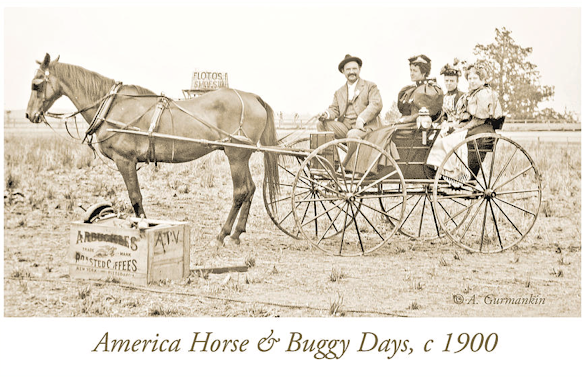
Now the grand finale -- especially significant because it has a penciled identification on the back, not quite the same "hand" as the other postcard but still a hopeful sign that this card too might have come from Walden. It says "Dell Babcock," and I was thrilled to locate the death certificate for Della Babcock of Walden (1859-1939), so I'm pretty confident this is a match. Note that her father was a Bailey, and her mother came from England! The conveyance she's driving -- can you name it? -- will appear most surely in book 3 of my Winds of Freedom historic novels series.

And that's how research becomes an amazing adventure, on a warm July day in Vermont.

Wednesday, January 23, 2019

Research: Vermont's Prohibition Laws, 1850 and 1852

An attorney with an office in St. Johnsbury, Vermont, made available to me this week the text from Vermont's early laws that prohibited alcohol sales, drunkenness, and more. They were earlier than federal Prohibition -- they were passed in 1850 and 1852, and their influence probably resulted in many of the "hidden rooms" of Vermont houses built between 1850 and 1930 or so.

The volume of laws, even though it had a lot of years of use, was in wonderful condition. Its original owner's name is stamped on it, as well as inscribed within. Of course, I wanted to know who "H. G. Edson" was. It turns out he was Henry George Edson, a St. Albans lawyer born in Swanton. I'm glad to have turned the pages of what was once his book ... and very excited to understand more about these laws, which will be in the background of the next crisis in THIS ARDENT FLAME, the 1852 adventure I'm now writing.

Onward!


Sunday, February 18, 2018

Saying Goodbye to the Underground Railroad Myths


One of the hard parts of growing wiser and kinder is saying goodbye to some things we once thought were wise and kind -- but turned out not to be. For me, one of the sad farewells to make involved the Little House books of Laura Ingalls Wilder ... a series I enjoyed as a youngster, imagining myself as part of the cozy little family that moved West along with the American frontier.

When I "grew up" in terms of historical fiction, I began to realize the harm those books can do, in particular Laura's mother's opinion that Native Americans were dangerous and should be killed -- after, of course, depriving them of their lands and customs. It was a painful change to make, to see the books as only "reference" for folk ways and for traditional American White bigotry. It still hurts.

With that new awareness came the realization that many books for children in particular embrace myths that do harm. The books pictured here -- one of which is actually sold as nonfiction -- have problems in terms of the history they teach and the myths they encourage. Because I care about young readers having good books available that show more truthful accounts of the past, I dug into both American and Vermont research on the 1800s. And then I got to work and wrote THE LONG SHADOW, an adventure of three teenage girls in 1850 in Vermont's Northeast Kingdom. The book will be published in about 8 weeks, on April 18, 2018.

For a quick summary of "what's wrong with the Underground Railroad myths," check this succinct and authoritative version provided by Prof. Henry Louis Gates.

And for more discussion, join me to learn about my new book at a local bookstore, or on the radio, or invite me to bring the conversation to your club, church, or classroom. After all -- that's why I wrote this book. So that you and I could talk about it all.

Monday, February 12, 2018

Lincoln's Birthday ... and Thaddeus Stevens on My Mind


"President's Day" is still a week away, but today, February 12, is the date that is Abraham Lincoln's birthday. When I was growing up, schools celebrated it -- not as a day off, but as a day to pay attention.

Today in our era marked by harsh political conflict and skyrocketing awareness of the way America's centuries of enslavement have injured our people, it's a good day for learning more about our past and choosing ways to make the present and future better, I believe.

So I paused this morning to check what Abraham Lincoln was doing in 1850, the year when my "Winds of Freedom" series opens with the book The Long Shadow (publication date April 18, 2018). In that year, Lincoln was still practicing law in Springfield, Illinois, where he took on quite a few transportation cases. He also gained a patent of his own for a boating invention. He'd already served one term as a legislator, and opposed the land grab of the Mexican-American war; that war ended two years earlier, marking his first contribution to national affairs. He wouldn't speak out again until 1854.

But in 1850, an ardent freedom fighter from Vermont, transplanted to Pennsylvania, took a powerful stance in Congress to oppose slavery. That voice came from Thaddeus Stevens, and it echoes many others, especially the voices of America's Quakers, who pointed bluntly to the evil of humans being "owned" by others. "Chattel slavery," they spoke of -- "chattel" refers to personal property, and unlike, say, indentured servants, chattel slaves could be transferred by will or by bill of sale.

Yes, you'll find actions by Thaddeus Stevens influencing Vermont village life in The Long Shadow. Importantly, the choices taking place in this book are made by women who choose to take action -- protagonist Alice Sanborn, her best friend Jerusha, and their younger and very dear friend Sarah, with her dark skin and desperate longing for her family, still enslaved but with hope of purchasing their freedom. And Miss Ruth Farrow and the Mero family -- historically "real" Black Americans who lived in my part of Vermont in 1850.

Each of us has something to contribute to making the world a more just and valued place to live. For me, it's speaking of how things really were in 1850 -- here in the Green Mountains of Vermont, where reading the words of Thaddeus Stevens gave a fierce and upright example.

Wednesday, January 20, 2016

Nature or Nurture? Justice, Secrets, and Love

A few weeks ago, through a connection with a cousin of mine in Israel (Inbal Jaffe), I received a photo that apparently has been legendary in my family's history. I didn't know it existed until Inbal attached it to an e-mail, but another cousin, Phillip Minden, told me he'd long searched for it. When I saw it, I looked from left to right at the "Three Henry Mindens" in the picture -- noting Dr. (of law) Henry Minden in the center, a man whose generous life I've recently learned about -- and suddenly realized the man on the right was "my" Henry Minden, a man who lived on Long Island when I was a child growing up in New Jersey. More than anyone else, more than my "real" grandparents, who all lived in England, this Henry Minden did for me and my siblings what grandparents do for their grandchildren: He welcomed us at holidays and on Sunday afternoons, hid Easter eggs around the garden for us to find (even though he was Jewish), encouraged us to play musical instruments, and gently assured us that a life of books was a very good life.


As I grew older, my parents revealed a small bit of Henry's story: He and his wife Betty had escaped Europe during the Second World War, via Holland, they said. Later, when I read the story of Anne Frank, I thought maybe they had hidden there, and been sent out secretly. But I didn't ask for more details -- in the family where I grew up, some things you didn't ask about, and most of those had to do with the War and the Camps ... the concentration camps.

Henry died while I was a teen, and I had never been to a funeral. Struggling to read my father's face when he asked me in a neutral tone whether I wanted to go to Henry's, I said, "No thank you." I think my father's relief related to not having to explain to me what I might have heard at that funeral. It was the family's job, as he saw it, to put the sorrow of the past behind, and not speak of it.

So it was that when I turned 50 years old, I knew almost nothing of my father's side of the family. He had said, to the child I was once, that "nobody close" to him had perished in the camps, or the war.

Yet the man with whom I courted that year (and soon married) said to me, "I think your father's family name is in the books in my personal library of Jewish life and history." So, far too late to ask for details from my deceased dad, I learned something in those books of Henry Minden after all ... and put into perspective the crumbs I had kept about my grandfather Ernest, who was my father's father. It took more years before I realized that I also had important "crumbs" to investigate about my father's mother, Lena.

And then everything I thought I knew about my father's family fell apart, as I found that Lena's father (I have a photo of him with my dad!) apparently perished in Auschwitz in 1942; just last year, I learned of my cousin Max who died fighting for "our side" in Italy; and now I think I've found another close member of the family who may have died in the war.

But here is what I know for sure: Henry Minden number 3, the  Henry on the right, was a kind man with a deep love of art and music, and who loved me. My father's family helped many others to reach safety and justice during the war, and afterward. And, as I have slowly come to realize, my mother's own repeated mention of Quakers in her family turned out to be a link to others who wrestled for safety and justice in America's long history -- whether in New England or New Jersey or Philadelphia.

Now I have this heritage, shakily assembled, slowly becoming more certain, of justice seekers and, put politely, secret keepers. I find that there's some of each of those in me, after all, and in my writing.

But most of all, as I realized last week, tears running down my face while I gazed at Henry's familiar face, my family has given me love.

Now, bear with me one more paragraph for an announcement: I am enormously delighted to say that the small local library in my town here in Vermont, the Davies Memorial Library, is acquiring a collection of books on social justice next month. Here are some details -- and I am happy to say that I've had a role in helping this come together:
Tuesday February 16, Educating Ourselves About Social Justice, at the Davies Memorial Library in Lower Waterford at 6:30 p.m. LSC Professor Patricia Shine and several of her students present and discuss some of the most influential titles on social justice. Books available from the library afterward. Free and open to all. Info: 748-4609 and davieslibraryvt@gmail.com

Saturday, October 31, 2015

"East Village" Vermont Fire of 1912: The True Story


The East Village fire of 1912: remains. Photo taken from behind today's Peter & Polly Park. Look for the bell tower of the church, toward the right rear in the card.
Dave and I enjoy collecting old postcards that show locations -- and sometimes people -- around our area, the Northeast Kingdom of Vermont. We've done this since we met, back in 2002, and it's become an important part of the research we each do: Dave for his attention to the college where he worked for 19 years (Lyndon State College) as Assistant Dean of Residential Life (he stays in touch with SO many people, as well as the history of Theodore N. Vail, a founder of AT&T and donor of many of the college town's cultural treasures. And me, well, I'm always hunting down more details of "truth" to add to the historical adventures I write.

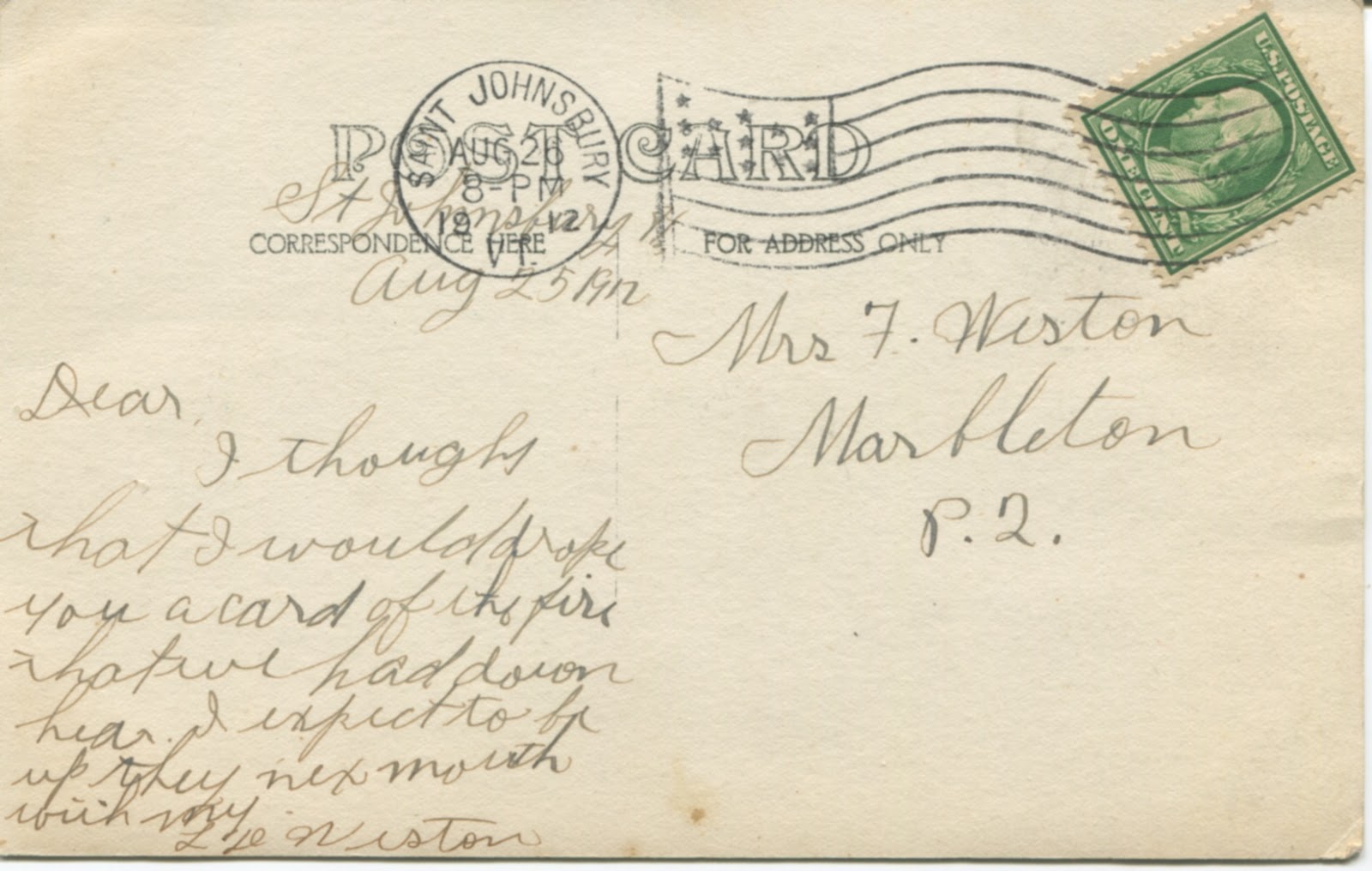
So this postcard became one of our Big Finds for 2015. It is what's called a "real photo postcard" -- someone photographed an actual scene and event, and had the picture made into cards. Three things alerted us to excitement here: the scene, which is after a disastrous fire; the postmark and hardwritten date, August 26 (25), 1912, in St. Johnsbury, Vermont; and the writer, L. D. Weston, who notes that he's writing to "Dear" Mrs. F. Weston, in Marbleton, Quebec, Canada.


We were wrong in almost all of our early assumptions about the card, though! The name "Weston" immediately rang a bell for us, as we know there's a household including that name in East St. Johnbury today. We wondered whether it was connected to today's family, and whether the image showed a farm fire.

Each of us -- Dave and I -- investigated in different directions. Soon we learned that today's Weston family didn't have a record of someone of that name in East St. Johnsbury (then known as "East Village") in 1912; then we found that L. D. Weston had lived in Lyndonville but was employed for a while by the railroad in St. Johnsbury. Finally Dave used the Library of Congress archives to unearth newspaper coverage of the 1912 fire -- which, oddly enough, turned out to have happened in East Village after all! I typed the news report up, and circled back to Edward Lee's "East St. Johnsbury Vermont" (1984) booklet to confirm the story from another direction. Lee's account makes it clear that the devastation of the East Village fire on August 7, 1912, had three contributing factors: no firefighting system in the village beyond the traditional "bucket brigade"; the fact that when the first motor-powered firetruck in St. Johnsbury itself (some 5+ miles away) tried to reach the fire, it was interrupted (according to the newspaper, three times!) by frightened teams of horses along the route; and a delay in getting a hand pumper from the Fairbanks Scale factory (about 6 miles way) to the fire via the railroad -- the pumper was placed on a flat car for transport along the rail line that linked the two villages, but had to wait for the passenger train from Portland, Maine, to arrive first.

Lee's account also includes the intriguing mention that firefighting villagers considered dynamiting the Moulton house next door to the church to stop the fire from traveling as far as the church! It appears this was a last resort that didn't actually happen.

A final note from Lee's accounts: By 1928 the East Village had its own fire station, next to the large store built a century earlier by Silas Hibbard. Perhaps one of today's readers can tell us when firefighting left East Village again, to be focused in "downtown" St. Johnsbury instead.

Here is the promised newspaper article:

-->
St. Johnsbury Caledonian, August 14, 1912

FIRE IN EAST VILLAGE
Four Houses and Four Barns Completely Destroyed and other Buildings Damaged.

            The little village of East St. Johnsbury suffered the worst fire it its history last Wednesday afternoon when in about three hours four houses and four barns were completely destroyed and another house and the Congregational church were considerably damaged. It was a case of no water system and all that save at least three more houses and the church was the sending of a hose cart and a hand pump with several volunteer firemen from this village to assist their brethren in misfortune.

            The fire was discovered about half past twelve when smoke was seen pouring out of the roof and along the ridge pole of John Nolan’s house on Main street. All the men in that section were away at their work and Mrs. George Dodge spread the alarm along the street. When the flames burst through the roof the top of the house was all on fire and all it was possible to do was get Mr. and Mrs. John Nolan Sr. out of the house and the family’s furniture, clothing and bedding were all lost. The fire quickly reached the barn which was filled with this season’s cut of hay and everything there was burned. Mr. Nolan received $1930 insurance on the buildings and furniture and that practically covers his loss.

            George Dodge’s house stood next to the Nolans and the fire soon leaped across the space and began devouring those buildings. Enough people had gathered by this time to remove most of the furniture and articles from the barn and they were saved in a somewhat damaged condition. The Dodges received $1,000 insurance which practically covered their loss on the buildings. There was a loss of over $200  on the hay, wood and furniture.

Assistance From St. Johnsbury

            When it was seen the fire would spread the authorities of St. Johnsbury were telephoned, and they ordered the new automobile fire truck to the scene. The truck had to come to a full stop three times on account of frightened teams and then made the trip in nine minutes. The buildings were so far done before the truck arrived that the chemicals were of no use and as the village had no water pressure the hose could not be used. Word was sent back to St. Johnsbury and an out of town alarm was sounded. The firemen quickly responded and soon had the hose cart with a hand pump loaded on a flat car and with about 20 firemen was ready to start. The special train was held however until the eastbound express pulled out and then was run to East Village. The firemen arrived there about quarter of three and soon had the pump throwing a good stream of water from the river on the fire.

More Buildings Destroyed

            Before the St. Johnsbury men arrived the fire had swept through the house and barn of Miss Charlotte Morrill a[n]d practically leveled the house and barn of Francis Brown. It had also caught on one side of the buildings of Lois Moulton and an attempt was being made to tear down that house in an effort to keep the blaze from the Congregational church. In their fright the people damaged the furniture considerably and they tore out the pews, windows and carpets of the church and some furniture was taken from the house of Eugene Shasteny beyond the church In a few minutes after the stream from the pump was started it seemed that the blaze would be stopped at the Brown house and the destruction of furniture was stopped.


Sick People Carried Out

            During the excitement Mrs. Moulton and Mrs. Shores were nearly overcome by fright and had to be helped to places of safety. Aunt Honor Brown, a woman about 85 years of age who lay in bed with a broken hip, were carried out of the Brown house. George Babcock was quite badly cut over one eye by a piece of furniture which was thrown from a house. The Brown invalids were taken to St. Johnsbury and the whole Brown family are there at present stopping with relatives. The Brown buildings were insured for $800 which covers the loss of them but Mr. Brown lost a lot of nice wood and some furniture. It is doubtful if they rebuild.

More of the Insurance

            The church was allowed $200 damage by the insurance company and Lois Moulton was allowed $350 insurance which will hardly cover her loss. The loss on the Morrill house was $1,243 but the loss is above $1,600.
            John Nolan and his family stay through the day at the abandoned house on their farm outside the village, but they stay nights at Charles Bowman’s as they lost all of their bedding. Mr. and Mrs. George Dodge have taken rooms as Oscar Wallace’s and will rebuild their house at once. Miss Charlotte Morrill is stopping with the Rev. Edward Lee and he sister, Mrs. M. S. McCurdy, who was spending the summer with her. is stopping at George Copp’s. Mrs. Moulton is also stopping there until her house is made habitable.

The Morrill House

            The house of Miss Charlotte Morrill was one of the oldest and best known residences in the village. It was partly built by the Rev. Silas Gaskill in 1825 and completed by Judge Calvin Morrill in 1850. It has been the residence of the Morrill family since the marriage of Calvin Morrill and Sophronia Lee in 1834. The family consisted of one son and three daughters of whom only the daughters, Mrs. M. S. McCurdy of Andover, Mass., Mrs. Elizabeth Chapman of South Part and Miss Charlotte Morrill, a member of the faculty of Adelphi College in Brooklyn, N.Y., survive. For years it has been occupied by the Morrill family as a summer residence where they had entertained many other guests.
            Miss Morrill plans to rebuilt the house at once. ###

A final note from Beth: Each of my novels somehow includes a fire, I find ... probably because of the one that made such a change in my own family's life. More on that, some other time. Finally, Dave and I are pretty sure this postcard is indeed of the East Village fire -- but a curious side issue is, it seems to be the only existing image of the fire. So if, after all this, you think we are mistaken and you have a good reason to say the card is of some other place or time ... let us know. We are always learning, and eager to learn more. -- BK

Sunday, August 16, 2015

Learning More "Little Things": Connecticut Valley Lumber Company

This year our region of Vermont is marking 100 years since the grand finale of river log drives on the Connecticut River, by the C.V.L. Co., the Connecticut Valley Lumber Company, owned by a self-made millionaire, George Van Dyke. Using stories recorded and perhaps lightly embellished by Waterford, Vermont, author Robert E. Pike, I often tell some of the history of Van Dyke's life and his river logging operations. (I did in Barnet on August 1, and will again in Concord, VT, on September 26, joined at both events by Robert Pike's author-and-historian daughter Helen C. Pike, who recounts a different side of the era through the life of logging entrepreneur Ruth Parks.)

A remarkable thing about the writing that I do about those days in Vermont history is: The research never ends. In all kinds of small details, I keep piling up information that fits with Robert Pike's tales (see Spiked Boots or Tall Tree, Tough Men, his noted collections). This weekend provided a classic example.

My husband Dave and I traveled an hour east, into the White Mountains, to savor a postcard show, where cards that were printed and often mailed from about 1890 to 1980 or so are marketed to collectors. Dave brought home some wonderful photos that fit the towns whose history he often promotes: Lyndonville and St. Johnsbury, Vermont.

Me, I brought home in elation (!!!) this postcard:


This boardinghouse and office of Van Dyke's C.V.L. Co. were in Bloomfield, Vermont -- most likely South Bloomfield, which was the earlier logging and milling center of the Essex County town. Today there are only about 265 residents of the town, but in the logging days it was a very busy place.

I was able to locate this information today, provided by the state of Vermont with its description of adjacent West Mountain Wildlife Management Area (WMA):
Timber harvesting on the WMA land begin in 1800 when the [neighboring] town of Brunswick issued a 400-acred "pitch" on Paul Stream to Ethiel Cargill. A large mill and small village were located further up Paul Stream at Brown's Mill. In 1900, the Connecticut Valley Lumber Company (CVL) moved its headquarters from Pittsburg, NH to Bloomfield, VT. This was the result of the discovery that the old-growth spruce south of the Nulhegan [river] was dying due to an infestation of spruce bark beetle.
It sounds like the company office was moved to focus more easily on this dying section of forest, to facilitate the harvest, doesn't it? That's what a map tends to confirm, too.

For me, one of the next questions is, what changes in forest health are now taking place due to climate change? And what will we see as people and logging businesses adapt to these, the way that George Van Dyke's company once did? Also -- what traces remain of the C.V.L. Co. boardinghouse and office shown here? I may need to plan a hike.

"This Is the Real Thing": THRESHOLDS, an Exploration of Transitions

My new book of poems. Available in bookshops and online. My buddy B and I shared a long lunch at a community restaurant today, and wrapped i...