Wednesday, September 27, 2023

Recently Published Poems, Stories, More


Rise Up Review, winter 2022 issue, "Psalm for Gaza."

Medium Day tutorial video on writing novels (and more): Make a Promise In Your First Chapter. 

Persimmon Tree, poem, "Forget-Me-Nots."

Written Tales Magazine, poem, "Storm Surge."

RitualWell, poem, "Ten Plagues Sestina." 

Gyroscope Review, winter 2023, poem, "Letter from This Morning's Burdock Plant."

Lilith Magazine, Feb. 2022, "Knit. Purl. Repeat."

Journal of Radical Wonder, "Rescuing the Abandoned Property in Vermont."

Lilith Magazine, "Mythic Under the Radiation's Red Eye."

Mystery and thriller reviews being added steadily at New York Journal of Books.

Monday, September 4, 2023

Place and Voice (a Writer's Notes): New Philip Marlowe Mystery (by Denise Mina) and Mountain Pioneer Joseph Seavey Hall


It's probably been a long time since you've read a Philip Marlowe private investigator (PI) novel by Raymond Chandler. If you ever have. The books are "of a time" -- classic for detective fiction, and redolent of California Anglo culture in the 1930s and 1940s, when the Silver Screen meant so much.

So why would you read one now, if you're not into the classics?

Simple: Glasgow mystery queen Denise Mina wrote this one, in sync with Raymond Chandler Ltd. And it's a lively, enjoyable read, made "modern" with assertive women whose beauty and intelligence operate in tandem, in that famous California sunshine.

First, though, here's the original voice of Chandler at the opening of The Big Sleep:

It was about eleven o'clock in the morning, mid October, with the sun not shining and a look of hard wet rain in the clearness of the foothills. I was wearing my powder-blue suit, with dark blue shirt, tie and display handkerchief, black brogues, black wool socks with dark blue clocks on them. I was neat, clean, shaved and sober, and I didn't care who knew it. I was everything the well-dressed private detective ought to be. I was calling on four million dollars.

Now here's Denise Mina, doing Chandler/Marlowe:

I was in my office, feet up, making use of a bottle of mood-straightener I kept in the desk. A mid-September heatwave had descended on the city. Brittle heat rolled down from parched hills, lifting thin dust from roads and sidewalks, suspending it in the rising air and turning the sky yellow. ... I don't usually drink in the office at ten thirty in the morning but I had a bad taste to wash away.

Nice, right?

Here's a quick sketch of THE SECOND MURDERER by Denise Mina: Marlowe, narrating in his classic first-person style, immediately hates his new client, but the missing young woman he's supposed to find seems to be in a lot of trouble, and some of his old friends think she deserves a hand. Of course he can't resist a pretty young woman in trouble. He locates her soon, but sorting out her situation turns out to be way, way over his head. At least four strong women get involved; they can't really make it all better either, and Mina adds a bitter ending that fits the genre very well.

I thought I'd go nuts in the first quarter of the book, because the editors clearly have no idea of American spellings, alas ... it's very distracting to have a California PI talking in British spellings! The the plot took over and I enjoyed the rest of the book. I won't want a second reading, but the first one turned out fine. The main thing is, despite her Scottish writing accent, Mina knows how to turn a good story. (In fact, the last quarter of the book sounded more like Mina than Chandler, but I'm not complaining.) And she definitely did her research -- it's California all the way.


Also on my reading table for the past few weeks has been JOSEPH SEAVEY HALL (1818-1899), Pioneer of Mountain Tourism, by Annie Gibavic. This 227-page New Hampshire mountains history (Bondcliff Books) is authentic in ways that Mina's Chandler novel can't match—Gibavic is both a regional historian and a descendant of Hall, and worked from a trove of correspondence and background material to write the life of this mountain guide, including his adventures during the Civil War, silver mining in Nevada, assisting family in rough-country Michigan, and settling for his final years in Vermont.

Joseph Seavey Hall began his working life in the White Mountains when it was wilderness, and cut roads and built shelters, becoming the "engineer" of tourist routes on Mount Washington. Guiding and rescue alternated in his life after that, because the region took quite a toll on those on foot, especially in winter. Gibavic quotes passages from the death of Lizzie Bourne and, even more powerfully, from Hall's noted rescue of Dr. B. L. Ball on the mountain: 

We dispatched a man with a red flag to a point that could be seen from the Glen House. Mr. Thompson was so watch for a signal with his telescope in case we found him. He caught the signal. I throwed my  right arm around the Man's body with his left arm over my shoulder and with another man holding to the other side we hastened with our living burden in the direction of the Bridle Road. He had no use of his limbs and no other than the very strongest of men could have moved him over the rough Mountain.

The trove of original material that Gibavic amassed is stunning, and Hall's story is well worth the read. Like Mina, but with less fanfare, Gibavic crafts voices from the past in order to quilt her excerpted material together. As she explains in her author note at the end, "The words of Alice and Kitty are for the most part fictional, to lend continuity to the story." Gibavic's personal heritage of family lore and affection are also significant in this quilting. 

For some readers, the improvised fictional voices will distract, since the language in them is not as closely matched to the originals as Mina managed for Chandler. Yet even Mina showed her own narrative style eventually, so we can hardly fault Gibavic for a dose of the same. And in fact, her connection passages do exactly what she'd planned: They offer a more contemporary slant on what Hall's life engaged and how startling and impressive the achievements of this undereducated but ambitious man grew to be.

I recommend both books—but for very separate explorations. If you try both of them, let me know what parallels you see.


Wednesday, August 30, 2023

A Little Wobble on a Rainy Day; and PROUD SORROWS by James R. Benn


It's raining ... again. A quick look at online records suggests that in Vermont, in August, you have a 50/50 chance of rain on any given day. But it feels this year like the rainclouds slip around on a fairground track, headed back toward us the moment we think they're gone.

That's good for anything I've transplanted this month, since the roots are being steadily wetted down. On the other hand, I've started resorting to the dryer to get my towels back to useful status, instead of hanging them on the porch. We'll remember this wet and often flooded summer, as we look back on it.


Speaking of looking back -- well, isn't that one of the functions of historical fiction? For the hours that I am "inside" a well-spun story, I'm no longer comparing then and now, but I'm experiencing a different time altogether.

The Billy Boyle World War II Mystery series presents its 18th title next week (Sept 5, Soho Crime imprint of Soho Press): PROUD SORROWS, by James R. Benn. The title comes from a Shakespeare couplet in the play King John, referring to the force of grief. In November 1944 in Britain, surely everyone had a reason to grieve: The war hadn't destroyed Britain, Germany hadn't defeated the proud island nation, but death, crippling injuries, and residual trauma affected all.

Benn's first chapter swiftly reveals all the English village characters who'll have potent roles in the murder investigation ahead of Billy Boyle and his colleagues. Poor Billy! He's supposed to be taking a long-overdue break at the country home of his girlfriend Diana's father -- it's damp and chilly, a classic English November, but he comments, "I shouldn't complain. I was dry and no one was shooting at me."

Trust a big dinner group to show the cracks in family and friendships, though. Soon enough, Billy's worrying about the tensions that surround him. Some vacation! Series readers know he grew up in a Boston "cop" family and landed in Europe as a criminal investigator working for one of General Eisenhower's teams. Benn, however, is a straightforward author who won't leave you guessing about that, and about Billy's skills, in case you're new to his books:

Curiosity is the curse of any decent cop, as my dad and Uncle Dan, both detectives with the Boston Police Department, had drummed that into my thick Irish skull on many occasions. Always wonder why things happen, they'd say. Figure things out, even little things.

Billy's not-a-vacation-after-all involves a retrieved German bomber, some local feuding, injured and missing persons, and eventually the discovery of a murder. Will the little things help solve the crime? Trust Billy to see what's not obvious, even when looking at a ransacked home: "When a house has been gone through so thoroughly, it's usually because the object in question wasn't found."

A good part of the pleasure of Benn's Billy Boyle books is discovering what quirky, politically forceful, and culturally mystifying historical forces this author has unearthed in his march through the years of World War II. This time, the focus is on the Ritchie Boys and on right-wing politics. Benn provides a fascinating set of notes at the end. As usual, what cracks the case will be what Billy and his allies pull together, in this case about Nazi prisoners of war, but also about the land and nearby ocean. 

PROUD SORROWS offers an exhilarating and often emotional adventure, with hints at what lies ahead for the series in its inevitable movement toward the final year of the war. Now I think about it, re-reading this well-told mystery is just perfect for another Vermont rainy day. Time to make a cup of tea and tip back into the armchair.

Saturday, August 26, 2023

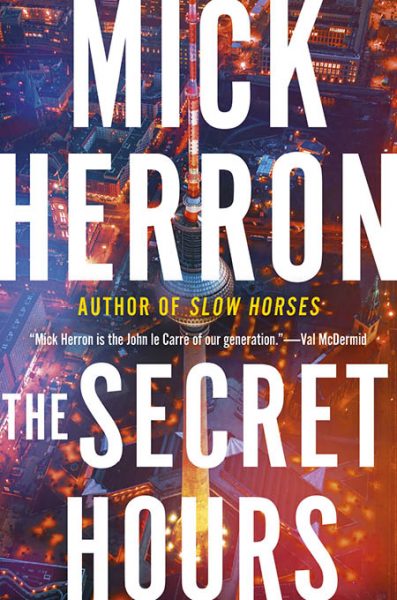
Slow Horses, Dark Discoveries: THE SECRET HOURS, Mick Herron (Sept. 2023)


My favorite characters from the Slough House/Slow Horses series are River Cartwright and Catherine Standish. I identify with each of them for a different set of reasons. (No, I am not going to whine about my father or my past here! I do that in memoir pieces, here.) And I can't stand Roddy Ho, with his endless primping and overweening self-esteem.

But the ones that obsess me are Jackson Lamb, Molly Doran, and Diana Taverner. Why? Because I'd love to have learned from each of them, and I wish I were as brave or as smart, and I know that I'm not. As a small child, when I began to realize that my parents kept secrets from me, I hoped with a deep unholy thrill that one of them was my identity as a Genius. By ninth grade, I knew that wasn't on the map. In the Slow Horses/Slough House series, though, each of these three has special incisive mind and, as a result, a degree of power that I'd now hate to have in my hands. The books let me peek into the inner selves of these characters, though, and there's a marvelous illicit thrill to that past-the-curtain view.

Hence the absorbing, impelling fascination of Mick Herron's 2023 offering, THE SECRET HOURS. Breaking the tradition of the reader knowing the sneaky secrets, this London/Berlin espionage novel offers a kaleidoscope of work names, job positions ("First Desk" at MI5), and hidden motivations as if the story unfolded in a very foggy neighborhood where any sighting of a spy on the sidewalk ahead could actually be the local bartender lost outside his terrain—and vice versa. 

Because the narrative involves so many hidden identities—some for the sake of anonymity among espionage professionals, some for political manipulation, some due to multiple identities either on British soil and foreign, or while publicly appearing "kind and wise" and secretly shown as manipulative and wicked— THE SECRET HOURS offers a shadow dance at first. Naive young "spooks" experience real life; political hostages slowly notice their bondage. Series readers will get the most from this novel, as they'll be alert for signs of which First Desk is hiding in the shadows, who could be a traitor, and small character traits long since revealed among the so-called slow horses. As one mask after another is lifted, the masquerade turns deadly. Yet, of course, this is Mick Herron writing, so deadly is also simultaneously funny and heartbreaking.

There are also delicious asides into evocative description, slipping in mention of the book's title phrase: "Even when apparently peaceful the [MI5/MI6] hub is alert for disturbance, whether in the world at large, on the streets of the safeguarded cities, or at the next work station along, because—as the whispered mantra has it—You never know. You never know when treachery might strike, or from what quarter. This is true whatever the time, but especially true after dark, since how we act in the light of  day is largely for other people's benefit, but what we do in the secret hours reveals who we really are."

Or the revelations of character in the face of rude awakening: "There was a big rip down the centre of everything now. It wasn't fair, she absurdly thought; wasn't fair that people should expose the violent terrors history held, and expect you to know how to respond." 

In the deliciously balanced double time spans of the book, the same character in another era will reflect: "The events she is recalling took place years ago, decades ago, but there is no statue of limitations on remembered damage, if that is what this is. And how can it be anything else? Happiness takes on a different shade in the light of  its consequences."

Don't let the "literary" phrasings mislead you -- this is also a book of fistfights, kidnapping, death threats, and some murder-for-politics. The difference is, in Mick Herron's hands, the questions asked by the ordinary people doing the footwork really matter. And ache. (And sometimes make you snort with an unexpected laugh.)

I often tell people to plunge into a book without worrying about whether they've read earlier work in a series. And you can do that with THE SECRET HOURS, of course. But if you do, then dip into some of the earlier Mick Herron books and come back to this for a second read. Then you, too, will double your time periods of engagement, and perhaps see, and feel, the movement of the world more clearly.

Release date from Soho Crime, an imprint of Soho Press: Sept. 12, 2023.


Monday, August 14, 2023

A Last Round of Summer Reading: Book Recommendations


I've recently taken photos of leaves turning red and yellow and landing lightly on the back roads or new-mown grass. It's still summer here in Vermont, where mowing the lawn with the walk-behind mower means working up a good sweat, but the cool evenings glitter with shifting constellations. Orion will rise in a few more weeks, and we'll start worrying about frost.

One of the unexpectedly moving crime novels on my summer reading stack has been WHERE THE DEAD SLEEP by Joshua Moehling (Poisoned Pen Press). This is his second book and takes a deeper look into the life of Sheriff Packard, introduced in And There He Kept Her. Significantly, it opens with an "inconsolable" three-legged dog whose nightly share of Packard's bed was taken by a visiting lover. Within a few paragraphs, it's already clear that Packard isn't handling his personal life well, while trying to be a small town's first gay (acting) sheriff. This personal confusion inevitably interferes in his crimesolving, and in his insight into why a local gambler turns up murdered in a home invasion.


Moehling is a gifted storyteller who sets up situations that clarify how greed, anger, and frustrated love can all become motives for crime. Packard's strengths depend on his ability to enlist loyalty and honesty from people who may not readily offer them. He also captures a twist of information and character in a few well chosen words, as in this fragment of a poker game: "When the river card turned, Jim raised and Richard folded. Alan shuffled his chips, then finally called. Jim took the hand with a three of a kind. Alan tossed his cards, showing a low pair." Minutes later, Packard will clear the high-stakes table with a haul of $75,000 that he can't accept, but that buys him enough respect to get some of the truth of the crime at last.

This book interfered seriously with my work plans. I wish you the same experience.

Also in the August heap has been EVERGREEN, the second crime novel of Japanese internment and anti-Asian prejudice surrounding World War II, by Naomi Hirahara and published by Soho Crime, imprint of Soho Press. I wasn't a huge fan of Hirahara's first, Clark and Division, finding it a bit too stilted (tasting like a translation despite the California birth and life of the author) and without a lot of character. 

To my delight, I found Evergreen smoothly written, intriguing, with strong development of determined Aki Ito and her struggles with both family and the unwelcoming nation, and with a complex strand of crimes involving both the plight of "second-class citizens" and the postwar new growth of America. Here's one of the polished turning points as an example:

The next meeting was going to be held in the Japanese-operated flower market on Wall Street in a few weeks.

"It's going to take time, Pop," I said.

"Those son-of-a-bitches," my father cursed. "They are not going to get away with it."

I sat quietly in the passenger seat, clutching my pocketbook. I knew that he wasn't just talking about the produce market. I couldn't bear to say out loud what I felt: Pop, they already have.

You'll want this one for any collection that circles World War II and the aftermath, or hate crimes, or American history, as well as Japanese culture and well-plotted urban crime fiction.


Later this evening I'll be working on my new memoir segment at Medium; I really enjoyed sharing some writing tips with other authors on the platform last weekend, using my extensive reviewing background to point to what makes a strong piece of writing and offering tried-and-true tips to get there. Every day, I'm aiming to deepen my own writing; it gets easier to make time after Vermont's first serious frost arrives, but until then, I've got a yard and garden to tend, as well.

Friday, August 11, 2023

The Writer, the Page, the Reader: A Magical Triangle


If you were a shy kid in elementary school, you will see entirely different things in a poem than your neighbor will, who arrived in first grade with friends from the neighborhood.

If the first time you made love was with the person you married, romance as a thread in the mystery you're reading may feel familiar and make you chuckle; when you've just concluded an acrimonious divorce, you might skip over those pages.

That's why I think of a piece of writing as one point on a triangle; the other two are who I am, and who you are. Good writing leaves room for the triangle to spin in different directions, expand, make a fresh angle, and rise into a second dimension. Yet the triangle, the bond between story and reader, must remain resilient and still touch all three anchors.

On August 12 at 5 pm (Eastern time), I'll bare my reviewer "chops" on Medium.com and offer a tips session for writers of haiku to short story to novel -- even applicable to nonfiction feature articles. There'll be some time for questions and answers, maybe even controversy.

Please do stop in and check it out! Scan the offerings for Medium Day and register here.

Meanwhile, a couple of sites with intriguing material on "endings":

https://www.masterclass.com/articles/how-to-write-the-perfect-ending-for-your-novel

https://www.emwelsh.com/blog/find-best-ending-story

https://scribemedia.com/write-book-conclusion/

Make A Promise In Your First Chapter: How-To Tips And Q&A For The Writing Life

Whether you’re writing a segment about your life, insight into history, a feature article, a novel, or a poem (yes, even haiku!), you’re laying out a path, an adventure, for your reader. There’s a reason for every ending: It seals the promise you make in your first line or paragraph or chapter. Then satisfaction makes your reader say, “Ah, that was good!” This seasoned author and reviewer shows how crafting your opening builds a promise to a reader. Discover the power of a beginning and ending that fit together (even when they have to fit head to toe). Gain a strategy for writing stronger and more memorable work. You’ll shape your writing with fresh insight from this chat.

Tag:Writing
Beth Kanell Writing That Braids Loss, Joy, Love

Tuesday, August 1, 2023

Sometimes Parents Can't Be Saved (and a Book Recommendation)

Martha Kanell, Dave's mother

Floods, fires, mass shootings -- in each news report, my eyes strain to see the children, in hopes that someone has saved them, putting them first. It seems like a shared value: If we can, we rescue the children. Then we look for others, including parents, grandparents, and more.

My husband Dave and I found many "coincidences" as we compared our lives before we met, at age 50. One especially poignant one involved our mothers: His mother, Martha, had died suddenly when just 57 years old (trust me, younger readers, that's a very unfair age for death), of a preventable complication from a hospital procedure. My mother, Joan, died suddenly at age 53 from a preventable complication from a hospital stay that in turn should never have happened.

Both of us agonized over those deaths—not just the grief of losing your mother before you've really had time to share adulthood with her, but also the insistent feeling that there must have been something we could have done to save them.

Sometimes, though, as I'm probing in my memoir segments at https://bethkanell.medium.com, that saving notion is a fantasy. Maybe it makes us feel that life is more predictable, if we imagine we have the strength and skills to save people. Maybe we're drowning in persistent guilt and trying to breathe.

One way I balance the loss and grief that life brings is by walking each morning, looking for ways to frame Vermont's natural beauty in photos. Poetry steps into that same balancing. And, of course, I read books. Although I read a lot of mysteries, some of them present caring stories where people support their neighbors and some people DO get saved! Here's a good one, new to the market today:

Birder, She Wrote, by Donna Andrews -- Relaxing Reading!


[originally published at New York Journal of Books]

“Between the careful plotting, the clever twists, and the colorful descriptions, Birder, She Wrote fills a nice slot for summer beach reading.”


Ah, summer in the country—a hammock, watching the hummingbirds, a break before going back to her job as the mayor’s special projects assistant. Meg Langslow ought to be able to count on that much, right? But that would be leaving out the hive of bees her father is setting up at her home, her grandmother Cordelia’s community activism that’s somehow landed a reporter among them, and of course, the political challenges of her job, inconvenient and pressing.


Her “short list” at the end of the first chapter already involves calming two wealthy families in town and finding the two unusual men whose lives have caused an upset. An upset, that is, about bees. Funny coincidence, right?

Actually, from the moment Britni the reporter pushes into the family’s efforts, nothing feels very funny. Almost immediately—after all, this is book 33 in the lively Southern mystery series that always involves some level of bird life out in the countryside—a dead body turns up. And finding the lost naturalist resolves nothing! Meanwhile, why on earth is Britni determined to profile Meg’s socially active grandmother for a sappy sweet-tea magazine that focuses on decor and dresses?


Count on Andrews for liberal splashes of humor: Meg and the law enforcement team, including Meg’s father, search the woods using Pomeranians as snuffling body detectors and then as search-and-rescue canines. Gentle puns also abound. But Andrews also sticks with the tried-and-true regimen of a good crime novel: clues and red herrings, and probing for the perfect combination of motive, means, and opportunity that makes clear who’s got a mission to murder in the neighborhood.


Meg presses the chief of police to reason more closely about the murder victim: “How’d he manage to get himself killed out here near one of Clay County’s better-known drug and moonshine markets? And … isn’t it more usual for drug dealers and moonshine sellers to keep shifting around where they do their dealing?” She pairs the circumstances with her knowledge of her hometown and past crimes, and takes the notion further: “What if Wally the Weird now fancies himself a hotshot vigilante anti-drug crusader? What if he thought he’d found another neighborhood teen on his way to buy drugs and followed them out here to get the goods on them?”


Meg’s also blunt when questioning local citizens, including those complaining about wildlife around their new homes in the country: “The bees were here first,” she points out. “If a bee-free environment was essential to your health and happiness, maybe you should have done a little more investigation before you bought your house.” The point’s well taken, and might have eliminated some local friction and even dropped a suspect off the list, if only the woman Meg lectured hadn’t turned out to be a likely victim of blackmail. So the question becomes, at what point does blackmail and the threat to “tell a secret” become motive enough to kill?


Adding fresh timeliness to the novel is a sideline of tracking down a long-vanished African-American cemetery in the woods—something that the prissy-appearing reporter tagging along finds totally uninteresting, but that puts the Pomeranians to even more use and engages Meg and her family with more of the neighbors and their histories.


Andrews offers a smoothly spun story full of her trademark observations of nature (not just birds) and women’s friendships. Between the careful plotting, the clever twists, and the colorful descriptions, Birder, She Wrote fills a nice slot for summer beach reading. Just don’t start looking up things like the “murder hornets” Meg has to consider, before packing your book bag for vacation.

Wednesday, July 26, 2023

Summer Books, and Summer Writing -- and Sweating


Summer in Vermont is glorious, and this year it's also scary -- that steady drumbeat of climate collapse becoming part of the pulse of my body and mind. The torrential rains with floods tore apart roads, homes, businesses. And, because "this is Vermont," they also bound many of us more closely in compassion and determination. When you face Winter together (the capital W is intentional), you value the arrival of others who can tow you out of a snow-filled ditch. So when you look at what remains after flooding, with the structures already starting to grow mold and the smothered fields stinking of decomposition, you add Summer to what we need to handle together somehow.

I've been mowing and planting, "grocking" my way to gardens that will eventually thrive without much attention and bring my rehabbed land, which was scraped bare just two years ago, to something loved and lovely. Writing comes slowly for me in the heat, but I wrapped up two trios of polished work and am constructing something about bears. Yes, the ones we live with. 

In the next couple of weeks I'll post reviews of a new birding mystery from Donna Andrews, and a strange direction for Alexander McCall Smith. Yesterday my review for a new trade edition of a James Patterson thriller posted at the New York Journal of Books:


The Perfect Assassin: A Doc Savage Thriller
by James Patterson and Brian Sitts -- review by Beth Kanell


“The perfect start to a pulp-fiction series brought into the 21st century.”


Pretend you don’t know who Doc Savage is or was, and you’ve opened The Perfect Assassin for its promise of being a James Patterson thriller. You’re ready for espionage, battle, comparison of weapons, intrigue.


Instead, Pattison, with Brian Sitts, offers a double narrative: The first involves a baby kidnapped 30 years earlier in eastern Russia, confined within a brutal boarding school that removes human affection and demands total attention to mastering skills, both in the classroom and in deadly physical situations like swimming in mid winter under ice on a lake. The second begins as a perverse echo of that: A harsh and powerful woman in Chicago kidnaps a wimpy anthropology professor, Dr. Brandt Savage, and cages him in a see-through cube, forcing him daily to complete agonizing physical training, eat only the disgusting nutritional smoothies she issues to him, and be punished with a shock to his bottom whenever he doesn’t do what she tells him.


Just before the story disintegrates into some strange BDM session, the narrative abruptly widens and the connection between the kidnapped baby and the dominating trainer named Meed becomes clear. When “Doc” Savage finally dares to ask why he’s been detached from his own life and is being rapidly remade, the answer makes no sense: He’s there to save the life of—this trainer? No way.


But he’s stopped resisting her demands, and even at strategy he’s more than catching up with Meed, as an intense game of three-dimensional chess reveals:


“’Check,’ I said. … ‘Nicely done, Doctor,. she said. I could see that she was annoyed—but also impressed. Part of her liked that I beat her. I could tell. So I decided to push my luck. … I slid out the throwing knife that she had hidden there. Before she could react, I held the knife up and whipped it at the man-shaped target across the room … Kill shot. My first. I could tell that Meed liked that even better.”


When the strengths and capacities of Savage’s remade body show up as irrational and, let’s say, far above human capacity, the penny may drop (as they used to say), if you’re a fan of the original Doc Savage from the pulp magazines. Or, of course, if you’ve stopped to look him up.


Like another series Patterson is masterminding featuring “The Shadow,” a long-ago radio show hero battling the forces of darkness, this one takes a notable heroic character from American life in the 1930s and redevelops him for today’s readers. How would you change your body in order to display a six-pack of muscles? What could modern science do to remake your senses of vision and hearing? How much could you learn in your sleep, if forced to?


At its midpoint, The Perfect Assassin switches direction and mood, from this mingling of attraction and torment, into a mission focus. The thriller mode that Patterson’s developed takes over, with attacks, angles, weapons, and more. Brace for deadly peril, of course, and devotion to crimefighting, as well as chase scenes, explosions, and espionage.


But there is also an underlying mission focus to the story, as well as links in the deep past that explain why Doc Savage and his tormentor/savior “Meed” must connect, and then must align themselves with a near-impossible challenge. It’s one that seems likely to require many more books of adventure and thrills—the perfect start to a pulp-fiction series brought into the 21st century.

* *

Later today I'll remove the latest set of delights from the flower press. Here's a portrait of my mother. Mixed media, mixed feelings -- check out the chapters as they accumulate on Medium. There will be a new one later today, I'm pretty sure. If the heat doesn't flatten me first.


Wednesday, July 5, 2023

Wait, What Century Are We In? Radical New Fiction from Sujata Massey, Mick Herron, Chris McKinney

Book recommendations! My recent reading has been all over the timeline and globe, thanks to three summer releases from the Soho Crime imprint of Soho Press. NOTE the release dates, please, for ordering and pre-ordering. I'm not exaggerating when I say that each of these books has given me insight into the mastery of important stories, as well as intrigue and adventure.

1920s India, Courtrooms and Crime (JULY Release)


The 1920s gave women freedom of dress, dance, and hair in the United States, as well as the vote -- but social change moved differently in India then, and Perveen Mistry, British-trained daughter in a Bombay law firm, can't find her footing. She should be recognized as a solicitor. But when she rashly tries to stand up before a judge on behalf of another family's injured servant, her credential aren't good enough: "I completed the bachelor of civil law education at Oxford University. Following this, I clerked at Freshfields which granted me the rank of solicitor." The judge traps her with an inquiry into her grades on the law exams, which of course she hasn't taken. "Female law students were not permitted ..." A very embarrassing move by the judge banishes Perveen from the courtroom, threatens the liberty of the woman she'd tried to rescue, and sweeps her career faux pas onto the gossip mill.

Death, poisonings, and legal manipulations with the upper-class that used to hire that now-injured servant as a baby nurse escalate the crises around her. Despite its supposedly sedate setting, THE MISTRESS OF BHATIA HOUSE turns into a page-turner of betrayal, dishonesty, and by necessity, bravery, as Perveen risks her most important relationship—with her powerful father—for the sake of her surging principles. 

Followers of the series (this is the fourth of Massey's 1920s India mysteries) will get little more of the romance between Perveen and the British man who's won her heart in earlier books. But oh, what an education in customs, cruelty, and courage!

Cold War Refresher for Awkward Spies (SEPTEMBER Release)


The "Slow Horses" Apple TV series has brought fresh attention to Mick Herron's addictive espionage series set "today" (more or less) in London. Although THE SECRET HOURS is billed as a stand-alone, it's slowly revealed to be a Cold War back story to some of the most compelling characters of the book series. Discovering which of the ardent young people from 1994 Berlin match the partners in the current investigation of MI5 is half the fun. When they start to key into the Slough House itself, though, forget putting the book down. As the unnamed "First Desk" at MI5 refects, "You never know. You never know when treachery might strike, or from what quarter. ... What we do in the secret hours reveals who we really are." Soon various forms of skullduggery, including betrayal and murder, rack up: "Killings happen It is not a matter of whether this is true or not; it is more a matter of whether it is justifiable." 

Herron's crime novels feature sharp threads of wry humor, and every triumph gained by his spooks and "joes" come with a huge serving of regret. THE SECRET HOURS gains double poignancy if you've been reading the earlier titles (I actually re-read them, almost annually). But if you're a novice, plunge in anyway. Odds are you'll then email the local librarian for earlier books in the series, and work your way back to this 2023 release with delight and escalating appreciation.

What Could Go Wrong With Artificial Intelligence That Hates You? (JULY Release)


My grown sons speak Asian languages—it's unusual for Vermonters, granted, and they've been given quite a few side-eyes in Asia for the unexpected sounds coming from their mouths. I think that enhances the fascination I find in Chris McKinney's "Water City" series, with its multiple scenes of Japan and more. McKinney, despite the sound of his surname, is native-born Hawai'ian and his ocean savvy formed the fabric for the first book in the future-utopia neo-noir of Midnight, Water City. With EVENTIDE, WATER CITY,  the threads of manipulation that might have been excused on the part of world-saving science in the first book start to bite ... and draw blood.

McKinney's protagonist, whose name we still don't have, served as risk-it-all detective in the first book. But now he's retired, letting his wife do the career climbing, and instead he tackles the daunting task of teaching and then keeping up with his daughter Ascalon—who, like her father, is a synesthete, someone whose perceptions arrive in the form of colors, sounds, even messages that don't mirror everyday reality. 

The idyllic life of water exploration with Ascalon ruptures under the intrusion of the potent and often cruel (needlessly? or correctly?) Ascalon Lee. By the time this strange villain-rescuer is captive, the roles of father, detective, bounty hunter, and world-saving hero have whirled into enormous confusion for McKinney's narrator: "She's got her gun raised to my belly. This should be easy. So easy. How many times have I pulled a trigger before? Then a single thought floods my mind. Anger. Rage. It's this emotion that makes it possible for me to make everything all about me. The thought melts and oozes into a deep self-loathing." There, bet you didn't see that coming — but if you savor well-written noir, you should have guessed. 

In this year of ChatGPT and other mixed monsters, the role of artificial intelligence in McKinney's series can't avoid a mix of promise and menace. Keep your eye on both Ascalon and Ascalon Lee, to gather hints of where this frankly terrifying series is headed for its finale, as the last of the trilogy, Sunset, Water City, will release in December.

I'd like to send all three of the books to my Congressional delegation. If only I thought they'd read them. Well, at least we the voters can be forewarned.

PS: Looking for more mystery reviews, from cozy to very dark? Browse the Kingdom Books mysteries review blog here.

Sunday, June 25, 2023

Book Recommendations: Back in the [Writing] Saddle Again


It's not true that I got NO writing done while Tilly the Lovable Dog was here ... but every bit of writing time was hard-earned, with Tilly often licking my elbows as I typed. So it's been all about priorities. She went back to NJ on Wednesday, and I think I've done the inevitable grieving at not being able to keep her (the scariest part of her knocking me down was being afraid I'd fall on top of her and hurt her). So, onward.

First, writing itself. I've got a couple of novels out being read by editors, which is always a good feeling (if also totally unpredictable). Memoir segments will catch up soon. Poems always underway. I've been taking a Zoom'd class in poetry-in-response-to-art, and I've learned nothing in it about how to do strong poetry in this framework, but I've made the most of the art end.

Now for some Book Recommendations!


Love a relaxed summer mystery that plays fair with the clues and keeps you feeling good about the amateur sleuth? Pick up Barbara Ross's new Maine Clambake mystery, releasing June 27; I have a review of it in the New York Journal of Books and will add the link here when it posts: Hidden Beneath is the title, and the action takes place on an island off Maine's rocky coast. This is a good one for a summer hostess gift, too.

Most important book of the year (IMHO): Eventide, Water City, by Chris McKinney (Soho Press). You want to know what damage AI like ChatGPT can do? This is the ultimate nightmare, framed in a highly readable action adventure. I couldn't put it down. Release is July 11 but don't wait. Pre-order now if you've got a moment ... it's book 2 of a trilogy but even if you haven't read Midnight, Water City, you'll get right into this speculative near future and the powerful sense of agency of the dad who's got to save his kid (and incidentally the world). Soho is releasing book 3 this fall, an unusual move of two books packed into one year, so you won't have long to wait for the finale of the series.


Historical mystery with punch and a great feel for how women's roles were changing at the end of the 19th century: That's Katharine Beutner's Killingly, a title that didn't light up for me but with a very unusual plot involving college-age girls, illicit love, missing person(s), even abortion access. It's set at Mount Holyoke College, in western Massachusetts. Although I wasn't a complete fan of the plot pacing, the issues make this a must-read for women's fiction in particular, and it's definitely a worthwhile response to all those Boston-based college murder books, with extra insight on effects of class at the time. Also from Soho.


If humorous mysteries with good twisty plots tickle you, try Death Comes to Marlow by Robert Thorogood. Ignore the lame cover. I love the author's comment about the seventy-somethings he's tapping as amateur sleuths in a British village group of aging friends (the earlier title was The Marlow Murder Club, also funny): Thorogood said, "They solve the murders without reference to any forensics or the science that goes behind it all. It's proper old-fashioned Agatha Christie, walking around a town and solving the crime by talking to people." Right, what he said ... with some memorable scenes in the nearby river, some naked. Already available from Poisoned Pen Press.


My reviews of historical material -- mostly novels but sometimes nonfiction -- usually run in Historical Novels Review, where the (in press) summer issue includes my attention to Ravage & Son by Jerome Charyn -- a must if you love New York Jewish history, in this case framed around The Forward -- and a remarkable and hefty novel of Denmark's resistance in World War II, Hamlet's Children, from Pulitzer Prize-winning author Richard Kluger. The lightly fictionalized The Girls Who Fought Crime by "Maj. Gen. Mari K. Eder" didn't suit me (how women entered the NYC police force; the writing wasn't my cup of tea).

You've caught me in another re-read of books 1 and 2 of William Gibson's latest trilogy: The Peripheral, and Agency. Gibson's books give me a shuddering awareness of the perils of our time -- and a very small crumb of hope. Plus they're an amazing read, powerful and lively and full of expressions that brand themselves into my thoughts. 

Summer is for reading. And a bunch of other stuff. Don't get me started on my gardens.


Friday, June 9, 2023

Book Recommendations: A New Review Feature on This Author Blog

Grieving under the wildfire smoke.


This 'n that, first: As usual, I'm working on four writing projects at once. One's a mystery novel that's gone through a couple of major revisions -- since the focal point of the crime had to change entirely, when Vermont laws changed. I'm looking for a publisher for book 3 in my Winds of Freedom series; the one who'd eagerly said "yes please" discontinued its Frontier Fiction line as the pandemic wrapped up. I've always got poems underway and am taking a course in ekphrasis, poems that respond to or interact with visual art. Wild! And in that magical moment just before sleep recently, I saw a way to entirely rewrite Queen of the Kingdom (a Northeast Kingdom contemporary novel) that I think I've got to indulge, for the fun of it.

That's the "output." I need good "input" to do all this -- some comes from daily walks, some from friendships, some from sorting the past in my ongoing memoir on Medium.

But for me, the biggest and best influences are conversations about books, and reading good ones. Here are some I'm recommending:

Tom Piazza, The Auburn Conference. A young college professor in 1883, Frederick Olstead Matthews, is desperate to make his mark and impress the college (and wider public). So he invites a handful of prestigious authors to come talk about The Future of America. Do you expect Mark Twain to get along with Frederick Douglass? Walt Whitman to treat well Harriet Beecher Stowe? What about Herman Melville's personal despair ... and what may happen when a local and equally eager journalist decides to spark things up by personally inviting a group of suffragettes, or when Twain turns mischief maker? At just under 200 pages, this short lively novel turns out to be a perfect frame for merriment, grief, and a timely look at American Dreams. University of Iowa Press (bless their heart).

Nilima Rao, Disappearance in Fiji. No sign here of being a debut novel -- Rao, a Fijian Indian Australian author, spins a deft tale of a religious Sikh whose police career has self-destructed, landing him in a racist work environment on the island of Fiji in 1914, as the world heats up for major war. Akai Singh holds human values and justice dear, which takes him digging more deeply than desired into the case of a disappearance: searching for a vanished immigrant worker, a mother from India, practically enslaved on a plantation where Akai's investigation is totally not wanted. Timely in its framing of the evils of colonialism, the book offers both a tidily told mystery and multiple cultural perspectives. From Soho Press under the ambitious and global Soho Crime imprint.

Rebecca McKanna, Don't Forget the Girl. What have true crime TV shows and books done to us? Hardened us about victims, fed a fascination with killers? McKanna's thriller poses one nasty situation after another. I hated reading it, because every chapter made me more miserable, but ... it sure gave me a lot to think about. If you're a true crime junkie, grab a copy. Sourcebook Landmarks.

I'm also re-reading A God in the House: Poets Talk About Faith, a set of interviews with poets about their religious backgrounds, discoveries, and passions. Ukrainian-American Jewish poet Ilya Kaminsky (find his poems elsewhere, online and in his books) and New Hampshire novelist Katherine Towler asked hard questions, and persuaded Carolyn Forché, Gerald Stern, Kazim Ali, Jean Hirshfield, Jean Valentine, and other heroes of modern narrative and lyric poetry to answer from personal experience and heartache -- and joy. I keep adding more bookmarks to my copy, for provocative assertions that I want to consider further. The book came out in 2012 from Tupelo Press; I should schedule another re-read for myself every couple of years. SO worth it.


The Poetry of Transitions: What Is Poetic Language?

On Thursday July 16 at 6:30 pm in the Davies Memorial Library in Lower Waterford, Vt., I'll be chatting about my new book THRESHOLDS (fr...