Saturday, November 11, 2023

Digging Into Veterans Day, Poetry Included

Yesterday I spent an important hour with a "poet of war," encouraging more writing, trying to hold some doors open. I hadn't thought of this person with such a category until I got there and began to listen (in person), and then it seemed so clear that I was surprised I hadn't found the term before.

Of course there are many who've written from their war experiences. The one that brought me reality (instead of lines of warnings and mourning) was Brian Turner. Here's the cover of his first collection. He's released three new books this year, all very different from where he'd started, with a richness of music to them. I hope you'll drop in and visit his website.


A bit of one of his poems: "A murder of crows looks on in silence / from the eucalyptus trees above / as we stand over the bodies."  Or from another, where a woman at a distance is hanging laundry: "She is dressing the dead, clothing them / as they wait in silence, the pigeons circling / as fumestacks billow a noxious black smoke. / She is welcoming them back to the dry earth, / giving them dresses in tangerine and teal, / woven cotton shirts died blue."

And thinking of those two together -- one local, not-yet-very-published poet, and the nationally and even globally recognized author -- led me to writing my own poem for the moment. There is indeed very gray and cold weather in northeastern Vermont today, with winter (its trials and delights) marching toward us, unstoppable, unbearable at times unless you hold onto love.

Thoughts on Another Veterans Day


This is the same wind-tossed gray sky that held in place

at childhood Easter mornings—resurrection arrives small,

one crocus at a time, one purple pod of potential

determined to unfold in any scraps of sun.


Now I hesitate on the other side of the year

aware that every small snowfall, every frigid silent night

warns of what’s ahead: Those in shabby housing press

plastic over the windows and grieve the cost of oil.


In town, the courthouse flag flaps wildly. Solemn words,

uniforms, a prayer. At the entrance to the grocery store

an old friend sits at a modest table, resting his knees

while reaching out with red paper poppies. Take one.


Veterans I have known: An angry man whose letters to

the editor poked like porcupine quills from his raw scraped

skin. A doctor who scrubs her hands too much. Young relative,

prospering, riding between wild lands and profit.


My father, who taught us Navy knots. Mom’s father,

arranging his kitchen  for baking bread, typing out

the detailed recipes, mailing them across the ocean.

“Z,” moving up the ranks, her friends lifting a glass.


The closer they are, the more personal their survival.

But understanding? For that, I lean on words, which means

that man in the middle distance (who hid his poetry notebook

when leading into battle), pulling me beyond


the cost of winter. His reality: first a pause to smile

at children in a desert land; to admire a woman at a well;

to press the love he’d hand-nourished, into another man’s

wounds; strike with a fist his own heart, for the sake of


honesty. Which is not at all like a textbook, after all.

Because it bleeds, forms a scar, resists hard rain.


-- BK


Sunday, November 5, 2023

Dad's Side, Mom's Side, and Poems Linked to Each


Although my parents thought kids should find their own way to religion when they grew up, they each explained briefly their own backgrounds: Dad came from a German Jewish family with little religious attachment (and Dad himself refused any form of belief, he said, due to the Holocaust). Mom grew up with a Quaker mother, valued what she knew of that form of worship, but added that she felt closest to God in her garden. And New England was her core.

For the past couple of decades, as I've investigated Dad's life, with leading questions from my Jewish and much-loved husband Dave, my poems have explored more of Jewish tradition and culture. But when I'm in my garden, I'm my mother's daughter, inhaling the scent of soil and plants.

It seems I've arrived at a life point where I want to probe my mother's side of things more deliberately, so you'll be seeing more of that. In fact, it's sort of obvious in the two poems of mine published this week.


Here's one that seeks to find light in the darkness, as Israel and Gaza continue their war -- you'll see it's especially about Dad.

And this one, told from the point of view of Henry David Thoreau's sister Sophia, digs into my mother's New England heart, into the wonders of the natural world, and into the determined sense of women's "agency" that Mom taught me.


Thursday, November 2, 2023

Loving November

Center, my grandfather; I'm standing behind my youngest brothers., at the airport.

After a dingy, cloudy final week of October, November has launched here with bright skies and gusts of snowflakes. It's a season full of energy and daring (at least on the best days), and I'm up for it.

My grandfather Ernest's birthday was November 4, and when I was small, birthday phone calls across the Atlantic were costly and had to be booked in advance with an overseas operator. My grandfather sympathized with my parents' tight finances and would place the call from his end. Mom and Dad only needed to stay home and receive his call.

They reminded each other of the date using a British rhyme about Guy Fawkes Day, when bonfires in England declare vengeance on a long-ago traitor. The rhyme says, "Remember, remember, the fifth of November!" (That was the date of Fawkes's treasonous Gunpowder Plot back in 1605.) Ernest's birthday would be the "other date," the fourth.

One November, my folks recited the poem wrong, accidentally saying "remember the fourth of November" instead -- and assuring each other that Ernest's birthday phone call would thus take place on the fifth. So they cheerfully went out to a local hamburger diner on the fourth, and felt terribly embarrassed to miss my grandfather's important phone call after all.

That makes it easy for me to recall the right date now! 

My grandfather Ernest's dual citizenship and cultured awareness enabled him to leave Germany safely before Hitler's "Final Solution" took form. In these days of rising anti-Semitism, it's good to reflect that my father's parents found sufficient haven in England, although I know now that Fascism in London at that time still meant a level of discomfort and fear.

Lucky me: Although I didn't understand my grandfather's life, and I didn't wake up to the questions I could have asked until way too late, I did very much feel his love and support. Now I imagine some conversations we might have had, and they intrigue me.

Cigar Ash on His Tie


Nothing pretty about him at seventy: massive hands,

lower lip drooping and deep, reddened, quiet eyes

watching my efforts. Ernst. Grandfather to nine


smaller family than his own father’s—yet none of us

starving in a brutal camp, or fleeing to South America

not even exiled to Australia (great-uncle Alfred). We


could fit within a single room. Yet Ernst overflowed.

Say “Ernest” in England, banker, explorer, eager lover

of strong women: Some people walk away. Refuse.


With long strides he walked toward. What I seize

(years later) must mesh with my early observations, white

cigar ash on his tie, and on his car dashboard too, thick


soft, scented, no relation to ashes of war. Symphonies,

portraits, books, the riches of late peace. His early winter

promised French cafés, Dutch museums: In November winds


I hear his smoker’s cough, his hawk-fierce whistle, and

welcome my grandfather’s haunting.


Monday, October 23, 2023

A Worthwhile Protagonist Has "Agency" -- Like Dr. Kate, the Vet


Although I hosted a wonderful elderly dog at my home for two months earlier this year, it turned out that I'm not a very skilled dog trainer ... and am getting a bit past learning new tricks myself. It hurt my heart to return the sweet pet who'd come here for a try-her-out visit, but it was the right thing to do, before I either broke a bone by falling while she tugged me along, or lost too much sleep to her eager awareness (bark, bark, bark, growl!) of the other animals around this rural place.

Even without a "companion animal" at hand, I found strong interest in the creatures in the new "Dr. Kate Vet Mystery" from Eileen Brady, released this month: MURDERS OF A FEATHER (Poisoned Pen Press).

As in many a "cozy" mystery series, the complications of crime in this lively tale are paired with Kate Turner's aching heart and hope for romance in time for Valentine's Day. Too bad the new vet in the area, "Dr. Mike," is married with newborn twins, as the two adults work so well together in a barn, meshing one's large-animal skills with the other's deft surgical and medical approaches. This too will turn into a twist of the plot, of course!

The murders Dr. Kate discovers are very human ones, but she'll tug at the strands of the crimes for the sake of both her own staff members and the many related animal emergencies around her, in an upstate New York harsh winter. Ice, snow, and slippery suggestions of motive and means fill the pages in a well-twisted plot with abundant discoveries. Her insistence on "agency" — that is, independence and taking her own direct actions — moves the plot well.

The best part of reading Brady's mysteries is the way she weaves Dr. Kate's animal and owner experiences into the insights that sleuthing requires: "Obsessive love. Jealous vindictive love. You see it in people and in animals that fixate on one person. That one being is all they want, all they need. And when they can't have them—they show their teeth."

Similar to the progress in a true crime investigation, it takes quite a while for Dr. Kate to unwind the final strand she needs. And that, in turn, allows readers more time to meet and enjoy the intriguing pets and farm animals along the way.

Between its charm and its intrigue, MURDERS OF A FEATHER (yes, there are crows involved!) can be a rewarding addition to the winter reading stack, and a handy choice for a holiday gift to an animal-loving friend or mystery aficionado.

And it's so very different from the next book I want to tell you about, which begins also in winter ... in urban Detroit. No pets involved at all, but plenty of love and loyalty, and a deft hand with crime.

Sunday, October 15, 2023

Judith Janoo's New Collection of Poems, JUST THIS — and the Resonance of Place (Book Recommendation)


As of 2022, Vermont (said the US government) had 130 people earning an income as writers. This figure looks ridiculously low to anyone who's been to an author event or book festival here ... but I suppose it's because of the income aspect. Vermont mystery writer Archer Mayor used to claim the average writer's income was $7,000 per year, which won't pay for the rent these days, let alone food and car. So most of Vermont's writers probably combine another paid gig with their writing. 

Cover art by Helen Stork.

Still, it's a small state and in a given region, you get to at least know each other's names and often faces. And that's about all I've known of Judith Janoo, after crossing paths with her at maybe a dozen writing-related events but never even having tea together. Plus I read and reviewed her 2019 collection of poems, After Effects, and recently saw and enjoyed one of her new poems in a literary magazine.

So I bought a copy of her newest book, JUST THIS (so new it's not yet on her website), and settled down to enjoy. And investigate.

Because yes, for me, a book of poems is a double-direction investigation -- looking at how someone else sees the world, and comparing it with my own experience, and learning from the gaps and overlaps. Before I'd finished reading the "front matter," I'd discovered things I hadn't wondered about ... including pointers that showed me that Judith's last name came from her late husband Vincent, born in Malaysia. Why hadn't I wondered about the name "Janoo" before? Maybe it just seemed to fit so well with Judith? 

The front matter also says she absorbed Malaysian culture for 27 years. Hungry for more about a culture I don't know, and how a "Maine-er" like Judith would connect with it, I began looking at PLACE in Judith's poems.

The first two are instantly located "here-abouts": one poem build in stubby and intriguing tercets, called "Route 132" (I know where that is, in real life!), and the next, "Bear Cub," also in tercets but with slightly longer lines and a rich trove of sensations, from touch to scent to bright color and hunger, and a deep tenderness. I'm home, I thought -- these are poems of "my place" in Vermont.

Then with a flip of the page I arrived in Maine, tasting the salt air and savor of my own mother's longed-for location, listening to the poet's childhood and new adulthood forming. "I am from the rocks and shore / of fishermen, lobster boats // dove gray mornings that rise / from blackness over water."

Abruptly, at the end of the first section of poems, I tumbled around the world to "Johor Bahru" on the South China Sea, and needed to press onward into the next section, that reader part of my mind whispering, "Tell me more! More!"

And so it went, through the collection. I might have asked for a sequence of poems that felt more geographically organized, but that, I know, is because I like organization. Instead, JUST THIS offered me five senses and a daring freedom of the map. 

I enjoyed it. I didn't put it down until the end, and then a few hours later I picked it up again and dipped back for more tastes. Let me know if you feel the same way about this resonant new collection.

Friday, October 6, 2023

More Poetry Publications on the Way


I've probably spent too much time today, trying to figure out how to convert a recorded poem from one format into another -- and failing the tech aspect! But I have hope that the digital natives at The Post Grad Journal will figure that out for my poem "Teen Summer," lined up for their next issue.

Plus this morning I had the amazing experience of learning, before being fully awake, that two other poems of mine, "Crossing Over the Moose" and "This Tree of Ripened Fruit," earned honorable mentions from the Northwind Writing Award, sponsored by Raw Earth Ink. 

In this amazing interior + exterior season, I also am excited that "Diatribe from Sophia Thoreau (His Sister)" is scheduled for the November issue of Does It Have Pockets. 

None of the links above will show my poems yet -- but as soon as there are links for you to see them, I'll let you know! Now I need to get my feet back to earth, for today's exploration out on a back road in Danville, for my next North Star Monthly feature. Which will NOT be poetry!

Sunday, October 1, 2023

To Wrestle With Abuse, Pain, and Anger -- in a New Noir Crime Novel by Matt Phillips, A Good Rush of Blood


The first time I started reading A GOOD RUSH OF BLOOD by Matt Phillips, I had to stop. Thanks to the heavens, the fates, a few better decisions, and a middle-class upbringing that cloaked me in some forms of protection, I haven't lived on the street or sold drugs. But Oh Dear God, I've known plenty of others who have (if you haven't known any, you've cut yourself off from the sad side of America), and more than once, I've experienced a dangerous locale and wondered how I'd deal with being sexually violated, should it happen. Probably the worst season for that last issue was in my late 30s, living in a rough cabin and often alone at night, creating fear out of the darkness.

I finally reached a quirky and only marginally rational conclusion, but it was enough to let me get some sleep: I had heard that nerve cells, the slowest in the body to regenerate, are made anew every seven years. So, I reasoned, if rape took place and I became estranged from my own body, I would just need to survive seven more years until every cell would be clean and new. 

The mind, unlike the cell, doesn't regenerate. We'd be lost if it did, having to start all over again with how to balance on two feet, how to move food to our mouths. The drawback to this continuity is, most of the time, the hardest scariest parts of life are not fully forgotten, are they? We just make a sort of peace that lets us move forward.

So the young woman named Creeley Nash, driving a valuable load of potent drugs to Portland, Oregon, scared the you-know-what out of me. Not only was she balancing her life on "ordinary" drugs like booze and weed, but in order to earn a decent living, she'd agreed to run the transport for a man named Animal. 

What Creeley was: Thirty-nine years old, unwed, poor as sh**,  and somewhat proud to be a second-shift waitress at Walburn's in downtown Portland. But no, she was not Animal's girl.

The constant danger she's in when driving illegal drugs reflects the nastiness, cruelty, and crudeness of most people in that business. But to Creeley, who thinks a lot about what's going on, the treatment she gets from the people she delivers to is a predictable part of life as she understands it:

She expected it because being a woman meant being seen as a possession—men thought they deserved her. Or wished they deserved her. At her age, Creeley found this dynamic amusing. She'd stopped being afraid of men a few boyfriends ago, and now she steered clear of them. She'd given up on love. Didn't exist. Not for her.

A tip of the hat to Matt Phillips: The author's gender is almost irrelevant to this 300-page crime novel.

Creeley's inner commentary on drug running is revelatory: Rich people commit as much crime as poor ones, but hide it better. All cops are bent in some fashion, from her point of view. In a way, that reassures her, because it lets her finally ask for help from one, when she realizes she's got to know for sure whether her imprisoned mother really did murder someone, or was framed.

OK, I had to stop reading early, in my first dive into this book. I wrote to one voice of the publisher, Vern Smith, about the way the book trampled on old traumas of mine. I wasn't sure I'd do the review.

Vern replied, in part:

I think we always considered that this might be read as a heavy book, and accepted it as such, seeing literary and social value in that, too. I do believe that eliciting such a response is more of a blessing than a curse in that a book like this should spark conversations, and the best thing, I think, we can do in response is talk, which is sort of what we’re doing here.

So you can guess what I did. With the lights on brightly and the locks on the doors double-checked, I stepped back into the story.

Turns out, within the violence and peril, A GOOD RUSH OF BLOOD is a classic crime novel after all. A murder took place. Blame got distributed. Someone—Creeley in this case—is searching for both truth and justice and willing to make sacrifices for that.

So it turned out to be a powerful book worth reading. The investigation makes sense, the voices are real, and yes, Vern and Matt, there will be more conversations about it, when I find some other folks who've read this (that's a hint, folks). 

And if I didn't especially like some of the resolution, and would have made different choices in Creeley's shoes, well, thank goodness those shoes aren't mine. Because despite all the strange and scary parts of my earlier life, I found a really great set of decades eventually. Sometimes life really is stranger than fiction. Safer, at least. And happy.

Wednesday, September 27, 2023

Recently Published Poems, Stories, More


Rise Up Review, winter 2022 issue, "Psalm for Gaza."

Medium Day tutorial video on writing novels (and more): Make a Promise In Your First Chapter. 

Persimmon Tree, poem, "Forget-Me-Nots."

Written Tales Magazine, poem, "Storm Surge."

RitualWell, poem, "Ten Plagues Sestina." 

Gyroscope Review, winter 2023, poem, "Letter from This Morning's Burdock Plant."

Lilith Magazine, Feb. 2022, "Knit. Purl. Repeat."

Journal of Radical Wonder, "Rescuing the Abandoned Property in Vermont."

Lilith Magazine, "Mythic Under the Radiation's Red Eye."

Mystery and thriller reviews being added steadily at New York Journal of Books.

Monday, September 4, 2023

Place and Voice (a Writer's Notes): New Philip Marlowe Mystery (by Denise Mina) and Mountain Pioneer Joseph Seavey Hall


It's probably been a long time since you've read a Philip Marlowe private investigator (PI) novel by Raymond Chandler. If you ever have. The books are "of a time" -- classic for detective fiction, and redolent of California Anglo culture in the 1930s and 1940s, when the Silver Screen meant so much.

So why would you read one now, if you're not into the classics?

Simple: Glasgow mystery queen Denise Mina wrote this one, in sync with Raymond Chandler Ltd. And it's a lively, enjoyable read, made "modern" with assertive women whose beauty and intelligence operate in tandem, in that famous California sunshine.

First, though, here's the original voice of Chandler at the opening of The Big Sleep:

It was about eleven o'clock in the morning, mid October, with the sun not shining and a look of hard wet rain in the clearness of the foothills. I was wearing my powder-blue suit, with dark blue shirt, tie and display handkerchief, black brogues, black wool socks with dark blue clocks on them. I was neat, clean, shaved and sober, and I didn't care who knew it. I was everything the well-dressed private detective ought to be. I was calling on four million dollars.

Now here's Denise Mina, doing Chandler/Marlowe:

I was in my office, feet up, making use of a bottle of mood-straightener I kept in the desk. A mid-September heatwave had descended on the city. Brittle heat rolled down from parched hills, lifting thin dust from roads and sidewalks, suspending it in the rising air and turning the sky yellow. ... I don't usually drink in the office at ten thirty in the morning but I had a bad taste to wash away.

Nice, right?

Here's a quick sketch of THE SECOND MURDERER by Denise Mina: Marlowe, narrating in his classic first-person style, immediately hates his new client, but the missing young woman he's supposed to find seems to be in a lot of trouble, and some of his old friends think she deserves a hand. Of course he can't resist a pretty young woman in trouble. He locates her soon, but sorting out her situation turns out to be way, way over his head. At least four strong women get involved; they can't really make it all better either, and Mina adds a bitter ending that fits the genre very well.

I thought I'd go nuts in the first quarter of the book, because the editors clearly have no idea of American spellings, alas ... it's very distracting to have a California PI talking in British spellings! The the plot took over and I enjoyed the rest of the book. I won't want a second reading, but the first one turned out fine. The main thing is, despite her Scottish writing accent, Mina knows how to turn a good story. (In fact, the last quarter of the book sounded more like Mina than Chandler, but I'm not complaining.) And she definitely did her research -- it's California all the way.


Also on my reading table for the past few weeks has been JOSEPH SEAVEY HALL (1818-1899), Pioneer of Mountain Tourism, by Annie Gibavic. This 227-page New Hampshire mountains history (Bondcliff Books) is authentic in ways that Mina's Chandler novel can't match—Gibavic is both a regional historian and a descendant of Hall, and worked from a trove of correspondence and background material to write the life of this mountain guide, including his adventures during the Civil War, silver mining in Nevada, assisting family in rough-country Michigan, and settling for his final years in Vermont.

Joseph Seavey Hall began his working life in the White Mountains when it was wilderness, and cut roads and built shelters, becoming the "engineer" of tourist routes on Mount Washington. Guiding and rescue alternated in his life after that, because the region took quite a toll on those on foot, especially in winter. Gibavic quotes passages from the death of Lizzie Bourne and, even more powerfully, from Hall's noted rescue of Dr. B. L. Ball on the mountain: 

We dispatched a man with a red flag to a point that could be seen from the Glen House. Mr. Thompson was so watch for a signal with his telescope in case we found him. He caught the signal. I throwed my  right arm around the Man's body with his left arm over my shoulder and with another man holding to the other side we hastened with our living burden in the direction of the Bridle Road. He had no use of his limbs and no other than the very strongest of men could have moved him over the rough Mountain.

The trove of original material that Gibavic amassed is stunning, and Hall's story is well worth the read. Like Mina, but with less fanfare, Gibavic crafts voices from the past in order to quilt her excerpted material together. As she explains in her author note at the end, "The words of Alice and Kitty are for the most part fictional, to lend continuity to the story." Gibavic's personal heritage of family lore and affection are also significant in this quilting. 

For some readers, the improvised fictional voices will distract, since the language in them is not as closely matched to the originals as Mina managed for Chandler. Yet even Mina showed her own narrative style eventually, so we can hardly fault Gibavic for a dose of the same. And in fact, her connection passages do exactly what she'd planned: They offer a more contemporary slant on what Hall's life engaged and how startling and impressive the achievements of this undereducated but ambitious man grew to be.

I recommend both books—but for very separate explorations. If you try both of them, let me know what parallels you see.


Wednesday, August 30, 2023

A Little Wobble on a Rainy Day; and PROUD SORROWS by James R. Benn


It's raining ... again. A quick look at online records suggests that in Vermont, in August, you have a 50/50 chance of rain on any given day. But it feels this year like the rainclouds slip around on a fairground track, headed back toward us the moment we think they're gone.

That's good for anything I've transplanted this month, since the roots are being steadily wetted down. On the other hand, I've started resorting to the dryer to get my towels back to useful status, instead of hanging them on the porch. We'll remember this wet and often flooded summer, as we look back on it.


Speaking of looking back -- well, isn't that one of the functions of historical fiction? For the hours that I am "inside" a well-spun story, I'm no longer comparing then and now, but I'm experiencing a different time altogether.

The Billy Boyle World War II Mystery series presents its 18th title next week (Sept 5, Soho Crime imprint of Soho Press): PROUD SORROWS, by James R. Benn. The title comes from a Shakespeare couplet in the play King John, referring to the force of grief. In November 1944 in Britain, surely everyone had a reason to grieve: The war hadn't destroyed Britain, Germany hadn't defeated the proud island nation, but death, crippling injuries, and residual trauma affected all.

Benn's first chapter swiftly reveals all the English village characters who'll have potent roles in the murder investigation ahead of Billy Boyle and his colleagues. Poor Billy! He's supposed to be taking a long-overdue break at the country home of his girlfriend Diana's father -- it's damp and chilly, a classic English November, but he comments, "I shouldn't complain. I was dry and no one was shooting at me."

Trust a big dinner group to show the cracks in family and friendships, though. Soon enough, Billy's worrying about the tensions that surround him. Some vacation! Series readers know he grew up in a Boston "cop" family and landed in Europe as a criminal investigator working for one of General Eisenhower's teams. Benn, however, is a straightforward author who won't leave you guessing about that, and about Billy's skills, in case you're new to his books:

Curiosity is the curse of any decent cop, as my dad and Uncle Dan, both detectives with the Boston Police Department, had drummed that into my thick Irish skull on many occasions. Always wonder why things happen, they'd say. Figure things out, even little things.

Billy's not-a-vacation-after-all involves a retrieved German bomber, some local feuding, injured and missing persons, and eventually the discovery of a murder. Will the little things help solve the crime? Trust Billy to see what's not obvious, even when looking at a ransacked home: "When a house has been gone through so thoroughly, it's usually because the object in question wasn't found."

A good part of the pleasure of Benn's Billy Boyle books is discovering what quirky, politically forceful, and culturally mystifying historical forces this author has unearthed in his march through the years of World War II. This time, the focus is on the Ritchie Boys and on right-wing politics. Benn provides a fascinating set of notes at the end. As usual, what cracks the case will be what Billy and his allies pull together, in this case about Nazi prisoners of war, but also about the land and nearby ocean. 

PROUD SORROWS offers an exhilarating and often emotional adventure, with hints at what lies ahead for the series in its inevitable movement toward the final year of the war. Now I think about it, re-reading this well-told mystery is just perfect for another Vermont rainy day. Time to make a cup of tea and tip back into the armchair.

Saturday, August 26, 2023

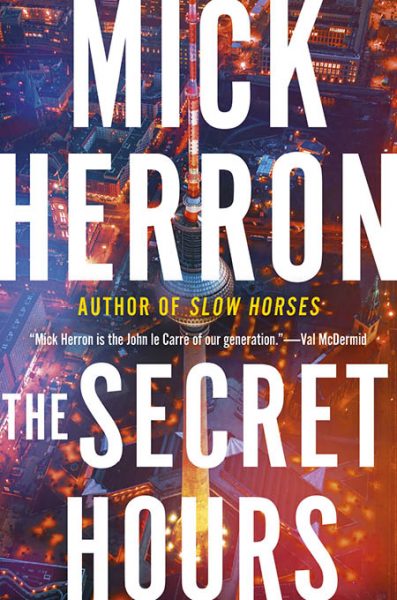
Slow Horses, Dark Discoveries: THE SECRET HOURS, Mick Herron (Sept. 2023)


My favorite characters from the Slough House/Slow Horses series are River Cartwright and Catherine Standish. I identify with each of them for a different set of reasons. (No, I am not going to whine about my father or my past here! I do that in memoir pieces, here.) And I can't stand Roddy Ho, with his endless primping and overweening self-esteem.

But the ones that obsess me are Jackson Lamb, Molly Doran, and Diana Taverner. Why? Because I'd love to have learned from each of them, and I wish I were as brave or as smart, and I know that I'm not. As a small child, when I began to realize that my parents kept secrets from me, I hoped with a deep unholy thrill that one of them was my identity as a Genius. By ninth grade, I knew that wasn't on the map. In the Slow Horses/Slough House series, though, each of these three has special incisive mind and, as a result, a degree of power that I'd now hate to have in my hands. The books let me peek into the inner selves of these characters, though, and there's a marvelous illicit thrill to that past-the-curtain view.

Hence the absorbing, impelling fascination of Mick Herron's 2023 offering, THE SECRET HOURS. Breaking the tradition of the reader knowing the sneaky secrets, this London/Berlin espionage novel offers a kaleidoscope of work names, job positions ("First Desk" at MI5), and hidden motivations as if the story unfolded in a very foggy neighborhood where any sighting of a spy on the sidewalk ahead could actually be the local bartender lost outside his terrain—and vice versa. 

Because the narrative involves so many hidden identities—some for the sake of anonymity among espionage professionals, some for political manipulation, some due to multiple identities either on British soil and foreign, or while publicly appearing "kind and wise" and secretly shown as manipulative and wicked— THE SECRET HOURS offers a shadow dance at first. Naive young "spooks" experience real life; political hostages slowly notice their bondage. Series readers will get the most from this novel, as they'll be alert for signs of which First Desk is hiding in the shadows, who could be a traitor, and small character traits long since revealed among the so-called slow horses. As one mask after another is lifted, the masquerade turns deadly. Yet, of course, this is Mick Herron writing, so deadly is also simultaneously funny and heartbreaking.

There are also delicious asides into evocative description, slipping in mention of the book's title phrase: "Even when apparently peaceful the [MI5/MI6] hub is alert for disturbance, whether in the world at large, on the streets of the safeguarded cities, or at the next work station along, because—as the whispered mantra has it—You never know. You never know when treachery might strike, or from what quarter. This is true whatever the time, but especially true after dark, since how we act in the light of  day is largely for other people's benefit, but what we do in the secret hours reveals who we really are."

Or the revelations of character in the face of rude awakening: "There was a big rip down the centre of everything now. It wasn't fair, she absurdly thought; wasn't fair that people should expose the violent terrors history held, and expect you to know how to respond." 

In the deliciously balanced double time spans of the book, the same character in another era will reflect: "The events she is recalling took place years ago, decades ago, but there is no statue of limitations on remembered damage, if that is what this is. And how can it be anything else? Happiness takes on a different shade in the light of  its consequences."

Don't let the "literary" phrasings mislead you -- this is also a book of fistfights, kidnapping, death threats, and some murder-for-politics. The difference is, in Mick Herron's hands, the questions asked by the ordinary people doing the footwork really matter. And ache. (And sometimes make you snort with an unexpected laugh.)

I often tell people to plunge into a book without worrying about whether they've read earlier work in a series. And you can do that with THE SECRET HOURS, of course. But if you do, then dip into some of the earlier Mick Herron books and come back to this for a second read. Then you, too, will double your time periods of engagement, and perhaps see, and feel, the movement of the world more clearly.

Release date from Soho Crime, an imprint of Soho Press: Sept. 12, 2023.


"The Young Elderly": No Way, No Way!

My "day job" is still editing journals -- that is, sets of articles written by researchers in various fields, from engineering to ...