Showing posts with label series. Show all posts

Tuesday, September 2, 2025

How the WINDS OF FREEDOM Series Reached Book 3


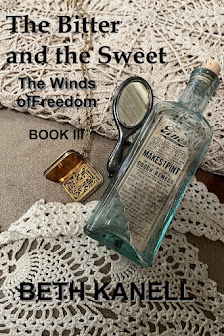
Both softcover and ebook available!


Blame it on that heirloom gold locket that my dad gave to me, after my house burned to the ground. The midwinter fire devoured all the jewelry my mother gave me over the years, all her knitting projects, a half-made crocheted bedspread for my youngest brother that I claimed after her sudden death a few years earlier, saying, “I’ll finish it for you.” Raging on a twenty-three-degrees-below December night, the fire took our clothes, my work, the children’s new Christmas toys. None of that compared to the importance of the three of us escaping, with burns on our faces and frostbite on our toes, from sock-footed hike a third of a mile to the nearest neighbor.


Dad drove north to check on us, a day later. He brought some family photos, thoughtfulness that impressed me; he brought my youngest brother the contractor, who’d never receive that bedspread after all, but who brought me boxes of his spare tools; and he brought the locket. Gold, shaped like a tiny box on a short chain, it opened to emptiness. No photo of anyone inside, but I saw an intricate gold grating that flipped outward. “It’s a hair locket,” he explained. “You put a lock of hair of your beloved into it.”


During the night of the fire, a mile from where my ex-husband lived, the only “boyfriend” in my life was playing music in New Orleans. He got a busy signal when he tried to phone me, and bitterly assumed I’d taken the phone “off the hook” to silence it during a date with someone else. Days later, he’d finally phone a neighbor and learn that a fire burns through phone and electric lines. I didn’t put a lock of his hair into the locket; he left not much later, for a dancer he’d formed a crush on.


When I turned fifty, in accordance with the answer a prayerful friend of mine had received, I met and fell joyously in love with my soulmate. By then, the kids were grown and gone, but on their rare visits home, they agreed I’d finally found the right partner. Next time my darling got his hair trimmed, I collected a curl and popped it into the locket.


Historical fiction already meant a lot to me; a lifelong history writer, and a fumbling novelist, I found the combined threads satisfying. And I wanted very much to give readers a vicarious experience of Vermont’s approach to the Abolition movement and to diverse settlers (setting aside for the moment the state’s sometimes cruel treatment of Native Americans; I’d addressed that in my first work of historical fiction, and the book is a classic, The Darkness Under the Water, but also controversial). I figured, if readers followed along with the teens in my new story, they’d discover for themselves that Black people in Vermont in the 1850s were “free and safe,” as one of the state’s great historians puts it.


If you haven’t yet written a novel, this might surprise you: Often the characters stubbornly diverge from where you thought they were going. So did the girls in The Secret Room: One morning, halfway through writing, I realized at least one of them would head into a dark collapsing tunnel, in a desperate rescue effort. As dirt fell into her eyes and mouth and she moved resolutely forward, one hand landed on an object that she reflexively tucked into a pocket. Later, in daylight, she discovered it was an antique locket.


Yes, there you have it: Dad’s little locket had crept right into my story. So it felt obvious, later, that I’d write another novel, this time set in 1850, when that locket first hung at the throat of a Vermont teen. That turned into The Long Shadow, a book I’d never imagined would be the first of a series.


Yet when I turned it in for publication, the cheerful editor said, “I hope we’ll be hearing more from these characters!” Shaken, I asked, “You mean a series? How long?” She replied, “How about until everyone is free?”


It doesn’t take a lot of American history to recognize that “when everyone is free” probably means the end of our Civil War: 1865. If I wrote a book for each year from 1850 until then, there’d be 15 books in the series. A nifty idea! However: My teenaged characters from the first book would be in their thirties. That wasn’t an age I wanted to write about – I love the voice of a teen observing her world. How could I solve this?


It took another week for the idea to arrive: If the teens had a reason for vanishing from the village at the end of each book, or maybe each second book, and the next book’s protagonist became a girl who’d been younger at the start, and I kept passing it along that way — well, you see how it would work, right? Sort of a relay race, passing along the Vermont fight for human liberty to each new girl, or set of girls. Yes! On the spot, I decided (since I’m far from young) that there would be two-year jumps between the books in the series. That meant seven or eight titles, which seemed workable, as long as I took my vitamins and avoided any repeat of the disastrous housefire.


Now we are in book 3 in what the editor and I decided to call the Winds of Freedom series. Almyra Alexander, who showed up in book 2 as a fashionable girl from Boston, longs to be a minister, a difficult if not impossible path for a woman in 1854. The Vermont village, with its changing ideas about people and their roles, may give her a way forward toward her dream.


But first she’ll have to puzzle out several newly arrived women at the local tavern, what they are carrying around the county, how to handle an aging criminal who arrives while her uncle the minister is out of town, and whether she can effectively assist the cause of Abolition.


If you’re ready to find out whether Almyra is up to those challenges, and what the risks are, and what allies she’s recruiting — get ready to read The Bitter and the Sweet.

Tuesday, October 29, 2024

Making a Scottish/British Crime Series Powerfully New Again: MIDNIGHT AND BLUE, Ian Rankin


A quick count suggests that MIDNIGHT AND BLUE is the 24th novel in the deeply admired Inspector Rebus series from Ian Rankin. Along with similar protagonists, like Michael Connelly's Harry Bosch, John Rebus has reached retirement age. How can a man whose life is framed by his investigative work manage the transition?

Shockingly, it seems Rebus will have to manage it in a dangerous prison, HMP Edinburgh, surrounded by criminals who have good reason to hate and threaten him. "Rebus felt hemmed in, not only by walls but bu the same daily faces too. He had visited the prison many times during his detective years — he recalled being shown the Hanging Shed, now demolished -- but this was different. The various smells were never going to be showered away.  ... Prison, nick, jail, chokey, inside -- many names but only one game: incarceration." 

There's only sparse explanation of how he's landed here with a life sentence, a result of bodily threatening a criminal who minutes later died of a heart attack. Clearly, Rebus's many slippery judgement calls and careless antagonisms of the past must have caught up with him as the courts ground him in their teeth. Protected briefly in solitary confinement, then pressed into the population of his old enemies and, of course, the antagonisms among them, it seems he's only surviving because the death that cost his freedom proved highly advantageous to gang leader Darryl Christie, who's offered to protect him (more or less). 

Of course, Christie is powerful, menacing, and in Rebus's estimation, quite mad. So that protection immediately equals additional danger. Too bad there isn't time to sort it out any further before Rebus's miseries are compounded by a death inside the prison, and fresh expectations from both the investigators and the prison's governor that Rebus will help solve this murder. To do so would quickly mean his death at the hands of the other prisoners, though. Or would it?

It's no spoiler to admit that all the action of this very high-action crime novel takes place in one dangerous week of Rebus's incarceration. Walking with him through the seeming impossibility of crime-solving while balancing threats around him is fascinating and suspenseful, and Rankin provides plenty of aggressive and startling twists along the way.

British cover.

MIDNIGHT AND BLUE will also satisfy readers who want a chance at the better side of human nature despite darkness and violence. Rankin's final acknowledgment shows he knows exactly what he's painstakingly built into this book: "I am grateful to staff and inmates (present and past) who spoke to me and allowed me to tour the facilities. I have taken a few necessary liberties, but I hope I have also managed to show that prisons are places where compassion and hope can be manifested on all sides."

In other words -- you might think you know the author, and the series, but this is a must-read to add to the experience. On my bookshelves, it's hanging around for a second delicious reading over the winter. 

Oh yes, the publisher is Mulholland (aka Little, Brown); I like the British (Scottish) cover design better than the American.


Wednesday, October 16, 2024

Three Teenaged Girls in 1850s Northern Vermont: My Protagonists for The Winds of Freedom


When I wrote THE LONG SHADOW, the story of Alice Sanborn's discovery of injustice and loss in her home village of North Upton, Vermont, I reached for integrity: not just for Alice and her family as they continue their commitment to the abolition of American enslavement, but also for how we see that time, that piece of our past. I wanted to give readers an experience of aromas and tastes as much as possible, along with the binding constraints of the layers of women's garments at the time, and the ways family could be both supportive and harsh. When Alice's uncle rages about the politics of the time, I want you to feel with Alice the scary and exhilarating moment of seeing someone take a stand for a difficult position.

In fact, I was so immersed in this 295-page novel that when I completed it. I was startled to hear the editor at Gale/Five Star, the publishing house, say "I hope we'll be seeing more of Alice!" "How much more are you thinking?" I asked. She responded, "Until everyone is free." That is, from 1850 to 1865.

Well, why not? Alice's interactions with her younger Black friend Sarah and the innkeepers' daughter Jerushah came to a natural end at the end of that novel. But as we all know, when one friendship ends or changes, another often comes along.


For THIS ARDENT FLAME, I chose a very different sort of new friend for Alice: Caroline Clark. Because of her inability to hear, Caroline's spent her school years in a boarding school for the deaf and hearing impaired, in another state. Returning to North Upton for Caroline could be far more traumatic if it weren't for Alice. As the two teens learn to communicate in a layered set of "languages," they learn more about the diverse people around them, and develop their own fierce commitment to abolition, as well as to the linked issue of women's roles and rights.

Readers may have been startled by the decision of these characters at the end of the book: They are headed West, to a place where their presence may be critically important to how America develops the laws and freedoms of its added territories, soon to be states. How could the Winds of Freedom series continue? Was it moving West?

Not at all. When the editor invited me to develop a series for this "young adult crossover" genre -- that is, one that features young adults (teens) as protagonists, but is read enthusiastically and with curiosity by adults, including parents and grandparents -- I saw right away that pushing the sequence by a year at a time, all the way to 1865, would mean a much longer and slower sequence than I wanted to write ... and, more urgently, it would mean that after the first few titles, the main characters would no longer be teens. Not only would that break the genre, it would take me into a kind of novel that didn't interest me. I really like writing "YA crossover."

So I came up with a plan: Each book would jump forward two years, not one; and the protagonists would shift with the timing, like a relay race, passing the action to another girl growing into the responsibility of working for a more moral nation and for the freedoms of those around her.


That's why book 3 in the Winds of Freedom series, THE BITTER AND THE SWEET, features would-be minister in training Almyra Alexander, whose Boston mother has passed away and whose politically active father is far too busy to raise a teenager (other than perhaps planning a marriage for her!). Readers met Almyra in book 2, when she was a pesky newcomer, dressed in city fashions and ignorant of rural ways, but already interested in the role she embraces in book 3: to become qualified to lead her own church. What about the push for abolition, a necessity for a moral person of her time -- will that get in the way of becoming a minister? And who ever heard of a woman leading a church??

I'm eager to learn what you think of Almyra's choices and adventures (including with a notorious counterfeiter) in THE BITTER AND THE SWEET. Please do let me know.

And when you've finished the book, tell me who you think the next young woman (teen!) is that I've chosen for the focus book 4. Think carefully, and remember the two-year jump involved. Can you guess the right one? I want to hear your thoughts, of course!

Thursday, June 20, 2024

Book Thoughts: World-Building and Suspense in SPIDERWEB ALLEY and EDGE OF THE KNOWN WORLD


"Book One of The Elverie Road"

When I learned that author Verlyn Flieger has been called "the world's foremost scholar on the works of J. R. R. Tolkein, of course I wanted to read her new novel, SPIDERWEB ALLEY. Scheduled for June 25 release from Minnesota publisher The Gabro Head, it's printed in a compact chunky form, 5 by 7 in ches and about an inch thick -- which immediately suggests tucking it into a pocket or modest carrier bag, for reading between stops or efforts.

The frontspiece offers an almost poem describing a chilly seacoast with nearby mysterious forests and "curious patterns of stars." Kath and Mick, who've bonded over the search for an old book at the library's Special Collections, are driving along the coast at evening, headed to an inn, when strange things begin to happen. Kath finds herself drawn to the eccentric people and their quaint folkways, feeling as if she belongs, in a way that the odd persons she connects with seem to confirm. Is this an Otherworld, a faerie place? Kath will come to know it as Elverie.

Her particpation in several faerie-related or pagan festive occasions here puts her into danger -- and perhaps even more so for Mick, suddenly in competition with a powerful mythic man who seems to know things about Kath that don't make sense to him. Soon he's denying her experience, sure she's having some form of breakdown.

The book's small shape allows a count of 362 pages for what's really a novella, or part I of a three-part longer novel. The ending's irritating in that sense, because things have really only just begun to knit together. I can't tell when the other parts of "Elverie Road" will reach print, but if you, like me, need to read this one in honor of the specialty of its author, brace for some frustration.

Flieger's novel is clearly built from the old British tales (English? Irish? Scottish?) told at firesides and on becalmed ships. Her creative aspect is the entwining of such tales with a modern and conflicted marriage. I'm holding off on deciding whether it "works" until I see the rest of the story in the sequels.


Dictatorships, Expanded Conflicts, and Genetic IDs

EDGE OF THE KNOWN WORLD (SparkPress, Sept. 2024)  is described as the debut novel by Sheri T. Joseph, but from the level of expertise involved in world-building here, I'd have to guess she's written plenty of other material while learning her craft. 

Alexandra Tashen is super bright and has earned her PhD early enough to be a postdoc student at age 23. She's also surprisingly naive, considering how much grief she's witnessed already, with a missing father and a genetic inheritance that puts her in danger daily. Any random ID screening could show up the not-quite-erased tagging gene that her father tried to spare her, and she'd be instantly a criminal and lose her career and lifestyle as well as freedom. And self-respect.

The professor she's working with, Kommandant Burton, is part parental and part mentor and mostly, although Alex doesn't quite realize it the implications, militaristically in charge of a lot of the almost-free part of the world. Wars familiar to us today have multiplied, fractured, and realigned the nations; the Kommandant is a general and a West Point alum and is in control of her group of factions.

The most significant aspect of this "world," though, is clearly built from today's American and even global politics: Someone's exerting unusual hacking skills on behalf of those who need asylum. The entire world of politics and conflict is balanced on who'll be allowed movement between which regions.

Alex is sometimes less interesting than her Kommandant, Suzanne Dias Burton (authors beware: that's a risky framework). Here's my favorite half page, as Suzanne interacts with a Russian-style counterpart who's just suggested that global instability justifies continued control:

"Gallows humor," said Bulgakov. He had the tranquil composure of a tortoise. "For many here, the refusés in the Netcast are separated family. They remember the kindertransports."

Suzanne stiffened, and checked for implied criticism. The kindertransports had smuggled children out of the Federation for several years following the Treaty, until the g-screens made it impossible to hide them. The children were returned. with scenes of screaming families that still rose in Suzanne's worst dreams. But Bulgakov's face remained serene. Suzanne wondered if it was possible for him to be outraged or shocked. Perhaps nothing surprised him anymore.

The book's finale is a strange one, half soft, half provocative. If there's a sequel, which seems likely, I'll be lining up for a copy. By the way, EDGE OF THE KNOWN WORLD will surely be compared with Atwood's The Handmaid's Tale -- but I think it's much closer to pushing today's politics to a believable extreme.  Nicely done.


Saturday, January 27, 2024

Deepening Sherlock Holmes: New from Laurie R. King, THE LANTERN'S DANCE


When seeking entertainment, it's not entirely fair, I know, to have to consider a literary definition first -- but if you haven't yet fallen for the Mary Russell/Sherlock Holmes series by Laurie R. King, which marks 30 years in 2024, you'll benefit from the definition of pastiche: "A pastiche is a work of visual art, literature, theatre, music, or architecture that imitates the style or character of the work of one or more other artists. Unlike parody, pastiche pays homage to the work it imitates, rather than mocking it."

There are many books that wear the pastiche label with pride. Perhaps the largest group of them is made up of books that take Sherlock Holmes into new cases (and there are some now that work from the original minor character of his landlady, too, which I find fascinating). A Holmes aficionado may decline to read such books — they're not written by the long-dead A. Conan Doyle, and even the best of them can't entirely match Doyle's style and tongue.

But New York City's The Mysterious Bookshop, which described itself as the oldest mystery bookshop in the world, devotes almost as much shelf space to Holmes pastiche and parodies as it gives to the original works. I share this photo from the shop's Facebook feed (thank you, Otto Penzler and team) to make the point:

Relevant bookshelves at The Mysterious Bookshop.

So I'm far from alone in treasuring Laurie R. King's lively series. This year King brings us THE LANTERN'S DANCE, and expands the art of pastiche into new Holmesian terrain: the childhood of the great sleuth, and its harsh conflicts and puzzles.

For the most part, King's series has reflected mostly the point of view of Mary Russell, who meets Holmes when she's in her teens and he is old enough to retire—but, as Holmes readers know, such idleness (even leavened by his hobby of beekeeping) won't suit the sleuth, and in fact would plunge him into the dangerous waters of drug use, his shelter when he's bored.

So in King's hands, Holmes and Russell find each other's deepest needs met by first a mentoring relationship, then friendship, and finally marriage. The most recent books of the series have revealed the surprise that Holmes has a son, Damian Adler. Holmes hadn't realized that his "one woman" from the original work, Irene Adler, became pregnant in their affaire. The simple reason is, Irene didn't allow him to know! In adulthood, Damian needed Holmes's assistance and broke through the secrecy that had separated them ... but didn't, of course, reveal all.

As THE LANTERN'S DANCE opens, Holmes and a slightly handicapped Russell (sprained ankle) arrive at Damian's home in France, where they expect to spend time with him, his daughter, and the petite and intelligent Scottish doctor he's soon to marry. Alas, the housekeeper and her husband inform the arriving couple that the Adler "family" has decamped. The reason is quickly clear: Someone broke into their home while they were asleep, and the level of threat shocked them. 

Challenges multiply: Holmes, of course, must protect his newly established family from the threat -- but is this a threat due to something in Damian's past, or an enemy of Holmes himself, or an effort to pressure his brother Mycroft? As he races off to apply his considerable skills of disguise and investigation, Russell is left behind at the Adler home and discovers a coded manuscript that calls on all of her linguistic and scholarly background to determine what it says and, most importantly, what it means, for Holmes, Damian, and herself.

As a pastiche, the book is cleverly done and probes the birth family of the mythical sleuth; language and customs are well matched to the historical period, and King has reached a superb level of narrative. The familial mysteries that unfold (including in India!) fit well with the original Holmes, and are intriguing and quirky. As a novel, its biggest challenge is the author's decision to use three narrators: Russell, Holmes, and the woman who penned the discovered manuscript. Although they are clearly delineated, this device keeps the action mostly at the surface because there just isn't enough time within the "speech" any of the three voices to dip into the emotional quandaries that King has explored in some earlier books.

Nonetheless, for any reader of the series, this is a must-have addition. Those just starting an acquaintance with Mary Russell should probably go back a few titles—maybe not all the way to The Beekeeper's Apprentice, but at least to the closely knit titles The Language of Bees and The God of the Hive, to make best sense of the importance of the events in this new volume.

My personal favorites of the series are The Moor, O Jerusalem, and Justice Hall, and I recommend those to anyone dabbling in King's river of pastiche and her insight into how a young woman might best partner such a difficult yet rewarding spouse as the great Sherlock Holmes. Each of these also brings me much pleasure and education as I continue to work at the writer's craft myself.

THE LANTERN'S DANCE has a February 13, 2024, release date. Don't judge it by the simple cover, or by the cryptic title. There's a very enjoyable read, within.

Sunday, November 26, 2023

Cute and Sweet "Cozy" Mystery: SPOON TO BE DEAD by Dana Mentink


I review (and savor) a lot of dark mysteries. Well, the darkness often comes with the nature of crime! But not always ...

Suppose you owned a darling little ice cream shop in, let's say, Oregon -- and winter was around the corner. Would you be worried? Trinidad Jones surely is, as she anticipates a drop in the sales of her very creative specialties. So to make sure the Shimmy and Shake stays in business and her unusual but sweet employees get paid, she'll compete for a catering slot: a holiday party on a steamboat owned by Leonard Pinkerton, who can certainly afford her prices.

In this third in her delicious "Shake Shop Mystery" series, Dana Mentink offers a set-up that's far more complex than just the sugary side of an ice cream business, though. Trinidad is one of three former wives of the charming but cheating Gabe Bigley, who's currently in jail, since his fraudulent dealings extend to more than just these women. Against the odds, the three of them have become friends and all live in the same town. (That's the only thing you really need to know from the two earlier books in the series.)

So when Gabe, apparently paroled, stumbles through the door of the ice cream shop with blood on his clothing and says something about having killed someone—then passes out—the immediate disruption hits a lot of lives all at once. Moments later, the victim turns out to be Trinidad's friend and ally, Oscar.

The day had started out with such promise. Now Oscar had been run down, her ex-husband was involved, and there was an orphaned parrot nesting above her rib cage. Oh my giddy aunt indeed, Trinidad thought as they returned to the Shimmy and Shake Shop.

Mentink offers a network of friendships, sleuthing, and potentially thwarted romance as the small-town mystery leaps toward a dramatic finale. This is a classic "cozy" mystery, packed with as many flavors of sweetness as a banana split. Add it to a stack of books for light and often giggling distraction on a winter afternoon.

Sunday, November 19, 2023

Detroit Crime Novel Sees "the Church" at Fault, in Stephen Mack Jones's 4th August Snow, DEUS X


For me, part of the point of working hard (and creatively) is the pleasure I can take later, collapsing into a fictional world that's totally apart and full of eventual triumph. So a well-plotted crime novel with characters I can care about, well, that can be quite a gift. And it's a thrill to let people know about the award-winning fiction coming from a "Michigander" like Stephen  Mack Jones.

You haven't read his August Snow series yet? Wow, you've got a big treat in store! This ex-cop in Detroit lives at the edge of multiple ethnicities — especially Hispanic and Black — in the Mexicantown neighborhood he and his friends have been steadily rehabbing.

When the local Franciscan priest, Father Michael Grabowski, suddenly retires and appears to be dying, August is convinced there's more at stake than physical illness. Father Grabowski's abrupt withdrawal from friendships and his 40 years of community care signal a spiritual collapse that's got to be related to another nearby priest's suspicious death. 

When August starts probing, he meets his match in a fierce (and armed) investigator from the Vatican who wants the local priest to take all the blame for a string of other abuse and deaths. And that's where the crimesolving rips into action.

Still, the deep pleasure of DEUS X is in Jones's rich descriptions of the neighborhood and of August and his allies, like Tomás: "Tomás handed me a mug. Like me, it was dangerously dark, slightly bitter, yet oh so satisfying." Yes, there's a woman in August's life, Tatina, who feels that way about him, but in this adventure, she's mostly off scene ("Somali and German, living in Norway").

Which is just as well for Tatina's sake, considering what August and Tomás are up against. The Vatican has its own enforcement team? Who knew? Is there a rational explanation for how some of the related menacing men seem to vanish when cornered? Although August tries to reassure himself that real deaths involve physical results, even he is worried about whether there's a scientific or technological explanation: "If not, I'd have to seriously reassess my position as an agnostic Mexican-American Catholic with African-American Baptist metaphysical leanings."

Jones takes this fast-paced crime novel across several boundaries of old magic and traditional healing, as well as Catholic priesthood abuse issues. So it's a compelling page-turner, excellent for a winter weekend of escape and questions, framed in sturdy friendships with plenty of firearms and other defenses. You don't need to read the other three books in the series first, although if you do, this one will resonate more—but you can pick them up afterward, because chances are, August Snow's fierce urban loyalties will leave you wanting more of his adventures.

Monday, October 23, 2023

A Worthwhile Protagonist Has "Agency" -- Like Dr. Kate, the Vet


Although I hosted a wonderful elderly dog at my home for two months earlier this year, it turned out that I'm not a very skilled dog trainer ... and am getting a bit past learning new tricks myself. It hurt my heart to return the sweet pet who'd come here for a try-her-out visit, but it was the right thing to do, before I either broke a bone by falling while she tugged me along, or lost too much sleep to her eager awareness (bark, bark, bark, growl!) of the other animals around this rural place.

Even without a "companion animal" at hand, I found strong interest in the creatures in the new "Dr. Kate Vet Mystery" from Eileen Brady, released this month: MURDERS OF A FEATHER (Poisoned Pen Press).

As in many a "cozy" mystery series, the complications of crime in this lively tale are paired with Kate Turner's aching heart and hope for romance in time for Valentine's Day. Too bad the new vet in the area, "Dr. Mike," is married with newborn twins, as the two adults work so well together in a barn, meshing one's large-animal skills with the other's deft surgical and medical approaches. This too will turn into a twist of the plot, of course!

The murders Dr. Kate discovers are very human ones, but she'll tug at the strands of the crimes for the sake of both her own staff members and the many related animal emergencies around her, in an upstate New York harsh winter. Ice, snow, and slippery suggestions of motive and means fill the pages in a well-twisted plot with abundant discoveries. Her insistence on "agency" — that is, independence and taking her own direct actions — moves the plot well.

The best part of reading Brady's mysteries is the way she weaves Dr. Kate's animal and owner experiences into the insights that sleuthing requires: "Obsessive love. Jealous vindictive love. You see it in people and in animals that fixate on one person. That one being is all they want, all they need. And when they can't have them—they show their teeth."

Similar to the progress in a true crime investigation, it takes quite a while for Dr. Kate to unwind the final strand she needs. And that, in turn, allows readers more time to meet and enjoy the intriguing pets and farm animals along the way.

Between its charm and its intrigue, MURDERS OF A FEATHER (yes, there are crows involved!) can be a rewarding addition to the winter reading stack, and a handy choice for a holiday gift to an animal-loving friend or mystery aficionado.

And it's so very different from the next book I want to tell you about, which begins also in winter ... in urban Detroit. No pets involved at all, but plenty of love and loyalty, and a deft hand with crime.

Wednesday, August 30, 2023

A Little Wobble on a Rainy Day; and PROUD SORROWS by James R. Benn


It's raining ... again. A quick look at online records suggests that in Vermont, in August, you have a 50/50 chance of rain on any given day. But it feels this year like the rainclouds slip around on a fairground track, headed back toward us the moment we think they're gone.

That's good for anything I've transplanted this month, since the roots are being steadily wetted down. On the other hand, I've started resorting to the dryer to get my towels back to useful status, instead of hanging them on the porch. We'll remember this wet and often flooded summer, as we look back on it.


Speaking of looking back -- well, isn't that one of the functions of historical fiction? For the hours that I am "inside" a well-spun story, I'm no longer comparing then and now, but I'm experiencing a different time altogether.

The Billy Boyle World War II Mystery series presents its 18th title next week (Sept 5, Soho Crime imprint of Soho Press): PROUD SORROWS, by James R. Benn. The title comes from a Shakespeare couplet in the play King John, referring to the force of grief. In November 1944 in Britain, surely everyone had a reason to grieve: The war hadn't destroyed Britain, Germany hadn't defeated the proud island nation, but death, crippling injuries, and residual trauma affected all.

Benn's first chapter swiftly reveals all the English village characters who'll have potent roles in the murder investigation ahead of Billy Boyle and his colleagues. Poor Billy! He's supposed to be taking a long-overdue break at the country home of his girlfriend Diana's father -- it's damp and chilly, a classic English November, but he comments, "I shouldn't complain. I was dry and no one was shooting at me."

Trust a big dinner group to show the cracks in family and friendships, though. Soon enough, Billy's worrying about the tensions that surround him. Some vacation! Series readers know he grew up in a Boston "cop" family and landed in Europe as a criminal investigator working for one of General Eisenhower's teams. Benn, however, is a straightforward author who won't leave you guessing about that, and about Billy's skills, in case you're new to his books:

Curiosity is the curse of any decent cop, as my dad and Uncle Dan, both detectives with the Boston Police Department, had drummed that into my thick Irish skull on many occasions. Always wonder why things happen, they'd say. Figure things out, even little things.

Billy's not-a-vacation-after-all involves a retrieved German bomber, some local feuding, injured and missing persons, and eventually the discovery of a murder. Will the little things help solve the crime? Trust Billy to see what's not obvious, even when looking at a ransacked home: "When a house has been gone through so thoroughly, it's usually because the object in question wasn't found."

A good part of the pleasure of Benn's Billy Boyle books is discovering what quirky, politically forceful, and culturally mystifying historical forces this author has unearthed in his march through the years of World War II. This time, the focus is on the Ritchie Boys and on right-wing politics. Benn provides a fascinating set of notes at the end. As usual, what cracks the case will be what Billy and his allies pull together, in this case about Nazi prisoners of war, but also about the land and nearby ocean. 

PROUD SORROWS offers an exhilarating and often emotional adventure, with hints at what lies ahead for the series in its inevitable movement toward the final year of the war. Now I think about it, re-reading this well-told mystery is just perfect for another Vermont rainy day. Time to make a cup of tea and tip back into the armchair.

Wednesday, July 5, 2023

Wait, What Century Are We In? Radical New Fiction from Sujata Massey, Mick Herron, Chris McKinney

Book recommendations! My recent reading has been all over the timeline and globe, thanks to three summer releases from the Soho Crime imprint of Soho Press. NOTE the release dates, please, for ordering and pre-ordering. I'm not exaggerating when I say that each of these books has given me insight into the mastery of important stories, as well as intrigue and adventure.

1920s India, Courtrooms and Crime (JULY Release)


The 1920s gave women freedom of dress, dance, and hair in the United States, as well as the vote -- but social change moved differently in India then, and Perveen Mistry, British-trained daughter in a Bombay law firm, can't find her footing. She should be recognized as a solicitor. But when she rashly tries to stand up before a judge on behalf of another family's injured servant, her credential aren't good enough: "I completed the bachelor of civil law education at Oxford University. Following this, I clerked at Freshfields which granted me the rank of solicitor." The judge traps her with an inquiry into her grades on the law exams, which of course she hasn't taken. "Female law students were not permitted ..." A very embarrassing move by the judge banishes Perveen from the courtroom, threatens the liberty of the woman she'd tried to rescue, and sweeps her career faux pas onto the gossip mill.

Death, poisonings, and legal manipulations with the upper-class that used to hire that now-injured servant as a baby nurse escalate the crises around her. Despite its supposedly sedate setting, THE MISTRESS OF BHATIA HOUSE turns into a page-turner of betrayal, dishonesty, and by necessity, bravery, as Perveen risks her most important relationship—with her powerful father—for the sake of her surging principles. 

Followers of the series (this is the fourth of Massey's 1920s India mysteries) will get little more of the romance between Perveen and the British man who's won her heart in earlier books. But oh, what an education in customs, cruelty, and courage!

Cold War Refresher for Awkward Spies (SEPTEMBER Release)


The "Slow Horses" Apple TV series has brought fresh attention to Mick Herron's addictive espionage series set "today" (more or less) in London. Although THE SECRET HOURS is billed as a stand-alone, it's slowly revealed to be a Cold War back story to some of the most compelling characters of the book series. Discovering which of the ardent young people from 1994 Berlin match the partners in the current investigation of MI5 is half the fun. When they start to key into the Slough House itself, though, forget putting the book down. As the unnamed "First Desk" at MI5 refects, "You never know. You never know when treachery might strike, or from what quarter. ... What we do in the secret hours reveals who we really are." Soon various forms of skullduggery, including betrayal and murder, rack up: "Killings happen It is not a matter of whether this is true or not; it is more a matter of whether it is justifiable." 

Herron's crime novels feature sharp threads of wry humor, and every triumph gained by his spooks and "joes" come with a huge serving of regret. THE SECRET HOURS gains double poignancy if you've been reading the earlier titles (I actually re-read them, almost annually). But if you're a novice, plunge in anyway. Odds are you'll then email the local librarian for earlier books in the series, and work your way back to this 2023 release with delight and escalating appreciation.

What Could Go Wrong With Artificial Intelligence That Hates You? (JULY Release)


My grown sons speak Asian languages—it's unusual for Vermonters, granted, and they've been given quite a few side-eyes in Asia for the unexpected sounds coming from their mouths. I think that enhances the fascination I find in Chris McKinney's "Water City" series, with its multiple scenes of Japan and more. McKinney, despite the sound of his surname, is native-born Hawai'ian and his ocean savvy formed the fabric for the first book in the future-utopia neo-noir of Midnight, Water City. With EVENTIDE, WATER CITY,  the threads of manipulation that might have been excused on the part of world-saving science in the first book start to bite ... and draw blood.

McKinney's protagonist, whose name we still don't have, served as risk-it-all detective in the first book. But now he's retired, letting his wife do the career climbing, and instead he tackles the daunting task of teaching and then keeping up with his daughter Ascalon—who, like her father, is a synesthete, someone whose perceptions arrive in the form of colors, sounds, even messages that don't mirror everyday reality. 

The idyllic life of water exploration with Ascalon ruptures under the intrusion of the potent and often cruel (needlessly? or correctly?) Ascalon Lee. By the time this strange villain-rescuer is captive, the roles of father, detective, bounty hunter, and world-saving hero have whirled into enormous confusion for McKinney's narrator: "She's got her gun raised to my belly. This should be easy. So easy. How many times have I pulled a trigger before? Then a single thought floods my mind. Anger. Rage. It's this emotion that makes it possible for me to make everything all about me. The thought melts and oozes into a deep self-loathing." There, bet you didn't see that coming — but if you savor well-written noir, you should have guessed. 

In this year of ChatGPT and other mixed monsters, the role of artificial intelligence in McKinney's series can't avoid a mix of promise and menace. Keep your eye on both Ascalon and Ascalon Lee, to gather hints of where this frankly terrifying series is headed for its finale, as the last of the trilogy, Sunset, Water City, will release in December.

I'd like to send all three of the books to my Congressional delegation. If only I thought they'd read them. Well, at least we the voters can be forewarned.

PS: Looking for more mystery reviews, from cozy to very dark? Browse the Kingdom Books mysteries review blog here.

Wednesday, March 13, 2019

Thinking Pink, A Happy Year from My Last Radiation Treatment

Last weekend the Boston Globe ran an opinion piece that said people shouldn't have to crowdfund to pay for their health care. The piece described a man with critical diabetes who fell $50 short of his fundraising goal -- and as a result, the piece implied, he died.

I'm not sure the article made complete sense. But I get the point: Health care should be better than this. Sick people shouldn't have to go out and ask their friends and total strangers to donate, to save them. It's terrible.

Equally shocking, a quick Google search shows that crowdfunding is now supporting cancer research (both breast and prostate, say the articles, showing gender equity).

Wait, does that mean if the lab falls $50 short on donations, it doesn't get the testing equipment or microscopes? Sheesh.

I'm happy to celebrate a year this month since my last radiation treatment for very ordinary, very treatable, and still very scary breast cancer. Great treatment doctors and teams, top-notch support. And thanks to waiting until I was over 65 for the diagnosis, my health care insurance (part Medicare, part gap coverage) took me through this, brilliantly. Without added health care debts. Thank you, thank you, thank you!!! (I try not to remember that if I'd dared to get the diagnosis a year before 65, which might have been wiser in terms of cancer's action, I'd be hundreds of thousands of dollars in debt. Truth.)

There is one other small downer, though: Since I'm self-employed, even though I worked really hard and completed every assignment last year, I didn't have the extra energy for a while to go chasing extra work—and these days, the routine assignments don't cover all the living expenses. Fact of life. For 2019, I'll do better. But gosh darn it, I've still got to make up for that slowdown in 2018.

So I've taken a tip from the Big Research Labs and the little uninsured and everyone in between who's running behind these days financially, and done it my way:

Crowdfunding publication of my awesome (and already award-winning!) Vermont mystery, ALL THAT GLITTERS.

It's simple: Pre-order a copy of the book (click here to see it and browse). You get your money's worth as the book goes to print (we need 750 pre-orders for that), and I'll get a share after that happens, which ought to make up a chunk of the difference in what I needed last year, versus what I earned.

Oh, and if you pre-order three copies -- you get your name into the book as a sponsor. (So, like, you could sign the book next to your own name, really!) One thing I especially like about this route is, you can read the book for free on the website and make sure you're going to like it. (Sure, click here.)

This crazy notion comes via Inkshares, which is printing some really lovely books, on nice paper, well bound, well made ... and without a fuss. I love it!

So if you're in the mood to "Think Pink" may I suggest buying this mystery? You'll have a lot of fun, and you won't have to walk five miles or make people sign your pledge page or call the radio station or any of that. Just click here, and sign up for a book.

Then tell a couple of friends about it. That's how the real "crowdfunding" works. Because getting through modern life takes a lot of help. And trust me—I'll be signing up for YOUR crowdfunder next year.

Hugs and hope to you all!


Friday, March 8, 2019

Virginia Woolf, Vermont's Alison Bechdel, and ... Me?

Mom and me ... way back when.
My mom died suddenly, at the appallingly young age of 53, not quite done with child-raising. So in a real sense, I didn't get to see who she might have grown into as an independent woman. I picture her taking up oil painting seriously, and going to amazing lectures, and expanding the new career she'd started, creating recreational crafts at a local nursing home.

I imagine now things we might have started to do together, too: She would have adored 12-Step group meetings, for instance, I'm sure of it! (All those stories ... ) Schmoozed excitedly at Sisters in Crime gatherings. Hosted a book club (or two!). Maybe we would have taken some trips as "just the two of us," too.

Most of all, I wonder how she would have adapted to today's feminism. She was always, at heart, a woman who didn't stand for discrimination. But in her time (she was born in 1927), marriage was WAY different, and so was employment.

Still, I am certain she'd be calling (and e-mailing and Facebooking) all her friends near and far about the "Break the Bechdel with Strong Female Characters" badge that landed on my mystery, ALL THAT GLITTERS, this winter. I'm elated that this "syndicate" on Inkshares chose my teen sleuth mystery set in Vermont for the honor. Here's the reason:
All that Glitters hooks you in the first paragraph and doesn't let go! Beth Kanell has crafted a main character who feels real from the first page, and has already introduced a mother whose voice is all her own-- and certainly someone to reckon with! We can't wait to follow Lucky as she tracks down the person who shot her father, with the help of her two friends who also already show great potential for fully developed roles!
(Pre-order link at end.)
With my eager, curious mother in mind, I've been trying to figure out how to explain this award. It's about a "test" named for Vermont graphic artist Alison Bechdel (who's said she wished it were the Bechdel-Wallace Test, because it came up on conversation of two people). And in turn, she was thinking about Virginia Woolf's comments in Woolf's 1929 essay A Room of One's Own:
All these relationships between women, I thought, rapidly recalling the splendid gallery of fictitious women, are too simple. ... And I tried to remember any case in the course of my reading where two women are represented as friends. ... They are now and then mothers and daughters. But almost without exception they are shown in their relation to men. It was strange to think that all the great women of fiction were, until Jane Austen's day, not only seen by the other sex, but seen only in relation to the other sex. And how small a part of a woman's life is that...
To run the "test" today, you look at a film or novel this way, which originally applied to a movie in Bechdel's comic strip:
  1. The movie has to have at least two women in it,
  2. who talk to each other,
  3. about something besides a man.
 Well, yeah. I mean, sure. I mean, isn't that a big part of what a "girl sleuth" is doing, in the best books? Nancy Drew didn't talk with her sort-of boyfriend Ned much -- she confabbed with her "chums" Bess and George (both of them young women like here). And although Flavia de Luce, my favorite recent "girl" sleuth, depends on her dad's assistant to help her think through how to use her amazing science skills, her most important discussions are with the other women in her home.

It's not that we sleuth typed don't enjoy all of life -- but, as the Grand Sophy emphasized in a Georgette Heyer novel that I adored in my younger years ... there's a time and place to pay attention to some things (like what you're going to wear). And another time and place to focus on what needs to be solved.

Come to think of it, when Sherlock Holmes focused on "that woman" in his life, his detecting skills weren't quite as good, right?

Mom would have completely understood.

PS - Ready to pre-order your first-edition copy of ALL THAT GLITTERS? It's the first in a series of eight, and I bet each of them will make a good run for the Strong (and Smart and Sassy) Women category. We need to line up 750 orders to get this into print, so it really matters when you opt for a copy (or the special for three, which puts you into the published book as a sponsor!). It's easy to pre-order, just click here.


Monday, February 4, 2019

New Teen Sleuth Mystery ALL THAT GLITTERS Gets First Award!

Zowie! ALL THAT GLITTERS just won its first award -- and it's not even in print yet!!

The Break the Bechdel With Strong Female Characters Syndicate just named "All That Glitters" as its February 2019 pick. Here's why: "All that Glitters" hooks you in the first paragraph and doesn't let go! Beth Kanell has crafted a main character who feels real from the first page, and has already introduced a mother whose voice is all her own-- and certainly someone to reckon with! We can't wait to follow Lucky as she tracks down the person who shot her father, with the help of her two friends who also already show great potential for fully developed roles!

Hope you are following along, on this adventure in off-the-usual-route publishing. After all -- this is OUR Vermont Nancy Drew book (and, just a whisper to you ... like the original, this is a series, with seven more books plotted out already). I always loved Nancy Drew, and was ready for an update. Now, here it is.

Here's that link for the book, and you'll see the Break the Bechdel* "badge" on the page now. Then click the pre-order button (and note the 3-copy version that puts YOUR name in the printed book, too):


* Many readers don't yet know about the Bechdel test -- a relatively new way to look for books with strong, independent female characters. To learn more of its history, check out this link. It's named for a graphic novelist based in Vermont, so I'm especially happy to have it applied to ALL THAT GLITTERS. We're in this together, right?

Hugs and hope for today -- Beth

Saturday, January 19, 2019

"All That Glitters" Leaps to Life on Inkshares Publisher

I'm thrilled to see my teen sleuth novel ALL THAT GLITTERS available on the new publishing platform Inkshares. Click here to start reading for free! 

Whenever I chat with people about mysteries from childhood, Nancy Drew comes into the conversation. Love her or not, she's iconic, the teen sleuth who solves mysteries with her two "chums" Bess and George.

I wanted to see what Nancy Drew would be like if she lived in Vermont -- today!

The story takes place in Montpelier, after Felicity "Lucky" Franklin races home from college to help her mom. Lucky's dad has been shot, and Lucky's mom got arrested on suspicion of murder. Although Lucky quickly helps her mom to "lawyer up" and get released (the evidence is clear!), there's still someone threatening to injure her family and finish off her dad.

Is it the city's added taxes or the effect of marijuana for sale? How can Lucky and her friends solve the case -- and will they have to call in Roger, Lucky's ex-boyfriend? Wow, a special risk in doing that ...

Hope you'll click on this link to Inkshares and read along. It's free and easy to read the whole book on the website (press the READ button). Better yet, pre-order a copy.

Inkshares promises that when we reach 750 pre-orders for the book, it will be released as both a paperback and an e-book. Help it reach this goal and get your own first edition this way!

More stories about the book and Lucky Franklin in the coming days. Thanks for checking in!


Tuesday, December 4, 2018

Ruffed Grouse, or Partridge (Pa'tridge)?

One of the challenges of writing a novel set in 1852 is the details that aren't recorded, but that I still want to get "historically accurate" for the story. Today's puzzlement is how to talk about the wild bird known to American colonists, based on their British experience, as partridge -- but corrected in name to ruffed grouse. John J. Audubon painted the birds (see above). And Karen A. Bordeau of the New Hampshire Fish and Game Department also wrote this in 2015:

Regulation of grouse hunting received no attention for a long period. The first act protecting birds was passed in 1842, affording a breeding and rearing season free from molestation. They could be legally taken between September 1 and April 1, and permission of the landowner was required for hunting.
The regulation was repealed after four years, and grouse remained unprotected until 1862. The second law protecting grouse, passed in 1862, established a shorter season – September 1-February 28 – and four years later hunting was further curtailed by closing the season on January 31. Snaring had been a popular method of capture, and in 1885, was forbidden. By 1929, grouse were so rare all over the state that the Legislature completely closed the season in Coos County on the Canadian border, and in Cheshire County bordering Massachusetts.

And the New International Encyclopedia of 1917 says this:


So, what do my characters call these birds? That's in chapter 4 of THIS ARDENT FLAME (Book 2 of Winds of Freedom).

The Generosity and Grace of a Nearby Poet

Poet Carlene M. Gadapee is a familiar figure to high school students in Lisbon, N.H., where she teaches both English language arts and creat...